Travel Retail in 2026: TRunblocked.com’s Perspective On Trends And Predictions
Introduction by: Peter Marshall
Get ready for a pretty turbulent year – at least when it comes to the geopolitical situation. Has Trump’s recent operation in Venezuela now provided permission for autocrats elsewhere (we all know who they are) to justify their own existing actions, or take new ones outside international law? Whatever the outcome, Travel Retail will be directly impacted in some way and the industry will need to show a great degree of agility to deal with the ramifications of destabilization. But will we be trapped, even padlocked, in our current mindset of consolidation and slow evolution. It may be a new year, but will it be the same old Travel Retail?
Well, the answer is likely to be both yes and no. Here’s our topline view of trends and predictions.
2026: The Macro Picture
- Travel retail in 2026 will grow solidly but unevenly, with airports still dominant. It will be cruise lines that will accelerate the fastest. All stakeholders will continue the push toward more digital, data-driven and experiential models built around value, sustainability and personalization.
Market growth
- Forecasts suggest high single, to low double‑digit CAGR through 2026 and beyond. The demand drivers here: continued air traffic growth (e.g. Europe +14% flights 2024–26) and robust cruise tourism.
Structural shifts
- AI‑driven personalization, pre‑order, and click‑and‑collect will increasingly move from pilots to core infrastructure. Expect faltering results from retailers, better from brands.
Airports
- A healthy percentage of airports globally report plans to expand or refurbish duty free areas by the end of 2026, with airports remaining the largest travel retail channel by revenue.
- Expect larger walk‑through stores, more evidence of “airport as showroom” positioning, and more mixed‑use spaces combining F&B, brand pop‑ups and digital experiences.
- There will be a continuation of intensified tenders and more joint venture structures as landlords seek higher MAGs, a better category mix and – albeit snail-like – more data sharing from retailers and brands.
Airport Operators and Retailers
- Here it’s all about consolidation and scale. Major operators will keep expanding via new concessions and refurbishments, especially in Asia‑Pacific and the Middle East where so many new contracts have been signed since 2024.
- Expect an investment focus on omnichannel platforms (web, app, in‑terminal screens), AR discovery tools, and “narrative‑led” concepts to convert footfall into much needed, higher‑value baskets.
- Operators will push brands for better data integration, dynamic assortments by flight profile, and measurable ROI on activations rather than pure visibility.
- Will the recent surge to food and beverage in airport retail now be questioned?
- Watch out for aggressive moves from Al Waha and potential moves by Qatar Duty Free to move outside its current borders.
- Expect more examples of the Pentarchy at work.
Airlines
- Watch out big moves in the Middle East. With Dubai Duty Free’s remarkable 2025 figures, will that now push the price up for the prospective bidders, or will it mean that DDF will now continue on its own? Will the ambitious Al Waha find a way take up more retail space from the incumbent retail operators in Saudi? And will Qatar Duty Free move outside its current borders?
Cruise Lines & Ports
- Cruise tourism will reach record passenger volumes.
- For retail evolution, expect larger, multi‑deck retail footprints, strong luxury and watch/jewellery presence, and more collaborations which will signal a shift to more curated, story‑led retail at sea.
- Brands still need to better understand cruise line retail – no cut and paste jobs possible any longer.
- Ports and terminals will be increasingly treated as full travel retail nodes – with duty free, food and local concepts blending to capture pre/post‑cruise spend.
- Will Harding+ become an acquisition target?
Brands & Categories
- Premiumization with affordability remain key drivers. Beauty, Spirits and Confectionery will continue to lead, but consumers are polarizing between accessible “treat” items and more indulgent, high‑margin purchases. This tension will remain a constant for 2026 and the following years.
- In Beauty, expect more niche players being acquired. In Spirits, there will likely be disposals from Diageo and LVMH. But who are the likely buyers in such difficult times? In confectionery, expect a dilution of interest in Dubai Chocolate. Will Istanbul Chocolate become the new contender? Tobacco will hold its ground and continue to see robust demand for non-combustibles.
Digital and AI
-
- Brands will deploy AI to segment travellers, optimize price ladders, and power one‑to‑one offers across airports, airlines and cruise, with digital sales becoming structurally embedded in launch plans.
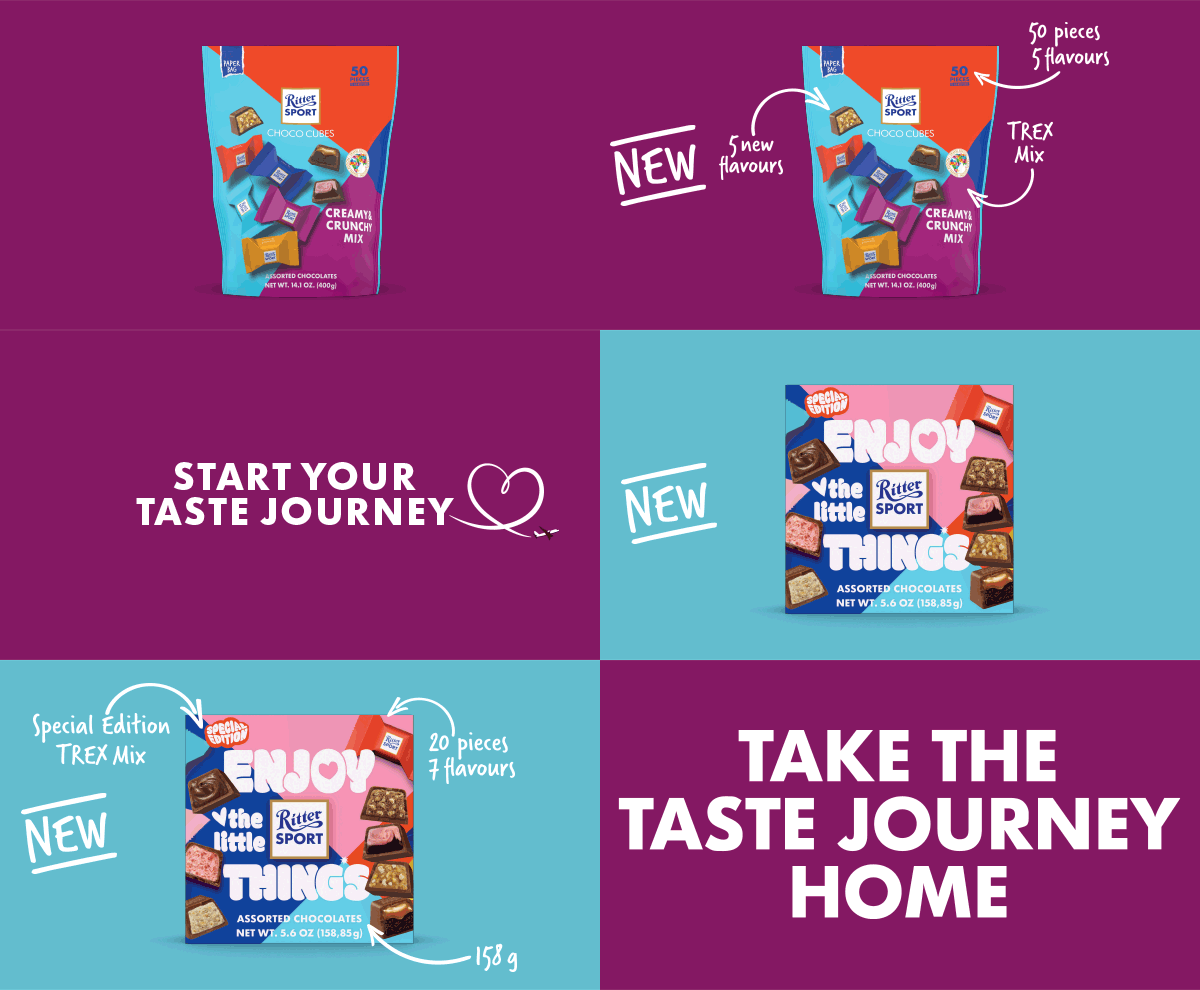
- Expect more TR exclusive lines, limited editions and localized ranges as brands seek distinctiveness and higher conversion in a channel less driven by pure tax‑saving.
Sustainability
-
- Climate‑conscious and “responsible luxury” narratives will be in abundant evidence, with partnerships on carbon offsets, sustainable packaging and authentic local sourcing increasingly used as differentiators. But has sustainability gone down the agenda?
Key Themes/Question Marks
- Value vs experience: how will each stakeholder balance price sensitivity with investment in experience when passengers expect both affordability and indulgence?
- Data and governance: who actually owns traveller data, how will it be shared across airports, airlines, cruise lines, retailers and brands, and how AI will be governed in targeting and dynamic pricing.
- Channel morphing: will inflight, port and downtown duty free finally become extensions of airport and cruise retail ecosystems rather than standalone silos, and how will contracts/partnerships change to support that?
Founder: trunblocked.com/Marshall Arts
Read Next
October 22, 2026
Not Just Candy: Mars Wrigley’s Dynamic Play in Travel Retail. An de Volder Interviewed
October 20, 2026
Travel Retail’s Blind Spots: 4 Senior Industry Executives’ Perspectives on Changing Shopper Behaviour, Retail Expectations and the Future of Conversion.
October 15, 2026
SEKONDA’S NEXT MOVE: CAN A £79.99 SMART RING CRACK TRAVEL RETAIL?
October 13, 2026
FROM A PRADA POST OFFICE TO FIRST-CLASS RECOVERY: MY L’ORÉAL TRAVEL RETAIL JOURNEY