

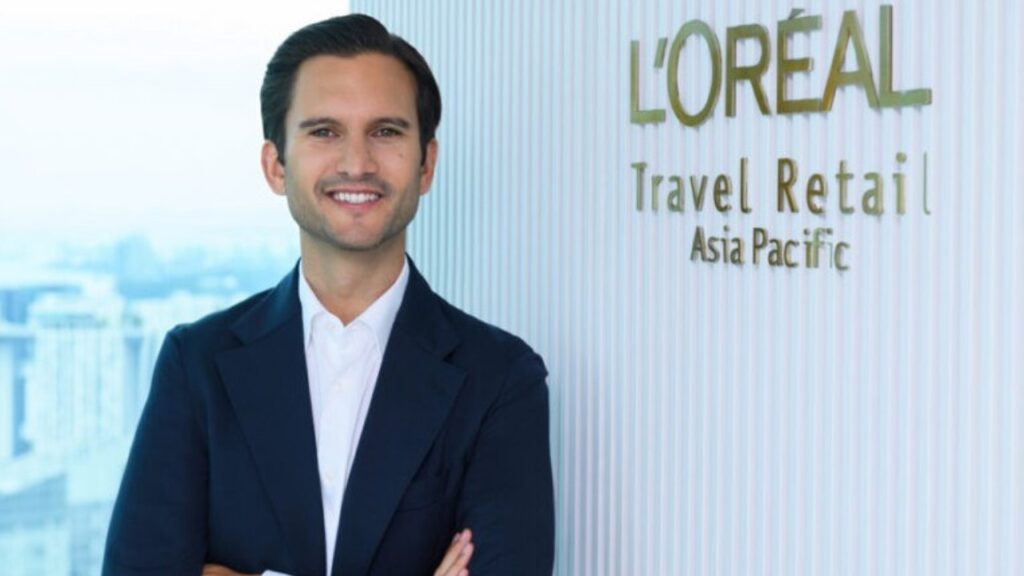
Experience First: L’Oréal Travel Retail Asia Pacific Managing Director Jesús Abia on the New Era of Travel Retail Beauty


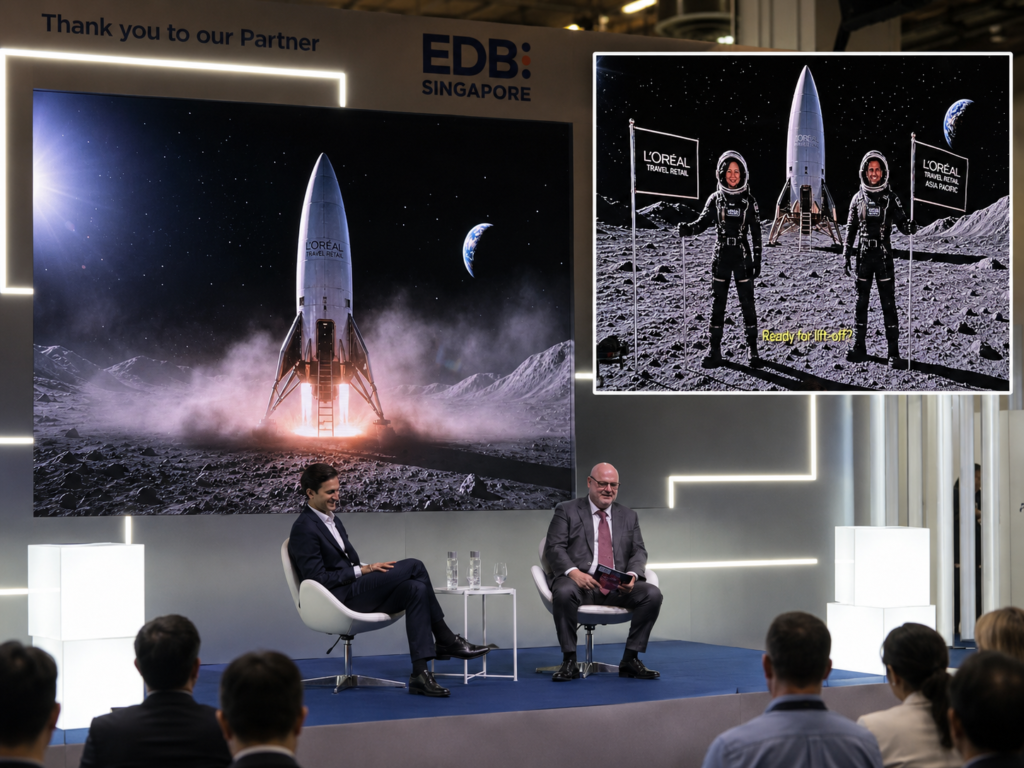
Standing room only is usually a good sign at TFWA Asia Pacific. But when Jesús Abia took to the stage at The Agora Sessions in Singapore, it quickly became clear this was more than just another conference presentation.
Introduced by a dynamic holographic dance performance and delivered with energy, humour and clarity, the L’Oréal Travel Retail Asia Pacific Managing Director offered one of the most complete snapshots yet of where beauty – and arguably travel retail itself – is heading next.
Abia’s central argument in his presentation was simple enough: Asia Pacific has become the industry’s most important innovation laboratory. But the implications of that statement stretched far beyond beauty products and airport counters. His presentation touched on shifting traveller behaviour, AI-powered engagement, ecosystem partnerships, sustainability, retail theatre and the growing importance of data in understanding increasingly fragmented consumer groups. And yes, there was even a special visitor – a robot flown in from Hainan as part of a YSL Beauty activation, underscoring the sense that travel retail’s future is arriving faster than many expected.
What made the session resonate was Abia’s refusal to romanticise the market. He acknowledged the disruption sweeping across Asia travel retail, from changing retailer structures in Korea and China to Hainan’s turbulent recent history. Yet his tone remained relentlessly optimistic. Travel is booming again, beauty demand is accelerating and, in his view, the companies willing to innovate around experience rather than transaction will define the next phase of growth.
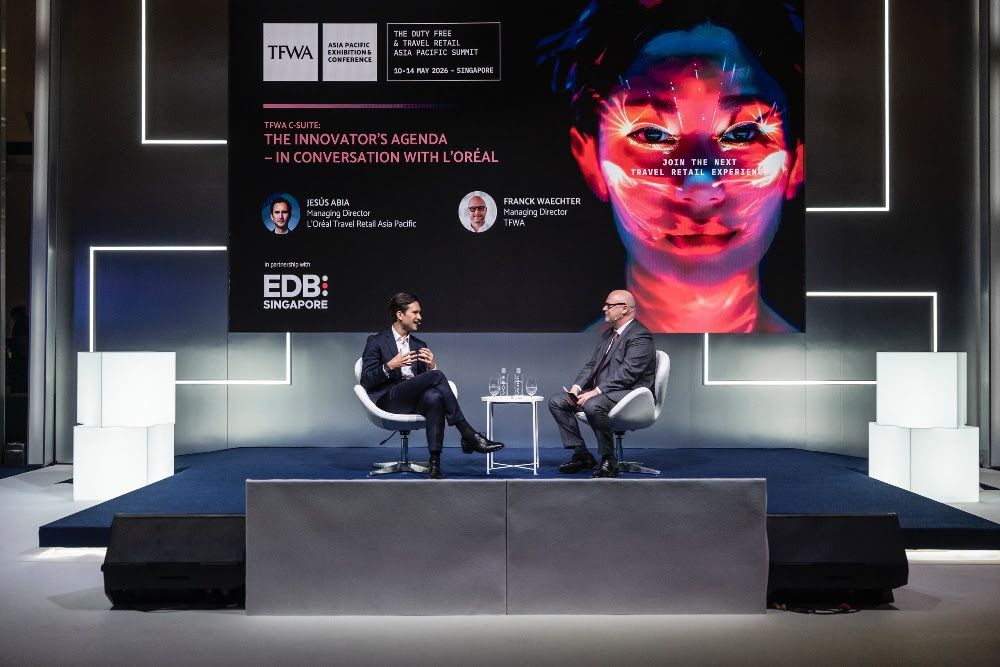
There was a moment midway through Jesús Abia’s presentation at TFWA Asia Pacific when the direction of modern travel retail came sharply into focus.
Not during the discussion around AI. Not during the statistics on beauty recruitment. Not even during the conversation about Hainan’s resurgence. It came when Abia explained that consumer centricity in travel retail is “no longer about the point of sale”, but instead about “the point of discovery and the point of experience”.
That distinction matters.
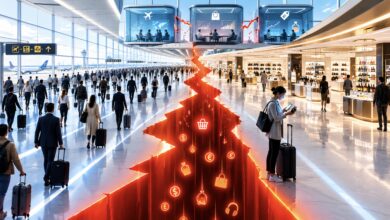
For decades, airport retail largely relied on the same formula: footfall plus visibility plus promotions equals sales. But as Abia repeatedly stressed during his session at The Agora, that equation no longer holds true in the way it once did.
“Today, there is no longer a direct correlation between traffic growth and sales growth,” he said. “You cannot simply expect consumers to enter stores automatically.”
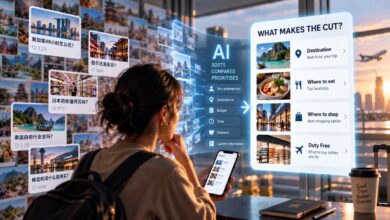
It was one of several observations that cut through because they reflected the reality now facing brands across Asia Pacific. Passenger numbers may be rebounding strongly, but travellers have changed. They discover brands online before they travel. They compare prices instantly. They expect personalisation, immersion and relevance. Increasingly, they want retail to feel less transactional and more experiential.
For L’Oréal Travel Retail Asia Pacific, the response is clear: meet travellers before they even reach the airport.
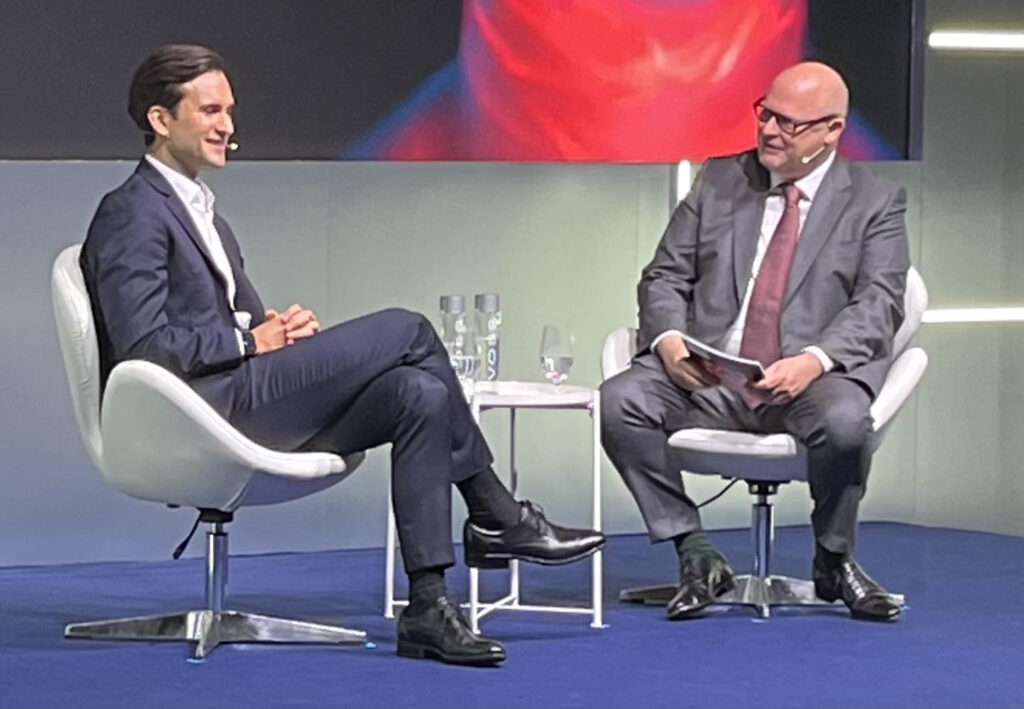
Abia spoke extensively about ecosystem partnerships – a phrase that can often sound abstract until you hear the scale behind it. L’Oréal is now working with travel and digital partners including Agoda, Grab, Meta, Alipay, Ctrip and airlines to engage consumers throughout the travel journey rather than simply at the departure gate.
“The goal is simple: connect with the right consumer at the right time with the right offer,” he explained.
In many ways, this broader ecosystem thinking was the defining theme of the session. Abia repeatedly returned to the idea that travel retail cannot operate in isolation anymore. Brands, airports, airlines, retailers and digital platforms all hold pieces of the same consumer puzzle. The future belongs to those willing to share data, collaborate and create connected experiences.
Asia Pacific, he argued, remains the ideal testing ground.
“Asia is always one of the best laboratories worldwide in terms of innovation,” he said.
It is difficult to disagree. Few regions combine such diverse traveller demographics, rapid digital adoption and competitive retail environments. During the presentation, Abia pointed to the evolving dynamics across Korea, Beijing, Shanghai, Hong Kong and Hainan, alongside the rise of new travelling nationalities such as Indian and Thai consumers.
“We see Indian travellers going to Singapore, Vietnam and Malaysia,” he noted. “We see Thai travellers shopping abroad.”
The implication is significant. Travel retail’s traditional dependence on a relatively narrow Chinese luxury consumer base is giving way to something broader and potentially more resilient. But that opportunity comes with complexity. Different nationalities, spending behaviours and beauty expectations require sharper consumer understanding than ever before.
“The most important thing is understanding the consumer,” Abia said. “I think we have been lagging behind in this regard as an industry.”
If the diagnosis was serious, the examples L’Oréal showcased suggested a company determined to move quickly. Hainan featured prominently throughout the session, unsurprisingly given its strategic importance. Abia described the market as “back after three very challenging years”, highlighting strong double-digit growth and renewed consumer appetite for experience-led retail.
L’Oréal’s recent multi-division activation with China Duty Free Group became a showcase for exactly the type of retail theatre Abia believes the channel now requires. SkinCeuticals treatments, YSL Beauty experiential concepts and Kérastase activations combined physical immersion with technology and entertainment.
And then there was the robot.

A YSL Beauty robot flown in directly from Hainan quickly became one of the talking points of the session – part novelty, part statement of intent. In another context it could have felt gimmicky. Here, it served as a useful symbol of how aggressively beauty brands are now experimenting with AI-driven engagement and experiential storytelling.
Abia referenced several examples already being deployed across the region, including AI skincare diagnostics, personalised beauty recommendations and even a YSL Beauty “AI DJ” capable of creating customised music experiences aligned with the brand’s identity.
“It’s only the beginning,” he said.
What perhaps stood out most was that Abia framed technology not as a replacement for human interaction, but as a tool to deepen it. Beauty, after all, remains an emotional category – the objective is not simply efficiency but creating stronger relationships between brands and travellers.
That recruitment angle surfaced repeatedly throughout the presentation. “We estimate that there will be more than 750 million additional beauty consumers by 2030,” Abia said. “What role will travel retail play in recruiting these new beauty consumers?”
For L’Oréal, the answer appears increasingly tied to discovery. Abia cited examples from Hainan where 40% of SkinCeuticals purchasers were new to the brand, while a YSL Beauty activation delivered a reported 90% conversion rate.
Those numbers help explain why travel retail still matters so deeply to global beauty groups despite wider market volatility. Airports and travel hubs remain one of the few places where affluent international consumers can still be surprised, engaged and converted in real time.
Sustainability also featured prominently in the discussion, with Abia pointing to growing demand for refillable products and revealed that 30% of products sold in L’Oréal duty free stores now offer refill solutions.
“We know that 74% of consumers want sustainable offers,” he said. “It is good for consumers’ wallets and good for the planet.”
By the session’s conclusion, Abia had painted a picture of a travel retail industry simultaneously under pressure and full of possibility. Market structures are shifting. Consumer expectations are evolving rapidly and competition for attention is fiercer than ever.
But the optimism never fades. “We are always ready to bounce back,” he reflected when discussing the industry’s resilience.
That spirit arguably defined the entire presentation. L’Oréal may be talking about AI, data ecosystems and digital engagement, but the underlying message was ultimately human: understand consumers better, inspire them earlier and give them experiences worth travelling for.
In Singapore, at least, the audience appeared convinced.









To subscribe free, please enter your email address: