EPI Group Wines & Champagne’s Cecile Vangelisti Interviewed


After the post-COVID Champagne surge with product on allocation and runaway demand, the category has met a heavier mood: geopolitics, tariffs, and a broader shift in consumer confidence that is all too visible.
Against that backdrop, André de Almeida for TRunblocked.com spoke with Cécile Vangelisti, EPI Group Wines & Champagne GTR and Middle East Director, about how Piper-Heidsieck, Charles Heidsieck and Rare Champagne are being managed as distinct brand universes, why airline premium cabins remain a bright spot, and what sustainability looks like when half of travel retail purchases still lean towards gifting.
André de Almeida (ADA): Cécile, how long have you been at EPI Wines & Champagne division, and how did you get here?
Cécile Vangelisti (CV): I’ve been at Piper-Heidsieck, Charles Heidsieck and Rare Champagne for more than eight years. Before that, after my time at Campari Group and William Grant & Sons, I went back to the beauty industry at Coty. I was then contacted by my ex-MD, Justin Weston, who was at the time setting up their GTR department. We saw each other in Cannes, and after discussions with my current boss, the vision and strategy spoke to me, so I jumped.
ADA: In March 2025 Stéphane Decaux was appointed CEO of Piper-Heidsieck. What immediate impact has that had on strategy?
CV: Yes, Stéphane was appointed CEO of Piper-Heidsieck last year. I work with Stéphane and with the CEOs of the houses. In terms of impact, no massive change yet, he’s discovering the house. Piper has had significant change over the last 10 years: improving the wines, changing the brand image. He has to keep that going.
ADA: How is the champagne category performing, and how is travel retail behaving versus the wider business?
CV: Champagne has been suffering a bit over the last one or two years. Post-COVID, the demand went very high, in fact we had to allocate stock to each single customer. Right now, business is not easy: tariffs in the US, geopolitical crisis, the Middle East situation, Russia-Ukraine war, and even France politically. Fortunately, in travel retail so far business is still positive. 2024 was my record year and although 2025 was less exciting than last year, it was still a good year. Airline business has been strong; business and first class are doing extremely well. This business is tender-based, but we’ve developed a healthy long-term relationship with Singapore Airlines, Qatar Airways, and others. Airport retail business is also doing well, albeit less positive than last year but still fine.
ADA: Do your strongest travel retail markets mirror domestic strongholds?
CV: Not always. The US is the first market for champagne globally, but we have a very limited amount of business in the US duty free. It’s not the most premium environment for duty free, the way in which retailers tend to tackle champagne like spirits, and it does not work because we don’t have the same margin as whisky or gin. So far, we have not found our way there. Champagne is very much centred around EMEA: it’s a French category after all, with business mainly coming from the Middle East, a bit of Asia, and the UK. However, we still benefit from the strength of the domestic market presence, for sure.
ADA: You manage three houses with very different positions. How do you avoid cannibalisation?
CV: We have two houses with the same family name (Piper-Heidsieck and Charles Heidsieck), which can be a strength but also a potential issue. However, the two brands are totally different, with distinct brand universes and identity styles. Piper is a very international house, known pretty much everywhere. It has this vibrant red colour, very distinctive. Piper is about innovation, NPD, disruption, audacity – breaking the rules of champagne, shaking a traditional world, recruiting millennials.
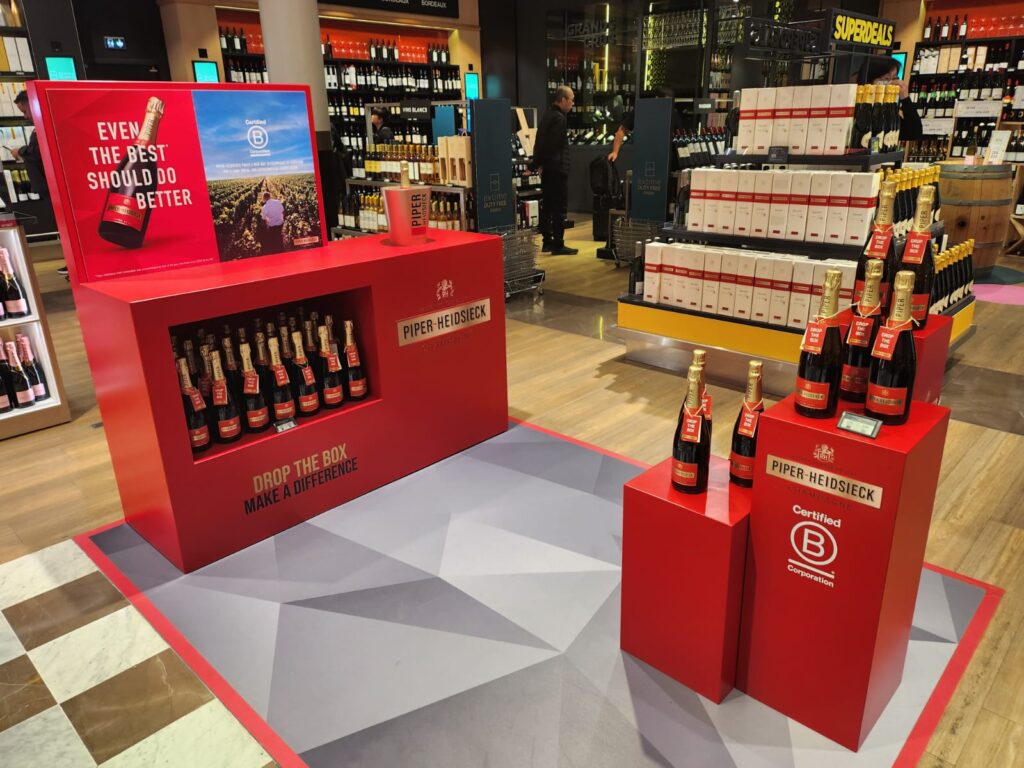
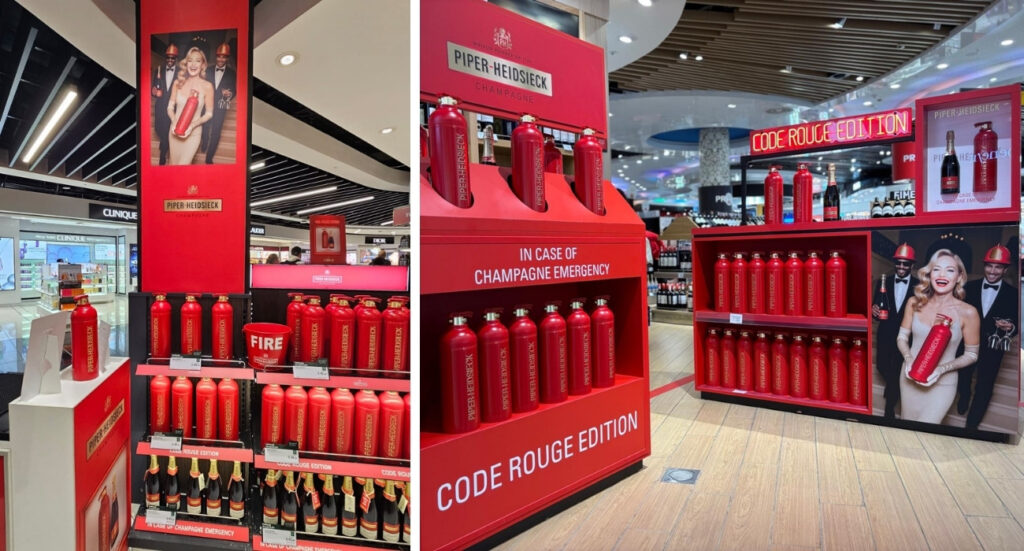
Piper has previously collaborated with Jean-Paul Gaultier, Christian Louboutin, so the brand has been very edgy. Charles on the other hand is much more niche, more of a classic premium champagne: it appeals to wine geeks, experts, connoisseurs. I work with fewer operators on Charles because it’s extremely well known in F&B, but less so to the wider public. Price matters, too: Piper’s entry price is around €35–38 whilst Charles’ entry price is higher around €50–55. In-store, if I have both, I don’t want them too close to each other because of the family name: Piper with the mainstream brands, Charles on the high-end section, and that way there is no cannibalisation.
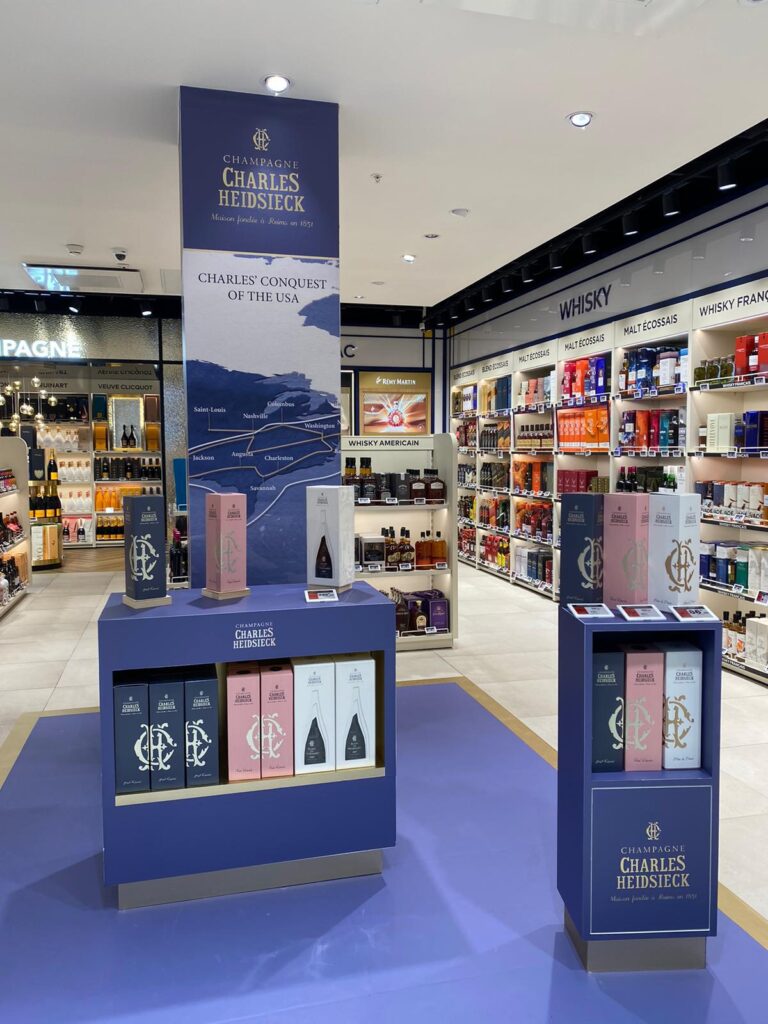 ADA: And Rare Champagne, where is it positioned?
CV: Rare was historically Piper’s Prestige Cuvée and became a standalone house more than six years ago. The bottle is totally different; the style is just extraordinary with a majority of Chardonnay and Pinot Noir grape varieties used. Rare is mainly Grand Cru and Premier Cru with a price positioning above €200. We believe consumers spending at that level would not want to be associated with Piper’s red label mainstream image, so we separated them. Rare has fantastic airline listings: Singapore Airlines First, Air France La Première, Cathay Pacific First, Korean Air. Rare sits around €230–250, similar to Charles Heidsieck’ Blanc des Millénaires, which is the Prestige Cuvée.
ADA: So, what are you seeing in terms of traveller preferences: styles, formats, gift pack innovations?
CV: Twin packs are a must in the champagne category, with two bottles minus a 10% discount. It’s a convenient, value for money proposition and it increases the average consumer spend. Twin packs are performing extremely well, especially on Piper. Also, NPDs, limited editions, exclusives are extremely important: you need to attract the passenger’s attention and convert it into sales. Either you fight on price – which we want to avoid – or you bring something new and different to attract them.
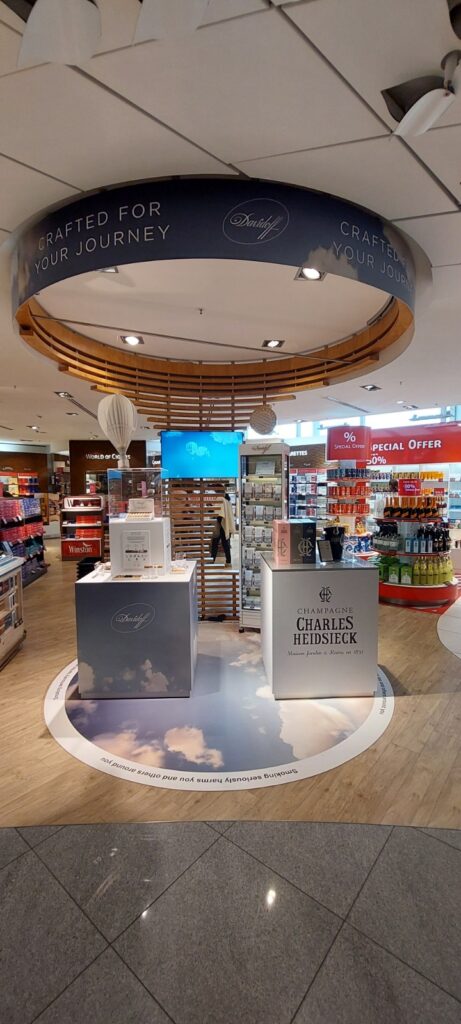
For Charles, we still need to focus on developing the brand equity and awareness first, so passengers know about the quality of the wine. Although these two houses are usually kept apart in the retail fixture, I’m testing having HPP promotional space where both Piper and Charles Heidsieck are present, to be more efficient with promotional spend, and because more diversity is better for promoters – if someone doesn’t want Piper’s style, we have Charles, and vice versa. I also started a cross-category promotion between Davidoff Cigars and Charles Heidsieck.
ADA: How are premium and prestige price points behaving right now in your markets, especially in the Middle East and Asia (in comparison to Europe)?
CV: Prestige Cuvées are suffering at the moment. People are being more cautious although this is hopefully just a cycle. The Middle East for example, is also affected by geopolitics, where consumers want less visible celebrations. This is driving the trend of trading down within the category. People are still spending whilst travelling but are more cautious on the product spend which affects premium and prestige products disproportionally. However, experience matters and how you develop the proposition beyond the physical product can help develop moments that you can’t simply find online to justify the higher spend.
ADA: And your philosophy on travel retail exclusives and limited editions?
CV: The GTR channel is strategic for us as a company, and most of the time we are the first in the company to drive a new gift pack or limited edition on a time exclusive basis. Typically, when our marketing team shares a new concept, I will sponsor it and open doors internally.
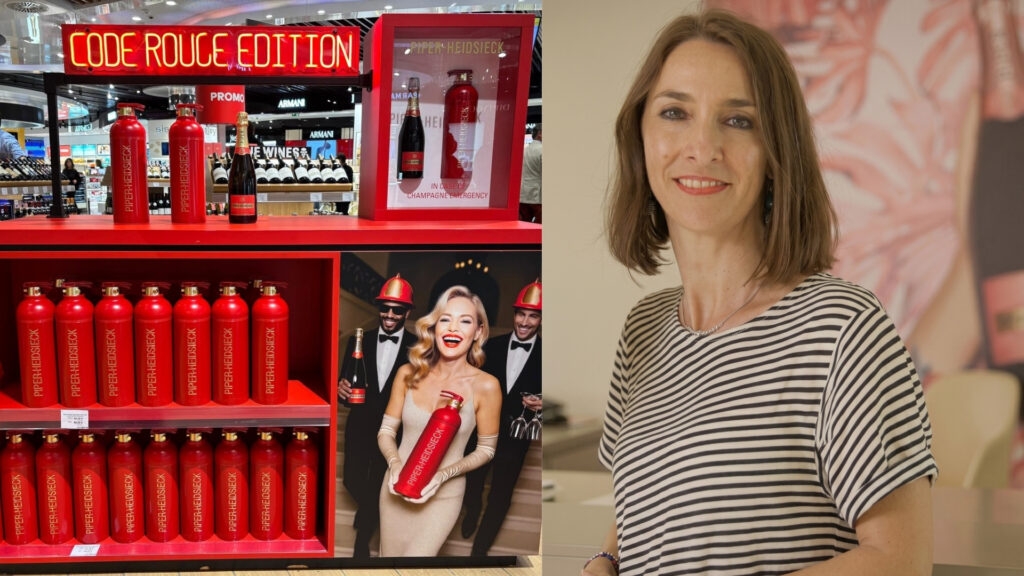
As an example, a few years ago, we launched the Piper Lipstick concept, which initially nobody thought it would work. I pushed it internally and we agreed on a cross-category launch with Lancôme and Heinemann and it was a huge success. More recently, the Piper Code Rouge limited edition was launched at Brussels Airport, followed by a HPP at Gatwick South, London Heathrow T3, and Singapore Changi and it has been another successful launch.
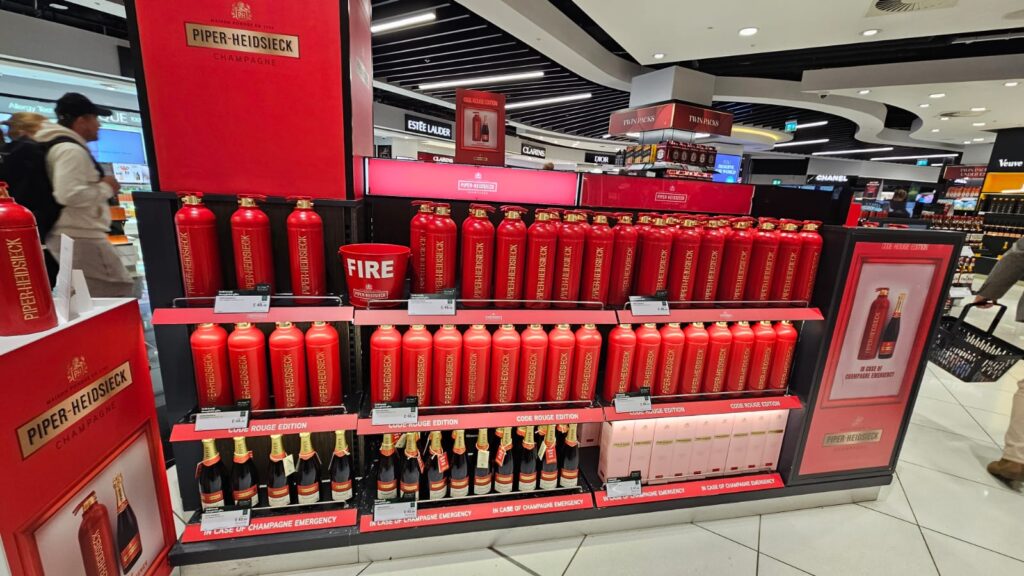
There are two champagne houses being innovative, Veuve Clicquot and Piper-Heidsieck. Veuve has always produced different and amazing packs. We are two houses bringing lots of innovation to a very traditional category in champagne.
ADA: Moving on, sustainability is increasingly central. What are your concrete priorities?
CV: We became the first Champagne Houses to become B Corp certified four years ago (2022). We’ve renewed it, improving the score by around 12% – which is demanding – but creates a positive impact.
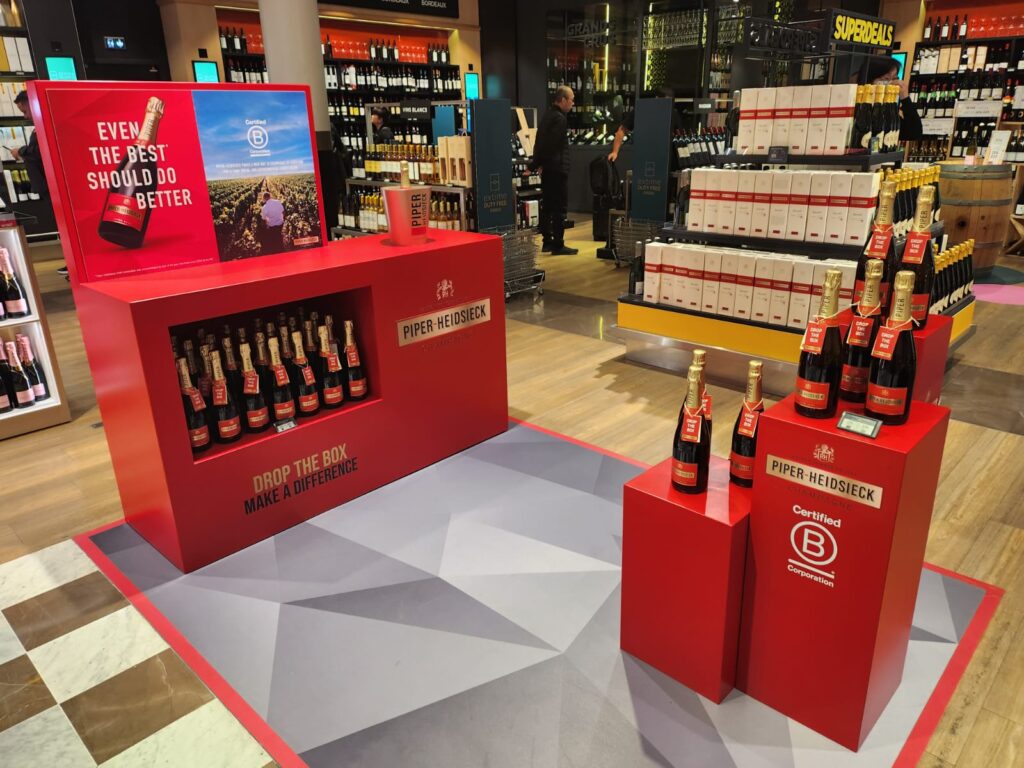
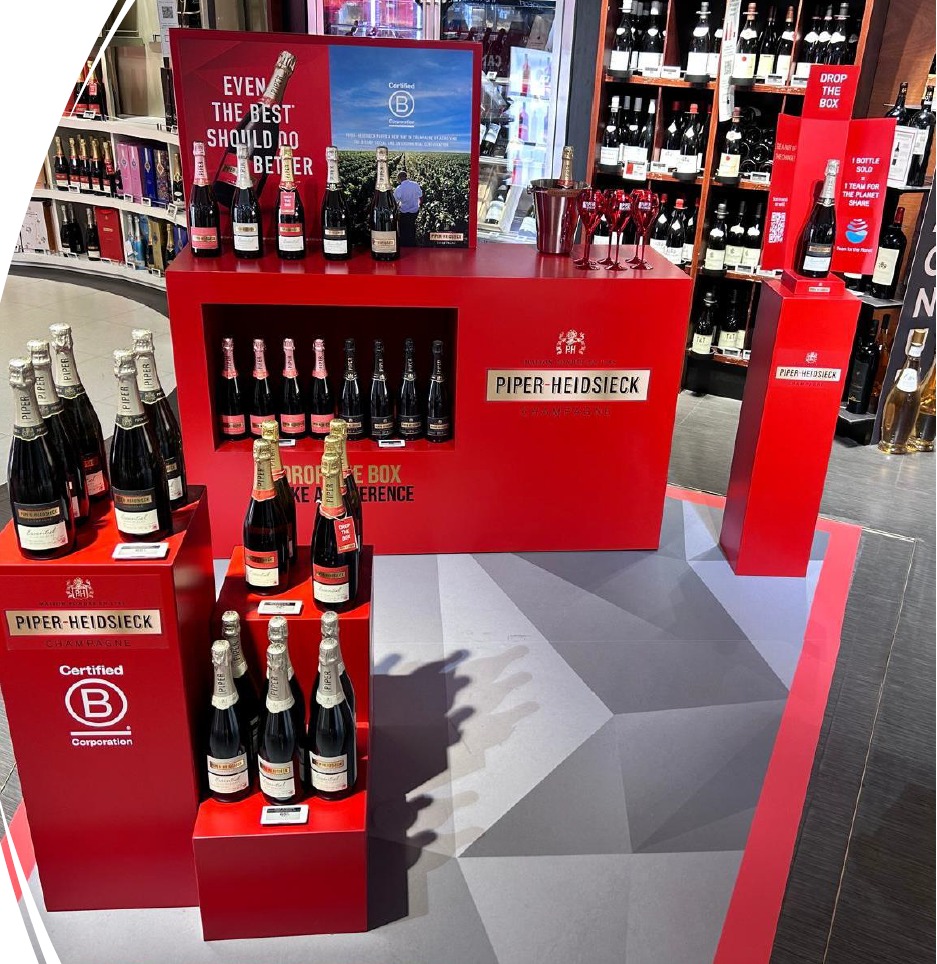
Sustainability for us includes the environment, but also social and society through diversity, inclusion – it is part of our day-to-day strategy. One such example is our “Drop the box. Make a difference” campaign – even though the travel retail channel is full of gift boxes, which most people will often throw away after purchase. Understandably, nearly half of travel retail purchases are gifting related, so the gift box is the perfect gift, and it avoids breakage.
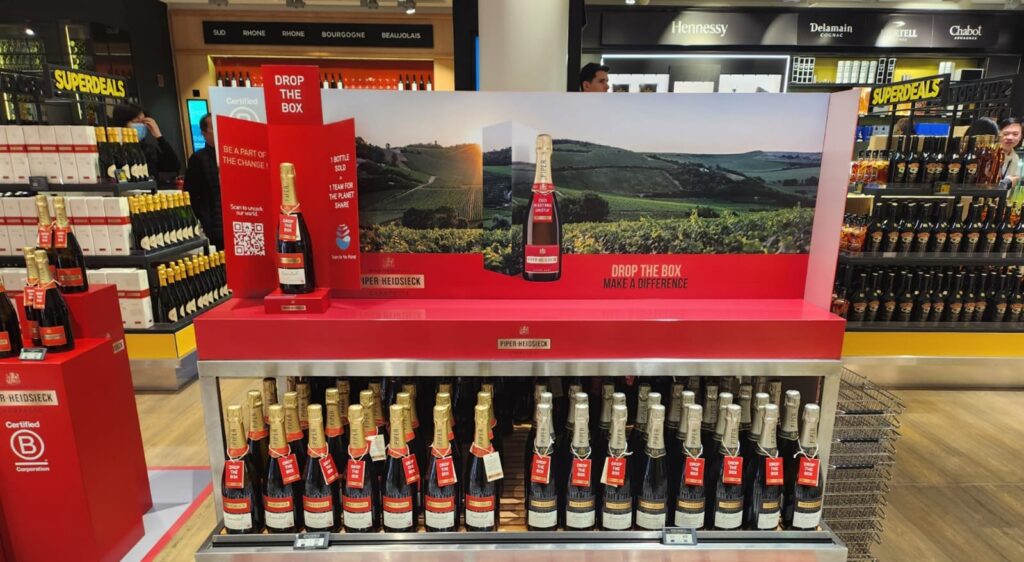
Our approach was to drop the gift box, put a neck tag, and donate the cost of the gift box to charity to make a positive contribution. People understood this message but still told us that if the purchase is for gifting, they want the gift box. This kind of change will take time and education. Ideally, the champagne category needs one voice with retailers and airport authorities included.


To subscribe free, please enter your email address: