


Luxury Travel Retail Has a Desire Problem. The Next Generation Is About to Make It Permanent. By: Alessandra Marinucci.


CVR has dropped from 23% to 12%. The industry is reading this as an economic problem. It isn’t. Read more here on why in an excellent op-ed by Alessandra Marinucci, Founder, LussoSphere and Former Retail Director, Versace & Valentino
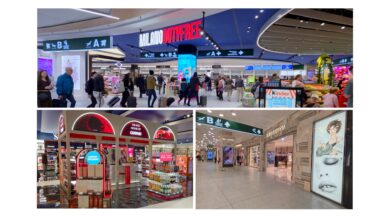
Walk through the luxury corridor at Heathrow T5. Then Changi. Then CDG. Then Dubai. The brand mix will feel strikingly familiar, with globally recognisable names repeated across terminals. The windows will follow the same campaign cadence, and the service will have been trained from the same playbook.
The result is that very little feels shaped by the specific context of that airport, that traveller, that moment. And that is the challenge.
“The traveller hasn’t lost interest in luxury. They’ve lost interest in that version of it, the version that looks identical in every terminal they’ve ever passed through.”
Conversion rates in luxury travel retail have significantly dropped over the same period that the offer has become most standardised. That compression is not a traffic problem; these are among the highest footfall retail environments on earth. It is a desire problem. And desire, unlike footfall, cannot be solved by opening another door.
Travel retail should be the strongest channel luxury has. The customer is emotionally displaced, between time zones, between obligations, briefly freed from ordinary identity. That is exactly the psychological state in which desire is most open. An airport is not a distraction from the sale. It is the best possible setup for one.
But that advantage only activates when the offer feels specific. When it feels like it was designed for this terminal, this traveller, this moment, not rolled out to all of them simultaneously.
The barrier is structural. Operators optimise for proven names and guaranteed footfall. Brands optimise for consistency and brand safety. Both are rational decisions at the individual level. Together they produce an environment perfectly optimised for invisibility.
Having spent two decades in luxury retail, I’ve developed a lens through which I see the gap between what the boardroom decides and what actually happens at the point of sale. That gap, between strategy and execution, is where the good ideas die. The store manager at a travel retail concession who could have responded to the specific profile of passengers on a Tuesday morning, the route, the nationality, the spend behaviour, but didn’t. Not for lack of instinct. Because the system didn’t give him the room.
The industry is watching the CVR numbers and reaching for economic explanations. Financial caution among higher income travellers. Corporate travel softening. Post-pandemic normalisation.
These are real. They are not the cause.
The more consequential shift is generational. Millennials and Gen Z now represent the majority of travellers moving through those terminals and Gen Z alone jumped from 8% to 14% of travellers in a single holiday season. This generation does not organise its relationship with luxury around brand hierarchy. It organises it around experience specificity, around the feeling that what is in front of them was selected with knowledge of who they are and what this moment calls for.
They are not less interested in luxury. They are interested in a different architecture.
For the previous generation, a renowned luxury brand fascia in a terminal was a signal, of quality, of status, of access. For the generation now dominant in that terminal, the fascia is
the beginning of the question, not the answer to it. What matters is what happens when they step inside. Whether the space, the product, the conversation feels like it belongs to this place, or was simply installed in it.
Travel retail, almost entirely, was built for the generation that came before. The model, proven names, global windows, consistent toolkits, was designed for a traveller whose primary desire signal was brand recognition. That traveller is now the minority in the terminal.
And there is a further dimension the industry has not yet fully absorbed. Generative AI use in trip planning tripled between 2023 and 2025, led by millennials. A traveller who has already built their itinerary, researched their destination, and formed their shopping intent through an AI tool before they reach the terminal is not waiting to be inspired by a fascia. The discovery moment has already happened elsewhere. The airport has to earn a second look.
Introducing brands that don’t exist in every airport simultaneously would help and the logic is more precise than curation for its own sake. A Loro Piana in travel retail carries a specific signal: permanence, restraint, material intelligence. It tells a certain traveller that someone in this building understands what they value. A Brunello Cucinelli does something similar but differently, it brings an almost philosophical proposition into a channel that has little of it.
In fragrance, a house like Santa Maria Novella, a Florentine apothecary founded in 1612, with a provenance story that no marketing budget can manufacture, offers the traveller something they cannot access anywhere else in that building. In fashion, brands such as Röhe or Auralee, which have built deliberate, almost invisible distribution precisely because ubiquity would destroy what makes them desirable, carry exactly the same signal: someone in this terminal knew something most airports don’t. That is desire architecture. It is also, not coincidentally, the architecture this generation responds to most acutely.
But new names alone won’t fix it. The deeper lever is giving the people inside those stores the tools, the data and the
permission to behave like they know who is walking towards them. Route specific clienteling. Nationality informed product weighting. VIC recognition that actually functions across channels. These are not new ideas. They are consistently killed between the strategy deck and the concession floor and they are precisely the capabilities that matter most to a traveller who expects to be seen as an individual, not processed as a passenger.
The industry has time to respond. But not as much as the CVR numbers alone suggest.
Economic caution is cyclical. Generational value shifts are not. The traveller now forming their relationship with luxury, deciding what it means, what it feels like, what makes it worth stopping for, is doing so in terminals that are not built to answer their question.
When the economic cycle turns, the desire problem will still be there. Larger, more structural and harder to reverse. The conversion rate recovers when desire does. And desire, for the generation now dominant in that terminal, requires one thing above all: the feeling that this moment was considered. That the offer in front of them reflects knowledge of who they are, not just confidence in the name above the door.
Alessandra Marinucci is the founder of LussoSphere, a Brand and Organisational Advisory working with independent luxury and premium brands on the architecture between strategy and execution. She previously held director level roles at Versace (Capri Group) and Valentino (Mayhoola Group), overseeing multi market retail operations across Europe.












To subscribe free, please enter your email address: