Quintessential Brands Group Oliver Storrie Interviewed


Over the past eight years, the Quintessential Brands Group GTR business has shifted from “almost nothing” to a meaningful share of its strategic portfolio mix -powered by Gin, anchored by Irish cream, and increasingly supported by Irish whiskey and selected 3rd party additions. At TFWA Cannes 2025, Oliver Storrie spoke candidly to André de Almeida about category cycles, regional realities, the role of celebrity-led propositions, and why collaboration with retailers is becoming non-negotiable for premium innovation.
Andre de Almeida (ADA): Oliver, how long have you been at Quintessential Brands (QB), and how new is your current GTR role?
Oliver Storrie (OS): The role is fairly new, but I’ve been at the company for eight years. When I first came into GTR, we had two listings – Greenall’s gin on Silversea cruise line, and Brogan’s Irish cream with Heinemann. The QB presence in the channel has developed a lot since that period.
ADA: How significant is travel retail in your revenue mix today?
OS: As I mentioned, initially it was non-existent if we exclude the revenue generated from own label and private label business, which is transactional. But for our strategic brands – the ones we focus on in travel retail – we’re about 25 – 30% of that branded mix now.
ADA: Which brands are driving that branded travel retail contribution?
OS: Gin has always been the front-runner with brands such as Opihr, Bloom and Greenall’s. In fact, Greenall’s gin has had a resurgence in the last 12–18 months. Irish cream is also very large for us. We’re the largest independent producers of Irish cream: Feeney’s and Brogan’s are two and three in travel retail by volume. Brogan’s main business is within cruise line pouring whilst Feeney’s is listed across European airports and border stores.


ADA: Has the mix shifted by brand or region?
OS: Irish whiskey is now playing a major role. We’re seeing growth from Europe across countries such as Germany, Poland, Czech Republic and into Eastern Europe so Irish whiskey trends are picking up. The market is dominated by Jameson’s, but growth in the category is coming from newer brands with The Dubliner probably being the main pillar. Regionally, the UK used to be our bread and butter and now the UK and Europe are evenly split about 50:50 in volume.
 Last year we got traction in Asia with airport and border store business, although Asia can be challenging. And we’ve always had good business in Australia as we have a distribution company there and that is led by Alizé, then a mix of Gin and Irish whiskey from our portfolio.
ADA: Does travel retail mainly drive revenue, margin, or both?
OS: Both. QB was set up by entrepreneurs, and they look at the bottom line. We flexed slightly because travel retail is the shop window, but we still want launches to be profit generating. We don’t really drive loss leaders. There may be tactical listings where above-the-line is too important and we’ll work to break even, but those are few and far between.
ADA: Category opportunities: where do you see the biggest upside?
OS: Vodka has had a resurgence, maybe 18 months ago I noticed it coming back. We’re part brand owner of Jo Vodka which we launched in GTR with Avolta and we’ve taken on a couple of brands. Tequila and rum are the ones that usually flatter to deceive. Operators think that this time it’ll happen, allocate loads of space for those categories, pull back on gin, and then it never really explodes. Rum does play a part and tequila also, but globally they don’t quite break through, only regionally.
ADA: Are 3rd party brands part of your portfolio gap-filling strategy?
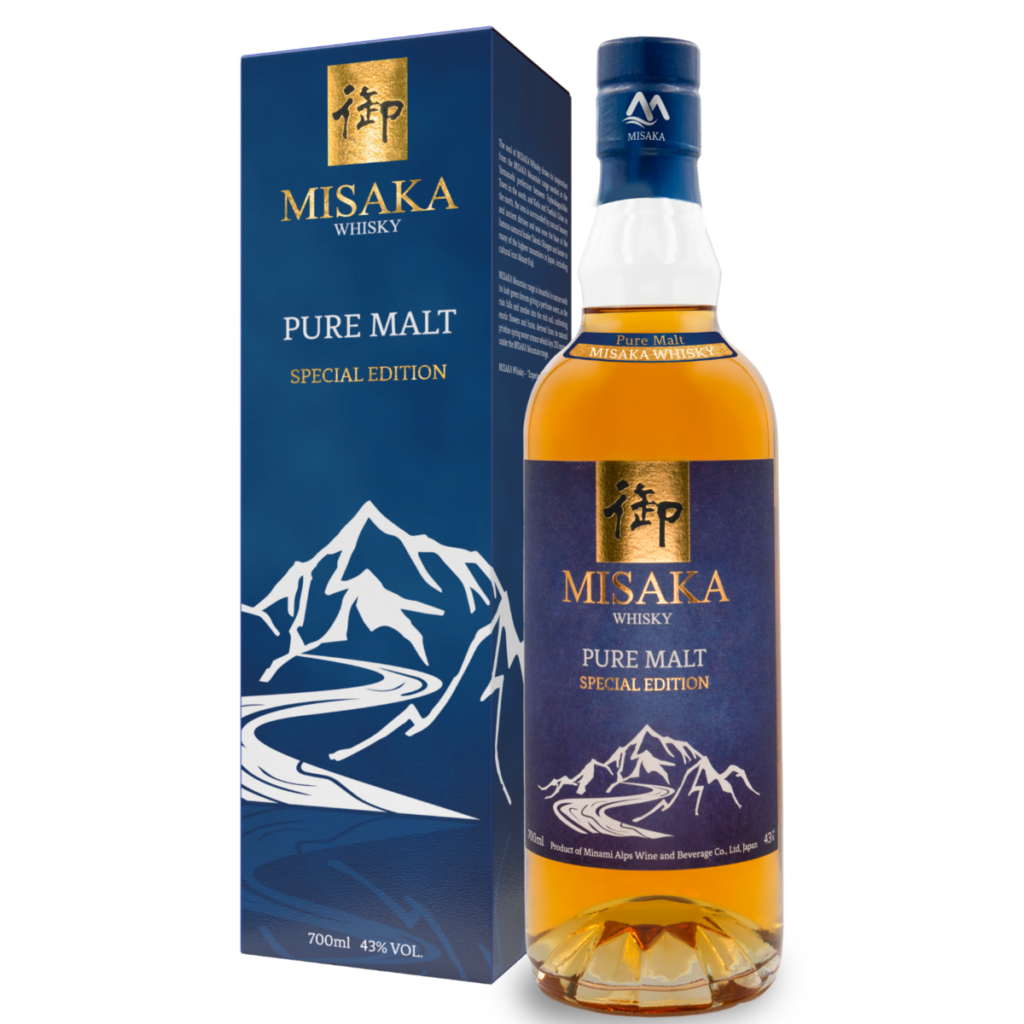
OS: Definitely. The Japanese whisky category has big growth and a small base. The MISAKA Whisky aged for 12 years in Mizunara cask is excellent, but I think we’re still two to three years away from real traction outside the major Japanese whisky players. Saying that, we’ve listed the MISAKA in the Nordics with inflight recently; the Nordics are ahead of the curve on brown spirits and discovery of new whisky products.


ADA: Gin in Asia is often described as small but a growth engine. How are you approaching that region?
OS: We work with Global Drinks Limited as our Asian distributor. But Asia is not one and the same across the continent, Thailand is different to Singapore, to Hong Kong, to China. We’ve seen Western brands becoming more popular. Gin’s flavour profile helps in that market. We led with Opihr gin, and it’s worked. We now focus on Greenall’s gin and Opihr gin and we’ve had success in Thailand and Hong Kong airports, but our most sustainable volume is from border stores around Malaysia.
ADA: You sounded cautious on Asia overall, why?
OS: Travel retail in Asia is struggling. Consumers are very digital led, checking prices instantly and often more so than the retailers. That mismatch matters: if your retail price is wrong, it is a missed sale. We need to get to a more fluid system, with more dynamic pricing, but I don’t know if operators are ready to deliver that yet.
ADA: What about Latin America?
OS: Big focus. We’re seeing gin take off in Argentina, Brazil, Colombia, Chile, like gin took off in the UK and Europe eight years ago. It’ll be a major focus for us in the next 12 months.
ADA: How do you balance heritage with innovation in what you push?
OS: Travel retail should be the first go-to for new brands. We’ve also got heritage, since 1761 with the world’s first London dry gin at Greenall’s, the oldest London dry distillery, so we don’t need a heritage kiosk. But we must keep our gin portfolio – Greenall’s, Opihr, Bloom – fresh and relevant. On Greenall’s gin for example, we created a Distillers Cup version, portable, with a jigger on-pack, offering something different for the passenger.

ADA: Celebrity-led propositions can be polarising. What’s your view?
OS: Two things matter: the product must be as good as possible (the liquid, packaging, the full proposition) and the celebrity must be front and centre. Consumers see through names only. As an example, we had Jo Malone CBE at Gatwick South Airport doing masterclasses all day, and the feedback received from the airport and retailer was superb. She understands that you have to be present to drive the brand forward.
ADA: Any exclusives or activations you’re using to stand out, especially given pricing challenges?
OS: The UK is out of sync on pricing versus the rest of the world due to Brexit, and that is challenging. Retailers want premium products at standard prices; it can become a race to the bottom. We’re working on an exclusive Dublin Liberties Irish whiskey cask range for an airport operator right now. The collaboration with the operator, their ops staff, even brand ambassadors on the shop floor helps us in choosing which cask finishes will be selected. That’s where premium needs to go, being co-created, with early buy-in and ownership from all involved rather than just another quirky product, with high price as the consumer is savvy and will see through it when walking through the store.
ADA: Bloom gin has also been refreshed, what changed?
OS: Bloom gin needed an update and our Master Distiller Joanne Moore came back with the perfect alcohol strength (ABV) to best deliver flavour and balance the gin. A new, beautiful bottle, more premium, and it’s just been launched with Heinemann.
ADA: Finally, sustainability – just how central is it?
OS: It’s core for the business, especially at G&J, which is most of our production. We’re on 100% wind energy electricity, no landfill, no single-use plastics. We launched Greenall’s gin in a paper bottle, but we felt we needed the plants to be sustainable first.


To subscribe free, please enter your email address: