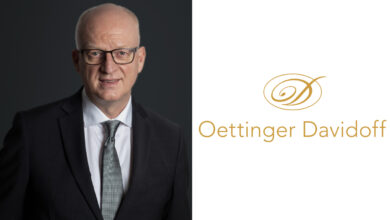


L’Oréal Travel Retail: Leading The Beauty Industry With First-Mover Advantage. Baptiste Beau, GM, L’Oréal Luxe – Travel Retail Worldwide, Interviewed


My annual interview with Baptiste Beau, General Manager, L’Oréal Luxe – Travel Retail Worldwide, is always one of the year’s highlights on TRunblocked.com. And this year is no exception. Whether it is the pentarchy, pop-ups, fragrances, cosmetics, haircare, business acquisitions – more or less anything that moves in Beauty in Travel Retail – L’Oréal continues to set the industry’s pace.
In spite of its size, the spirit of innovation and reinvention within the company is a constant as it stretches its lead away from competitors. Baptiste is a great ambassador and the passion he shows for the business is an example for us all. And it’s all wrapped up in another exceptional interview, with images to match.
Peter Marshall (PM): Hello, Baptiste, how good it is to see you again.
Baptiste Beau (BB): I’m very honored to again have the pleasure to discuss travel retail with you.
PM: Now I know there are many things close to your heart, but I want to start with something that actually is real and is being showcased around the world. As the industry discusses moving beyond the Trinity model – and I think we are moving beyond that now – how do you actually operationalize the pentarchy of stakeholders you’ve championed to actually deliver a seamless value creating journey for today’s traveller?
BB: Thanks for the question. If I remember well, the question echoes our discussion last year and the question is: how are we moving forward on this topic? I think that today the future of travel retail is bright. We’ve got amazing KPIs showing that travel and travellers are still growing a lot. And, at the same time, beauty is always very interesting in terms of the number of additional purchasers. For, you know, by 2030 we will have around 750 million additional beauty buyers!
But all this is related to the one vision that we discussed last year, which is how can we be sure that we can reinvent the experience in an airport? And for that what we call the pentarchy is how we can join forces to have all the stakeholders from airports to airlines, to retailers, to brands and even the Digital ecosystem in the same vision – to show to the world that we can bring together more value.
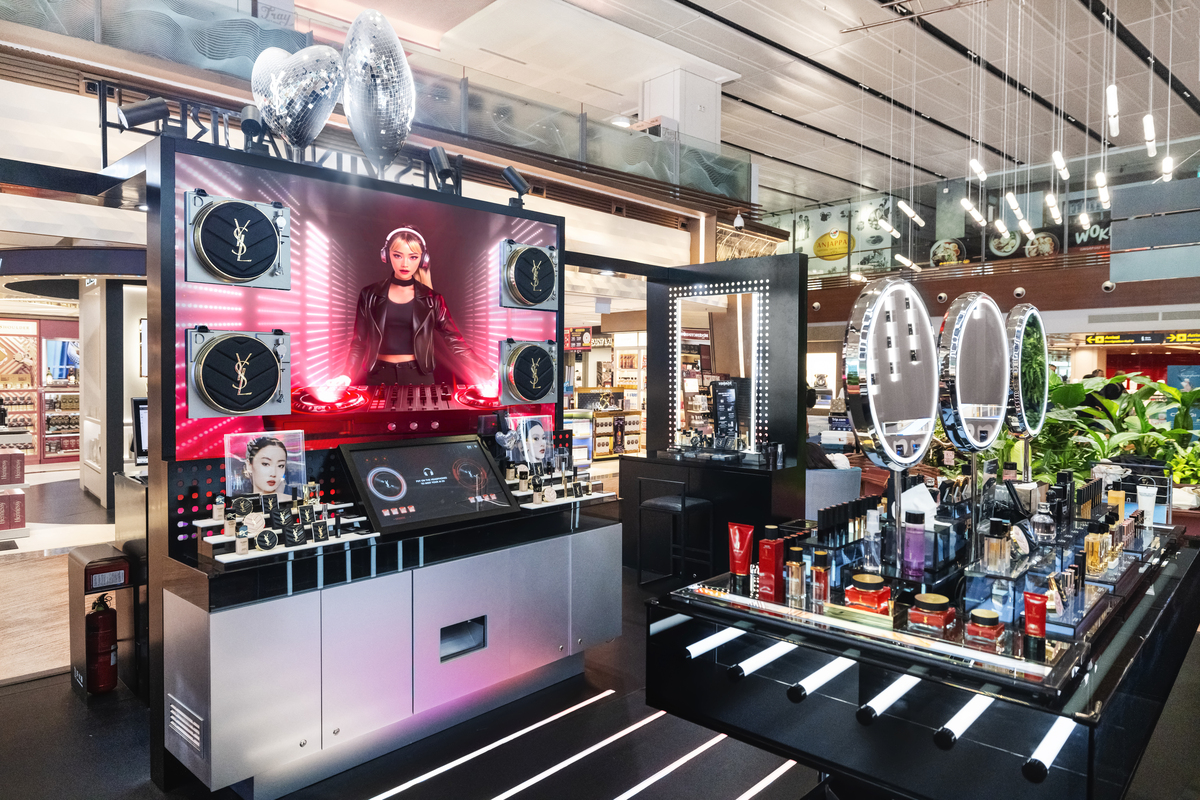
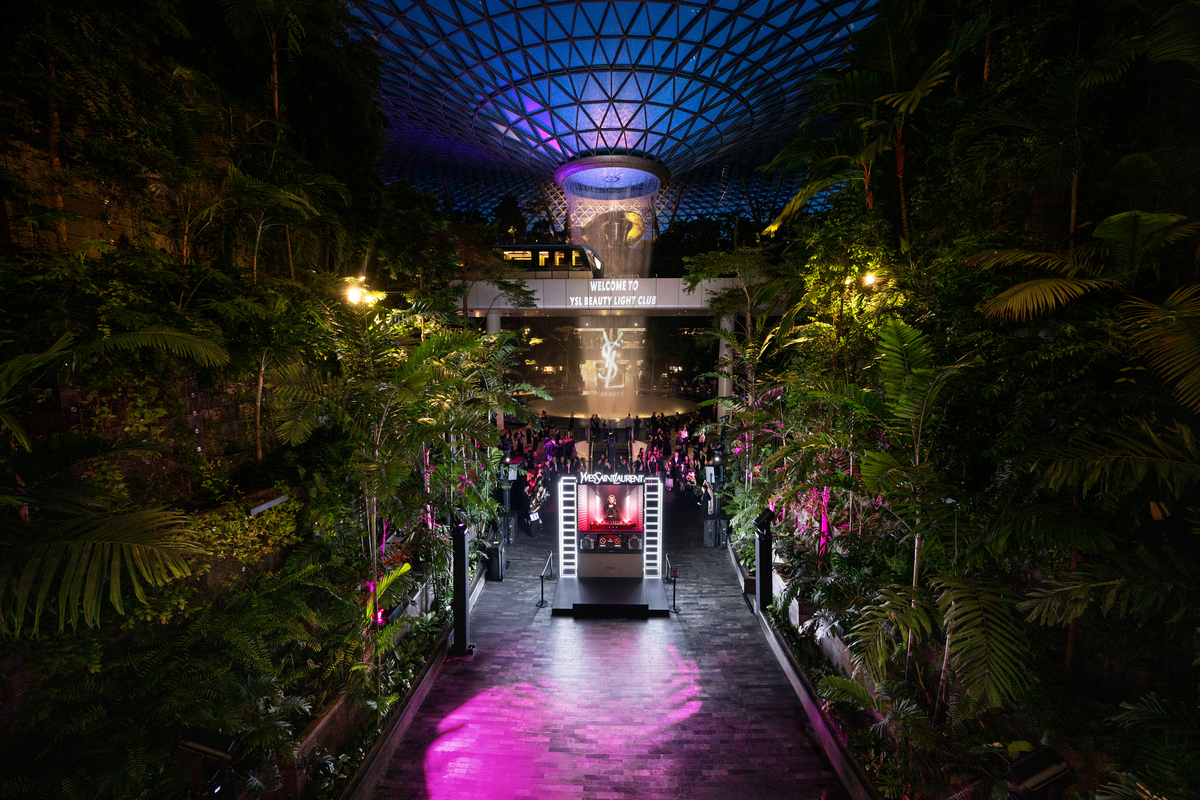
So we started last year with some test and learn projects. And I’m very, very happy to tell you that we have since then scaled this project. And I would like to give you two examples. The first one is the Beauty Light Club activation that we did in Changi Airport in Singapore, but also in Buenos Aires to show you that this can cross different continents, with the same approach and the capacity to embark on this journey. All the stakeholders are involved at the end, and this delivered great added value with great incremental sales.
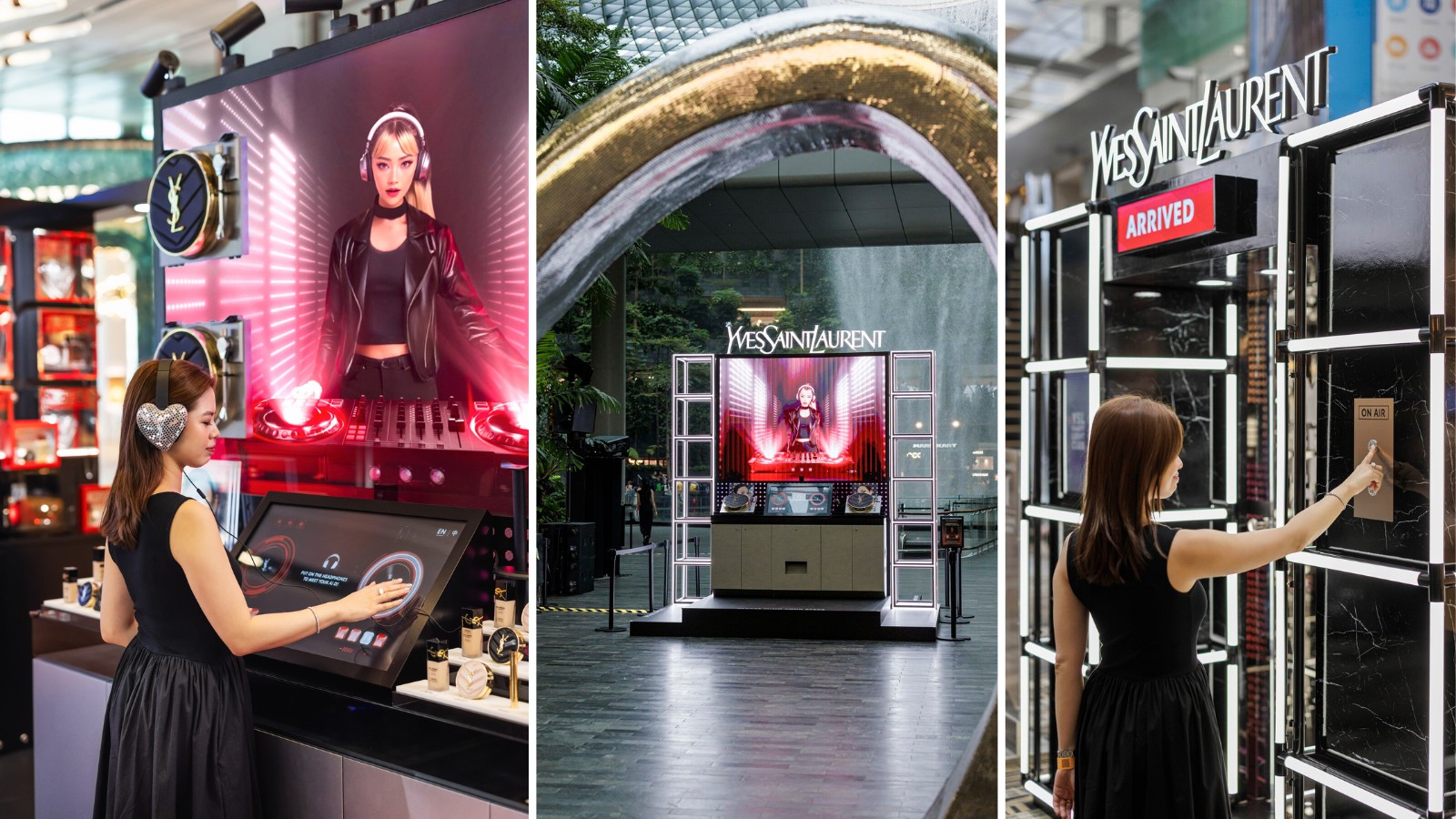
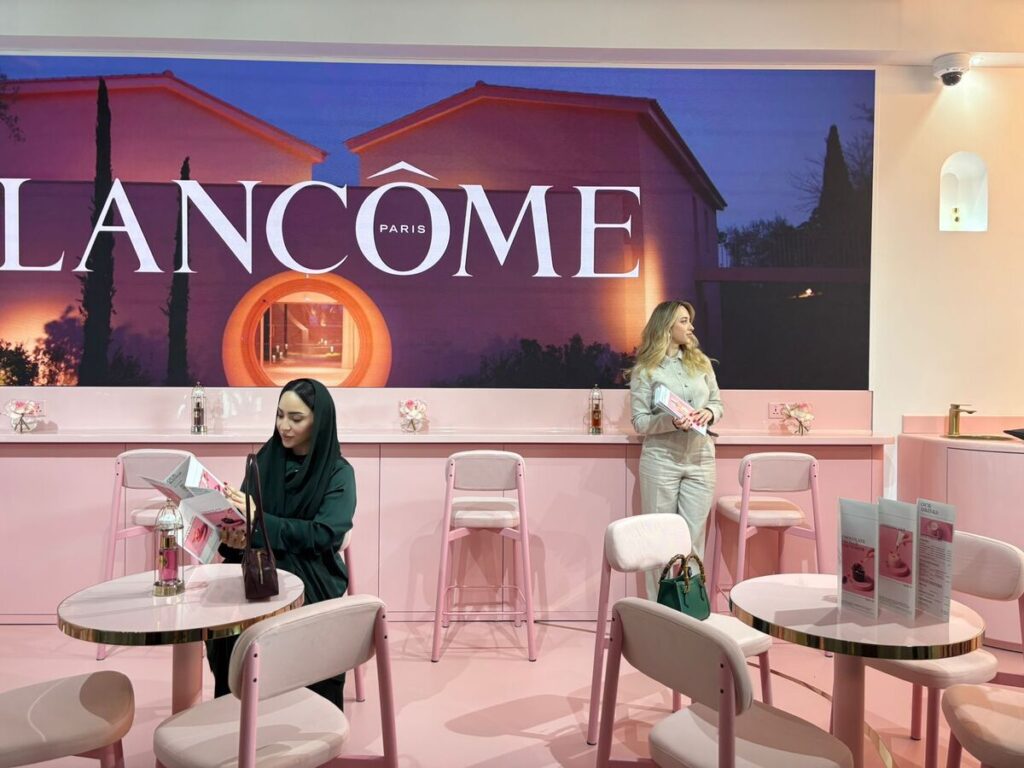
I have another example that is interesting. Last year we talked about Doha with a YSL activation. This year we have just launched another great partnership of Qatar Duty Free and Qatar Airlines. This is Le Café de la Rose in Doha.
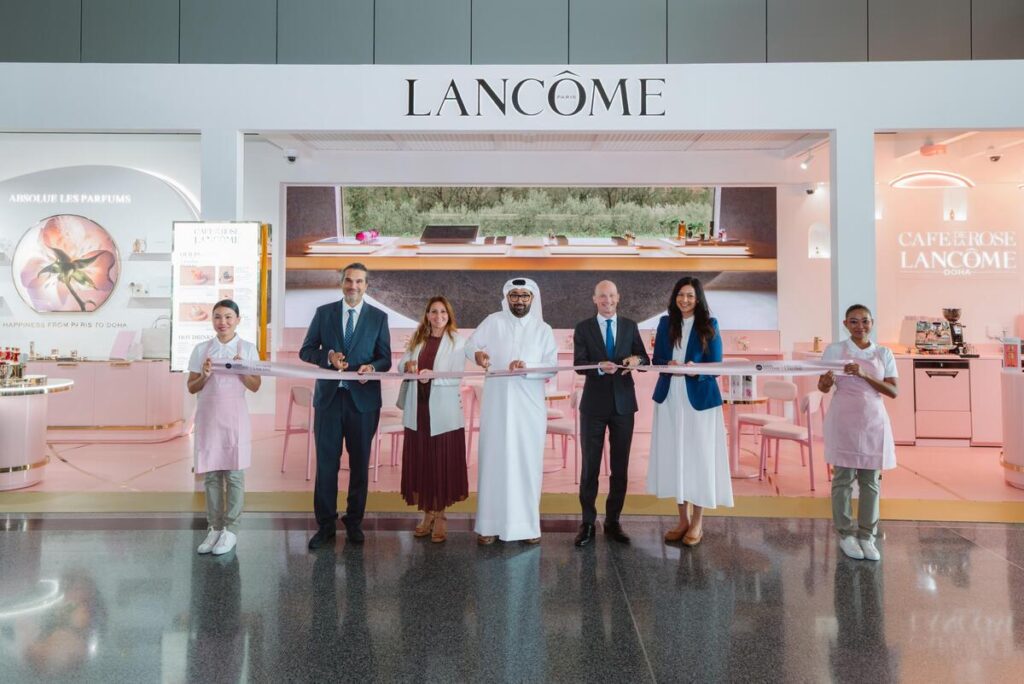
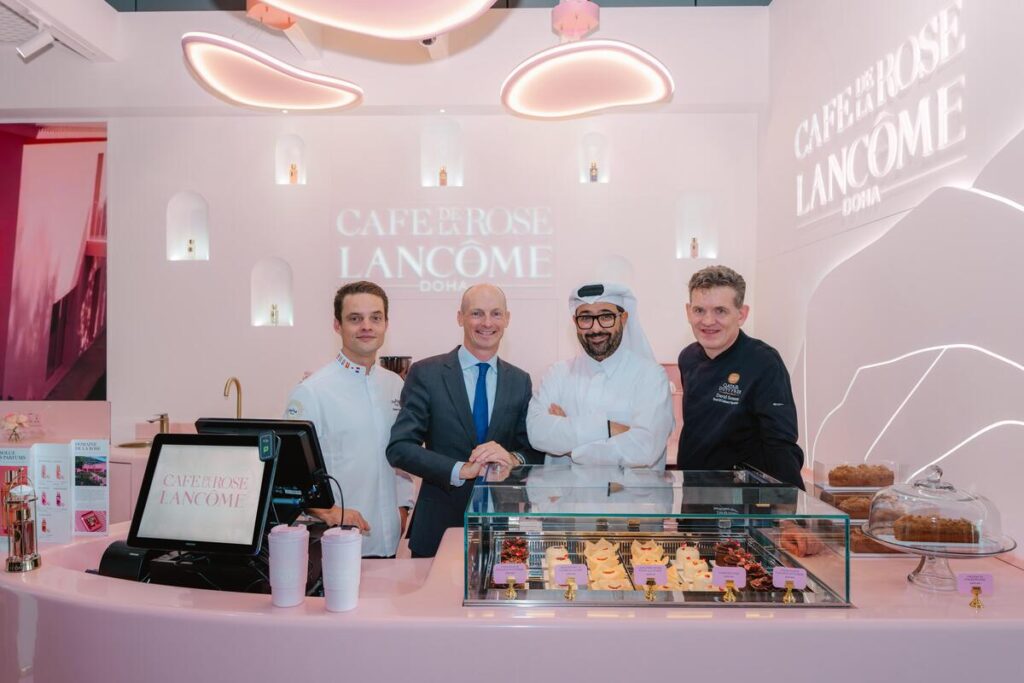
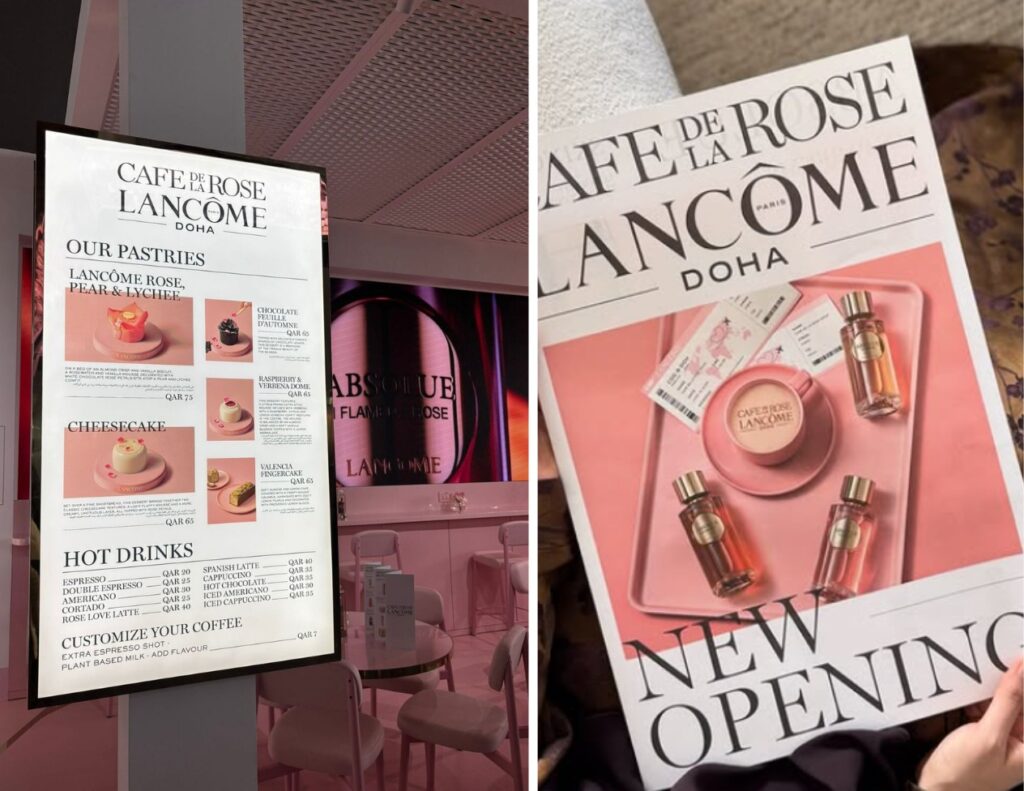
PM: That really is a major step change for you. It is completely out of – can I say it – your comfort zone in terms of what you’re trying to do.
BB: Yes, because it relies on something that is important to me. We consider that it’s our duty to re-enchant the customer experience in the point of sale, what we call the Entertainment Destination. Are we right to do so? Yes, because it’s important to be sure that despite the dwell time that is decreasing, we need to find a way to capture the traveller’s attention at the end.
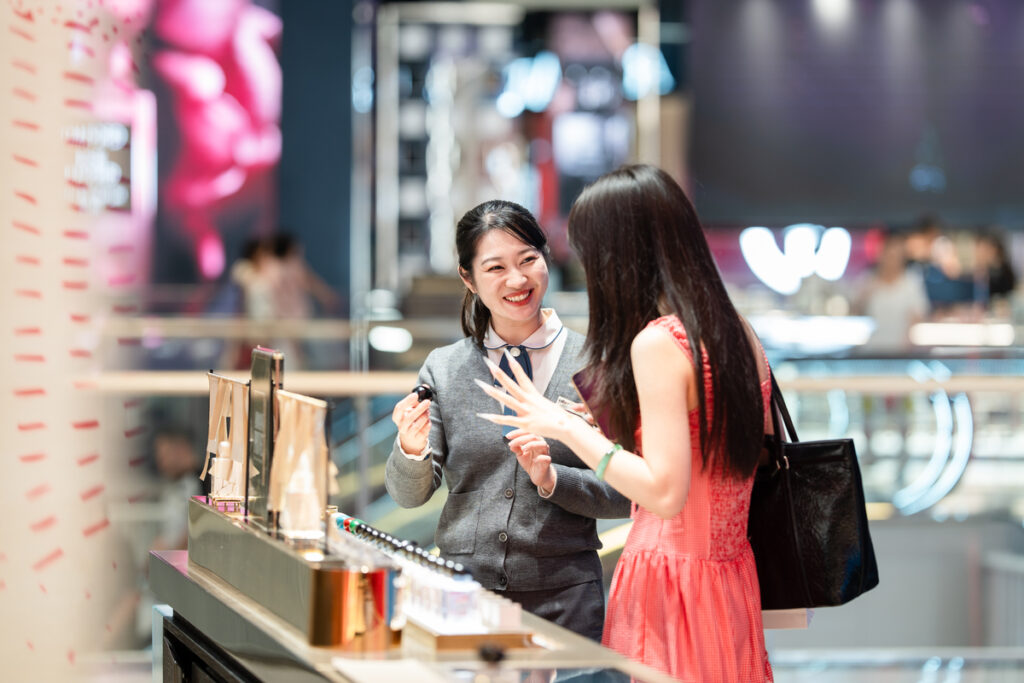
I used to say my number one competitor is the smartphone that every traveler has in their hands. The minutes where I’m able to go from screen mode to feel mode, I am doing my job. Because it’s all about emotional connections.
For that very reason we have decided to go outside our comfort zone based on three principles. The first is innovation – coming with something surprising and new. The second is differentiation – because it’s important for me to be sure that what we’re going to propose is quite unique in the airport industry. And third, it’s the global lens experience.
Because we need to go beyond just a transaction. And for that we decided to bring on the table not only the best of skincare and fragrance for Lancome with their high end approach, but also partnering with Lenôtre Haute Patisserie from France – just to be sure that we can propose an exquisite experience at the point of sale. As I said, this Cafe is live now. and it’s the epitome of what we should be doing in the coming years with Travel Retail.
PM: It’s interesting, because some major houses – Armani and Louis Vuitton to name just two – have created similar models as well. I don’t know how successful they are. Certainly your partnership with Lenôtre is a very smart move.
Now when we go back to the pentarchy, and as you well know, Qatar is a unique model – because everything comes under one umbrella, and that’s not replicated in many other countries. It’s going to be a slow burn for you. But if you go in and just look at it as a piece of real estate, then you enter a completely different market. You don’t really need to have the pentarchy – you could just conceivably roll it out as a standalone project.
BB: Yes, but at the end what is important is to partner with the stakeholders because they also have the knowledge, and their capacity to make it big and to scale it. That’s why you rightfully say that it’s easier somehow to do it in Qatar. But, an example of what we did recently with Beauty Light Club with YSL in Changi was done with the airport authorities as well as with the retailer. But this also included a partnership with Singapore Airlines and the GRAB application – a major ride hailing app used to go to the airport – to be able to do a holistic pre-trip, actual trip and post-trip event. These are all the key touch points connected with a seamless and relevant message. So this “seamless journey” specifically involves breaking down silos and fully integrating digital solutions. And, at the end, having a tailor-made approach for our travellers.
PM: So just how successful was it?
BB: It was a great success because we had, without disclosing too many figures, an amazing uplift in sales. That again shows that, at the end, it’s the only important thing that shows that we can bring value. Doing just that – and it’s just not a gimmicky approach.
PM: Agreed, I think it sets a new benchmark for what is actually doable and I expect there’ll be a few ‘me too’s’ coming along down the line.
BB: Anyway, then it’s a question of first mover advantage and our capacity to always innovate.
PM: Precisely. Well, as a follow up, and given the entrenched conservatism of the airport business model as it currently stands, what are the boldest proofs of concept you’re driving in order to force a reset in collaboration with landlords and retailers? I mean we’ve talked about the success of what you’re doing with Qatar Duty Free and Changi, but how do you persuade cautious partners to buy into your idea?
BB: I hope that is more than an idea, because now I have proved that it can work in many airports across the world.
PM: Okay, your change in strategy, then.
BB: Very simply and first and foremost, by explaining in detail our vision and our strategy and explaining the positive impact for all the stakeholders to do so. Because we are in a moment in time where we need to look for reinvention. Despite, as I told you, the great figures for the number of travellers traveling around the world. We can clearly see that the dynamic traffic of the market versus the evolution of travel retail is not following the same path. Which means that we still need collectively to think how we can re-enchant this experience.
So that’s exactly what we are doing. So first, explaining this vision and second, by doing some tests and scaling them thereafter. This is the way to convince those who are not necessarily convinced on day one.
PM: So let’s move on. With conversion rates lagging behind passenger growth, how are you evolving the architecture of L’Oreal Luxe’s brand experiences – whether you look at Aesop or Prada Beauty? I know you want to talk about other brands, too – but how do you maximize what you just talked about – enchantment, engagement and spend in what is increasingly a constrained travel retail environment.
BB: I can spend one hour answering this question. I will try to summarize my thoughts. I would say there are two important things behind your question. The first one is clearly our capacity to accelerate and scale new brands that are not that visible or existing in today’s airport shops because they are addressing some of the needs of travellers that are not addressed today. Hence, as you mentioned, Prada Beauty is expanding.
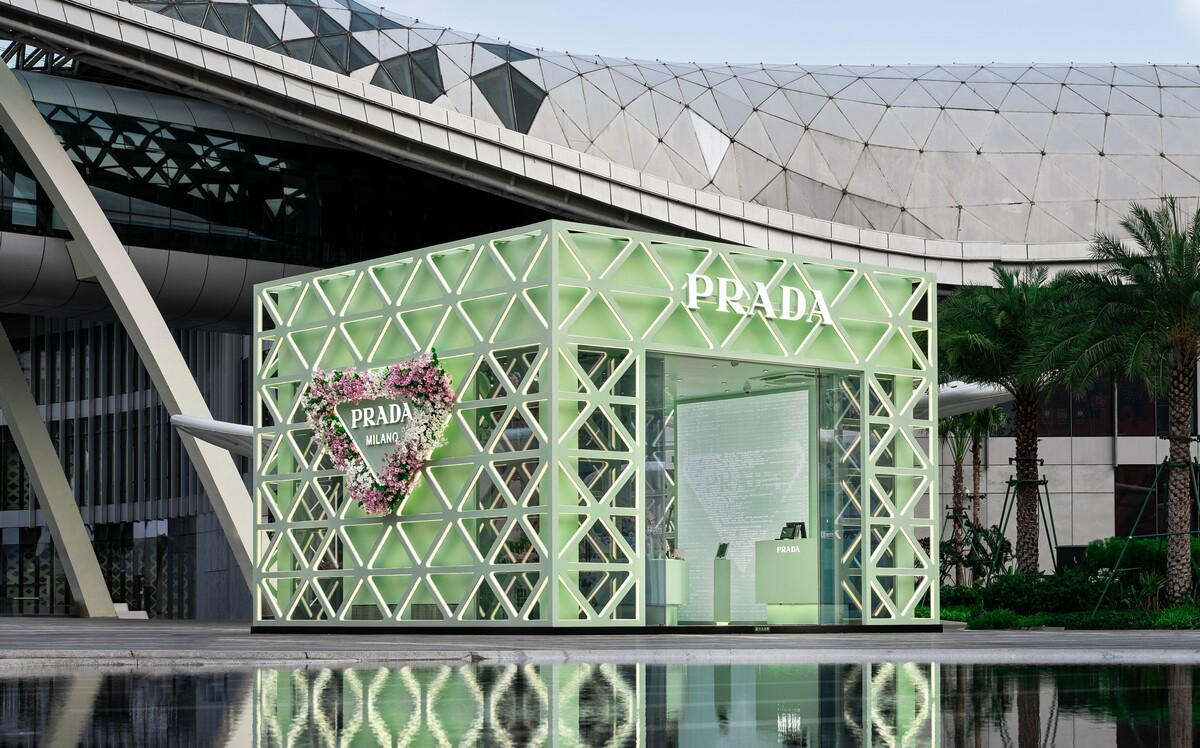
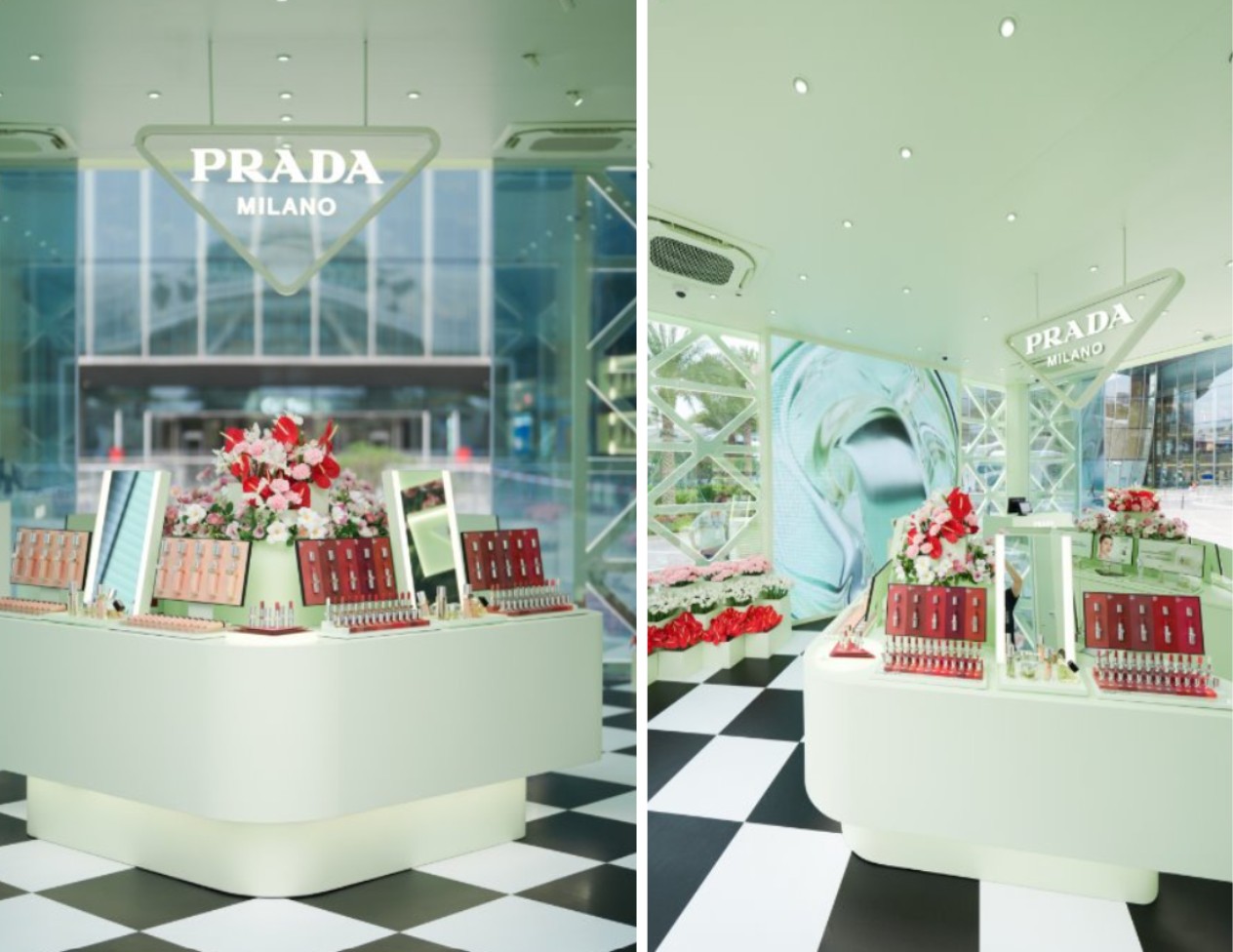
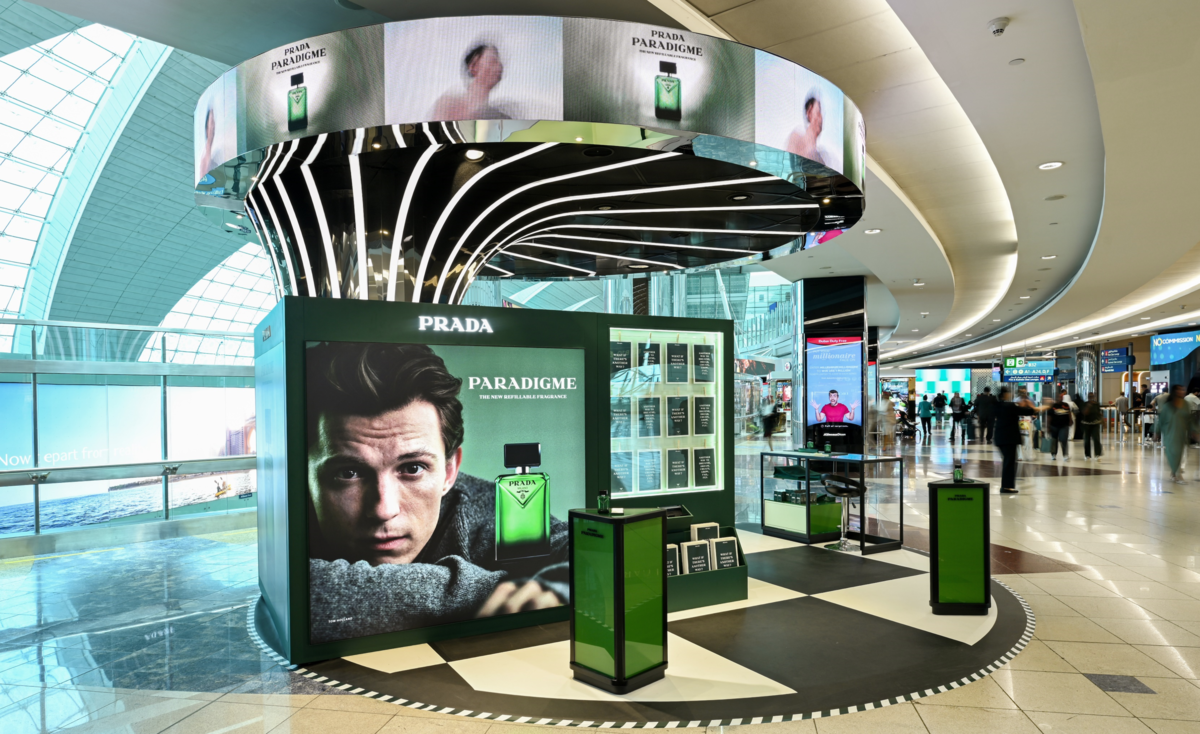
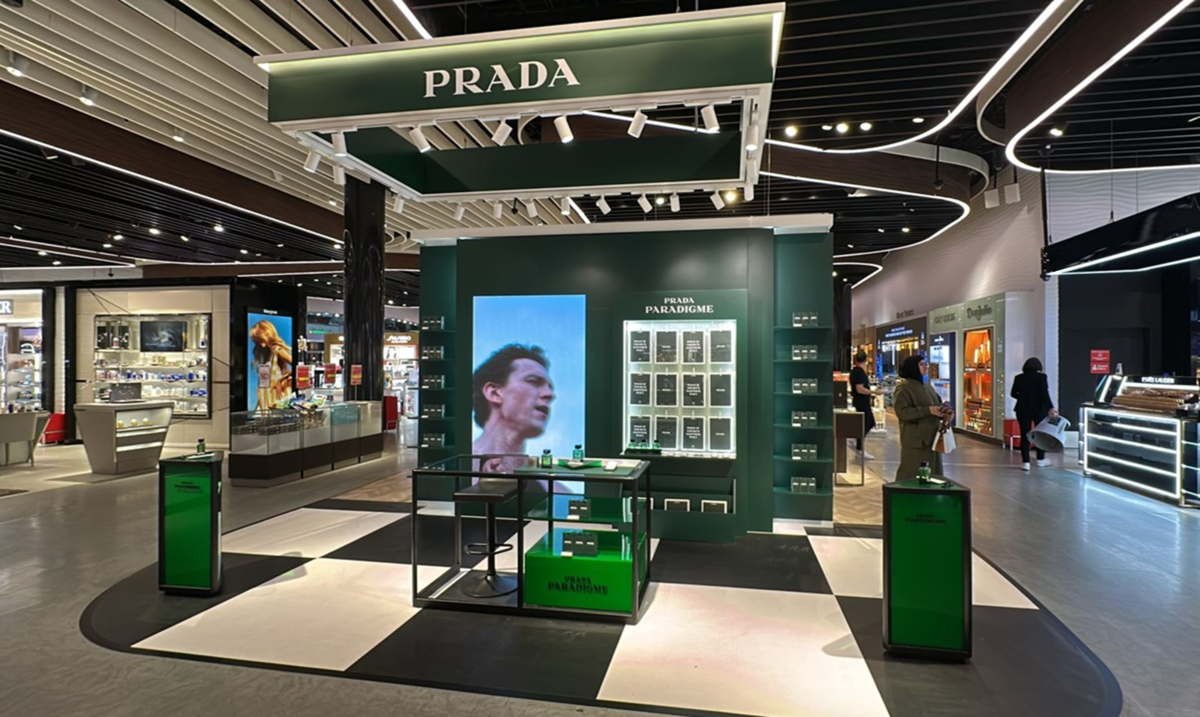
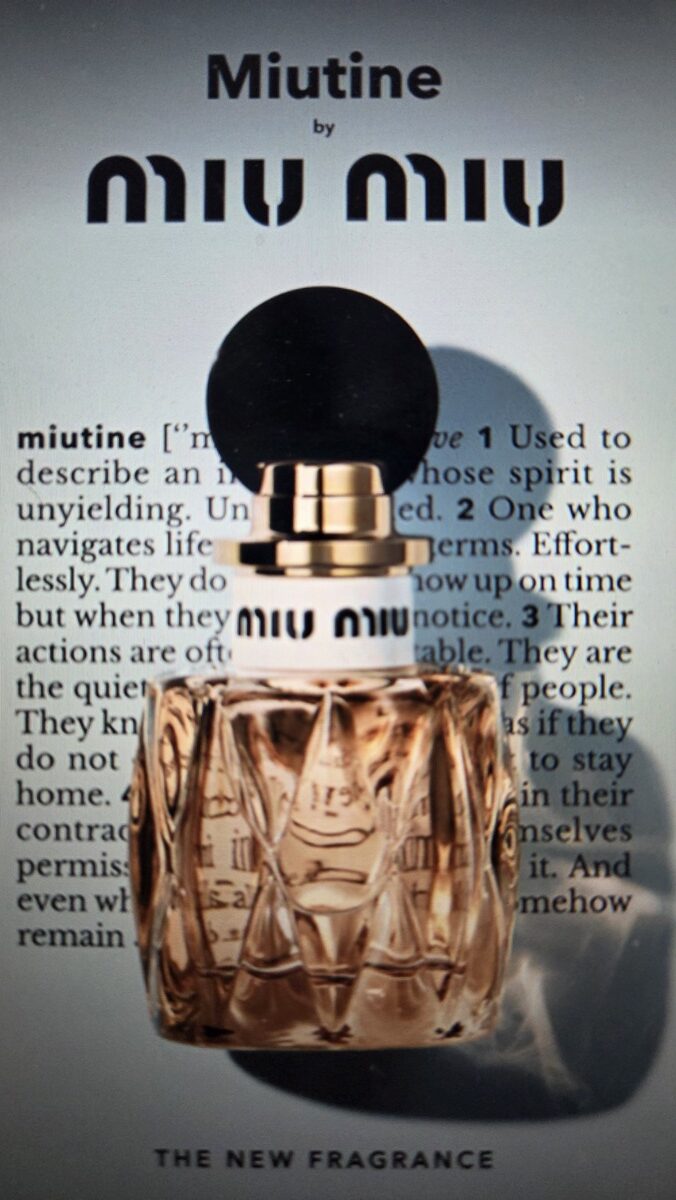
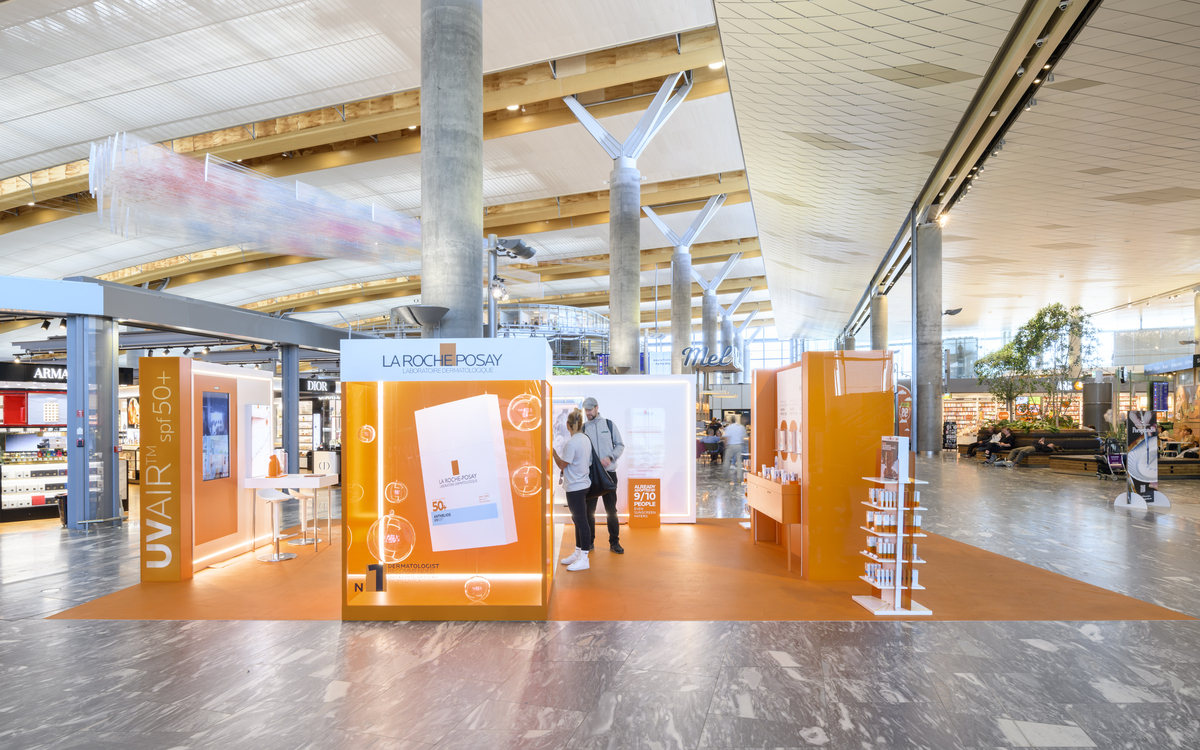
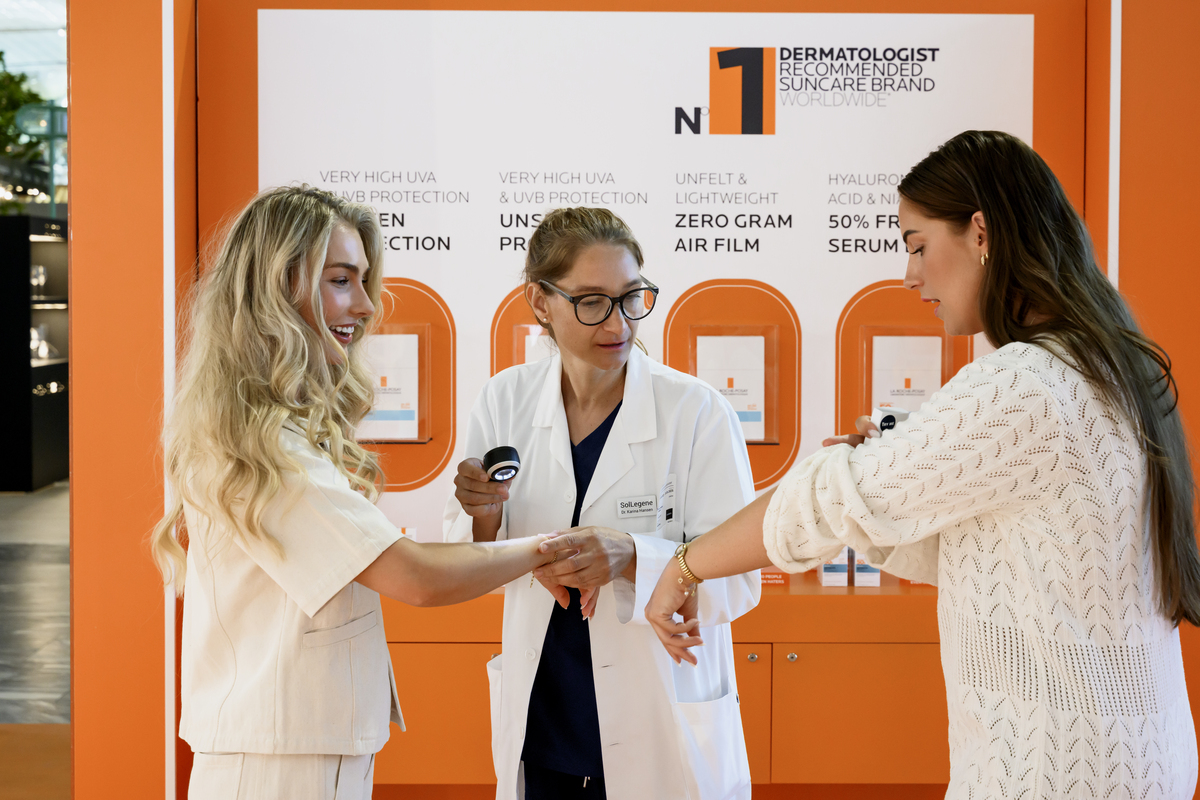
But also L’Oreal is a big company with a wide portfolio. We are also entering the market with the recently-acquired license for Miu Miu, which has just been launched a few weeks ago. And also through other categories. like professional hair care with Kerastase, with Dermo cosmetics and with La Roche Posay, which, combined, can bring you again the perfect offer – to be sure that we are catering to all the needs.
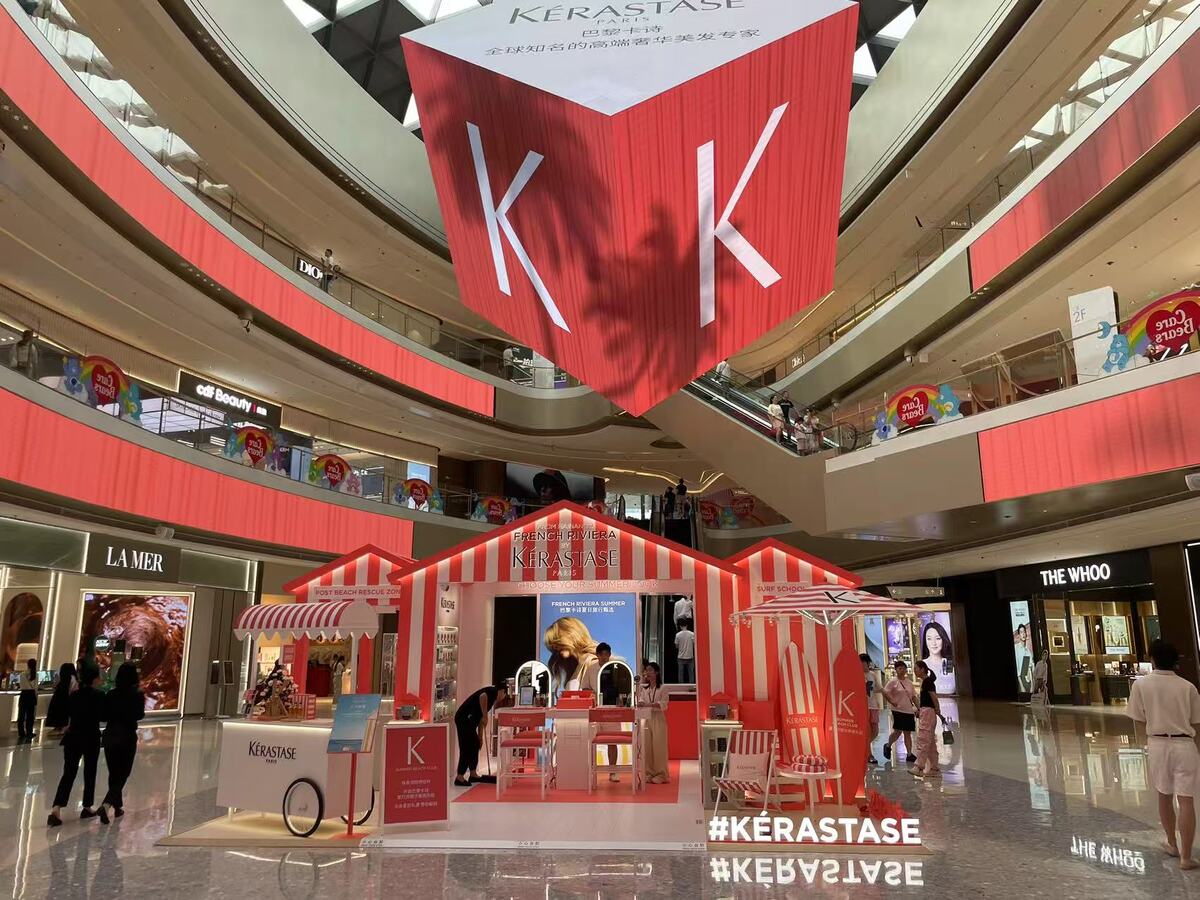
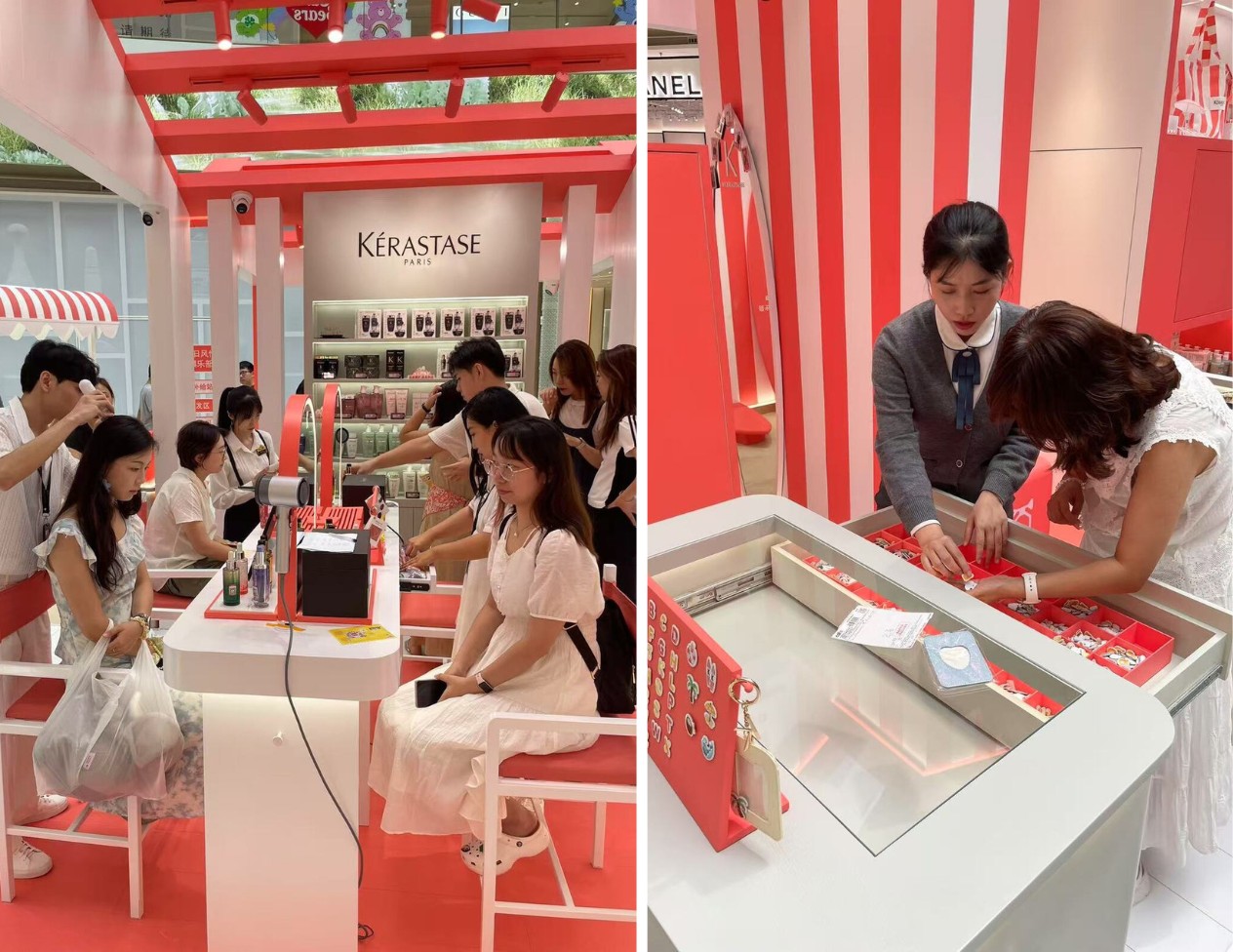
That’s the first part of the answer. The second part is, even with our brands that are as well known as Lancôme or Helena Rubinstein, our ability not only to innovate, but to reinvent and differentiate. And let me give you one example that is ‘live’ now in Macau as we speak. It’s the new travel exclusive concept of Travel Like Helena by Helena Rubinstein. A one-of -a- kind first class launch project that is going to be scaled in a flexible way – meaning from animations to permanent point of sales and from small to big configuration.
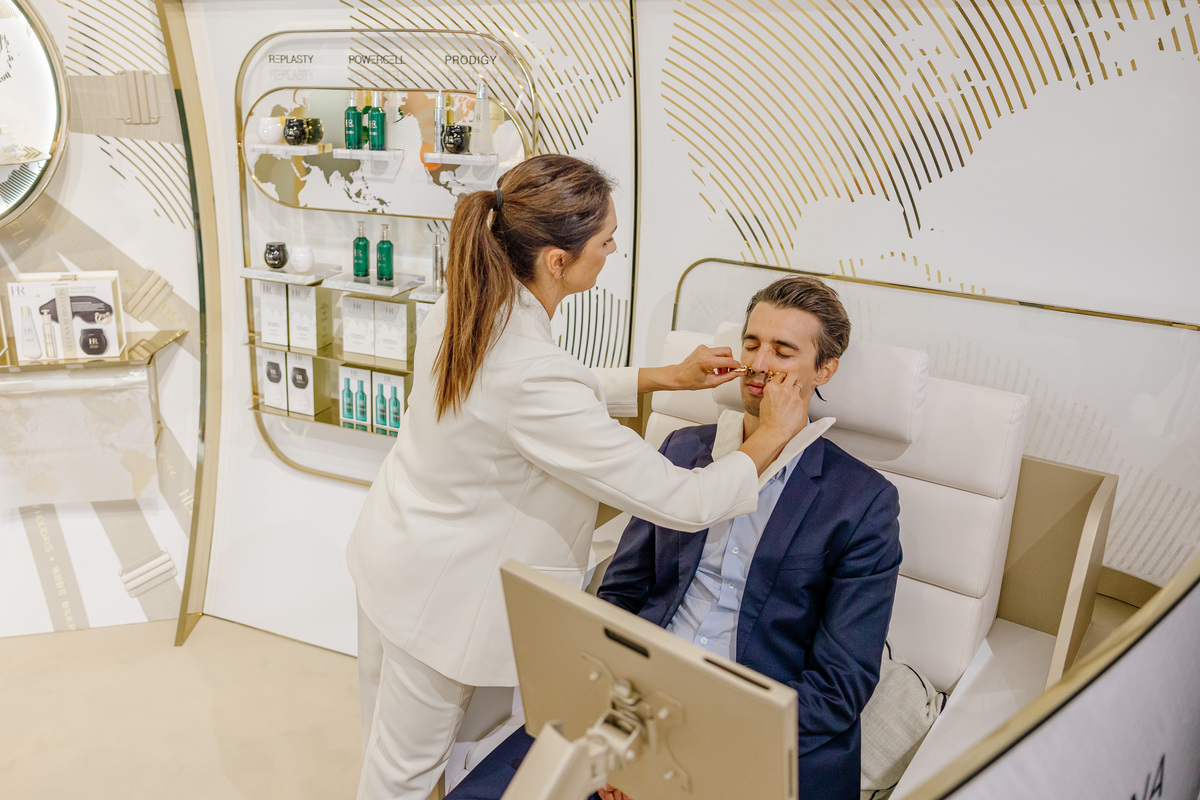
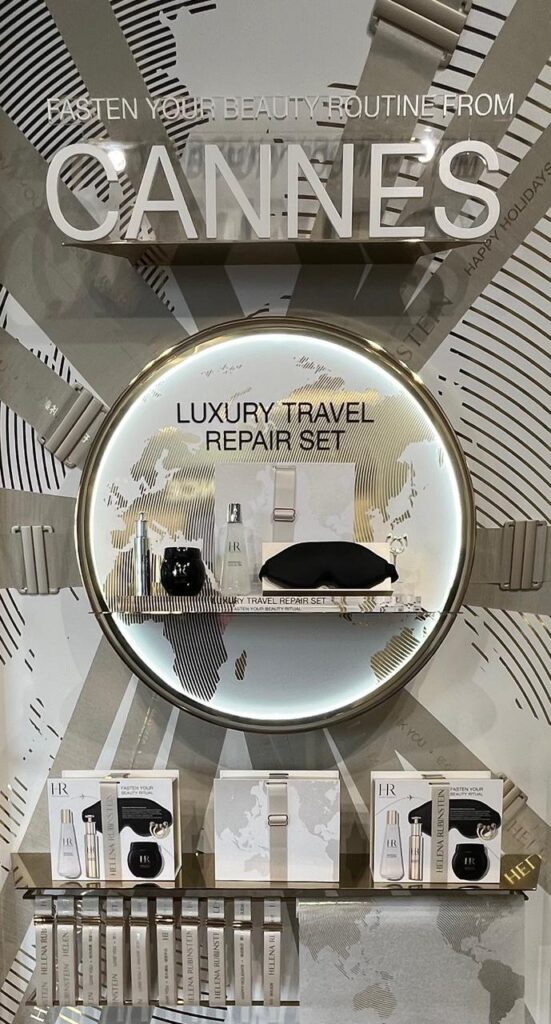
What’s behind our capacity to think deeply about travellers first? Well, what you’re going to see is exclusive to the travel retail, meaning that you will have an exclusive offer boosting what we call the TREX, the travel exclusive. With a new approach about skin concern and skin routines linked to long haul flights and the jet lag issues on your skin. And, at the same time, having the right services adapted to the tight schedule of travellers to be sure that we can have a VIP pampering service..
That’s another example. So one is new brands, expansion of brands like Aesop, Prada and the other one is how can we reinvent ourselves. Hence also the Entertainment Destination that we mentioned at this morning’s presentation with the six senses – the journey of the senses. We’ve got this compass and it’s six dimensions, something to be sure that we provide that is really relevant.
PM: Can you enlarge?
BB: So it’s all started by what I told you. The fact that we need, despite the great potential of travel retail, to think more traveller-first and understand the way we can re-enchant them and capture their attention. And for that we are convinced that experience is at the core of everything. We need to go beyond transactional. And for that we define what we call the six dimensions, the six senses, the journey of the senses.
These are the senses of the unexpected, because we need to surprise them. The sense of time – because depending on the moment of the year and the peak traffic moments, there are some cultural specificities that we need to address. The sense of place, because when you are traveling, 80% of travellers want to be connected to the essence of the destination. The sense of service. Because here, again, the more we use the services and the technology behind, the more we can tailor-make to their needs. And also the sense of gifting, a very important one. Today, 25% of the purchasers are looking for a gift. And I can tell you as a father of two sons, the first thing that I need to look for in an airport after a long business trip is the gift for my kids. So these are the six dimensions that are the north star of our strategy. And that’s where we need to put innovation behind. Always to be sure that we remain more relevant than ever.
PM: So this is an integral part of your new strategy.
BB: I wouldn’t say ‘new’ strategy. It’s an amplified strategy we propose. As I said we need to be relevant and to differentiate ourselves versus High Street. That’s so important because the needs and the expectations are different.
PM: Yes, absolutely.
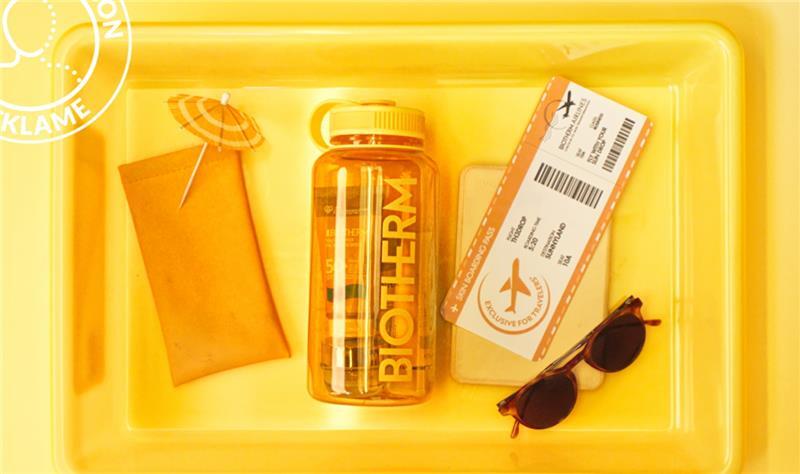
BB: When you are going on holiday and you go after the security check, 59% of travellers say that they then feel relaxed. Okay, but ‘relaxed’ means that there is also a new mindset, a new state of mind that we can leverage and understand how to cater to their needs. And so that’s why we have worked on new initiatives as far as TREX are concerned. I mentioned the new exclusive sets for Helena Rubinstein. I could also mention the Biotherm drops. This is a new fitness bottle that has been created with a routine inside that is enjoying an amazing success in the Nordics, for example, in Europe. These are examples of what we are able to do in terms of innovation and also thinking about the full pyramid of prices. So from accessible prices to very high end luxury goods.
PM:. What, then do you think are the most effective ways that physical and digital touchpoints can work together pre, during and post trip to create loyal brand advocates in travel retail rather than just transactional customers?
BB: This is a very good question because at the end we are building brands and not just selling products. I would say two important words: authenticity and relevancy. All this is encapsulated in the experience we propose. The minute we are able to personalize, but still be relevant to the brand throughout the journey and the different touch points – from physical to online – is when we can really be perceived as authentic and then be able to create the connection that we are looking for.
PM: Just developing this, how do you actually define the ‘right ‘ kind of immersive, sensorial and personalized experiences that will resonate with increasingly diverse and demanding travellers and avoid falling into the pitfalls of standardization, commoditization or super superficiality?
BB: Great question. It’s a long question and a very difficult one, but a very interesting one. I think that I will give you an example. Technology AI. Lots of people are talking about AI. For me, there are two ways to leverage AI. If you really want to make it authentic and good, it needs to be within a global activation that makes sense, that is meaningful to the world. For example, for the first time last year we used AI to do an AI- powered diagnosis for travellers with the new Génifique of Lancôme. The objective behind was to understand through the weather conditions, through the timing of the long haul and the destination, what the right skin routine should be to answer the potential skin concern.
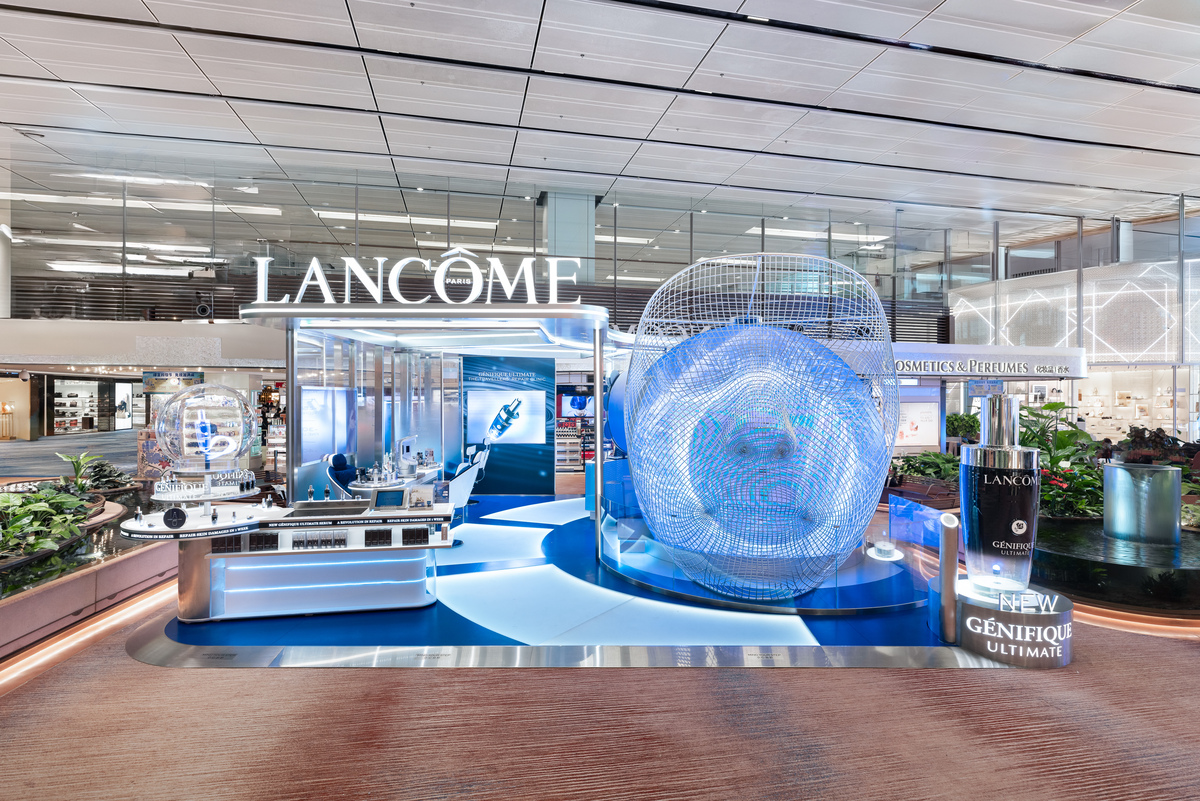
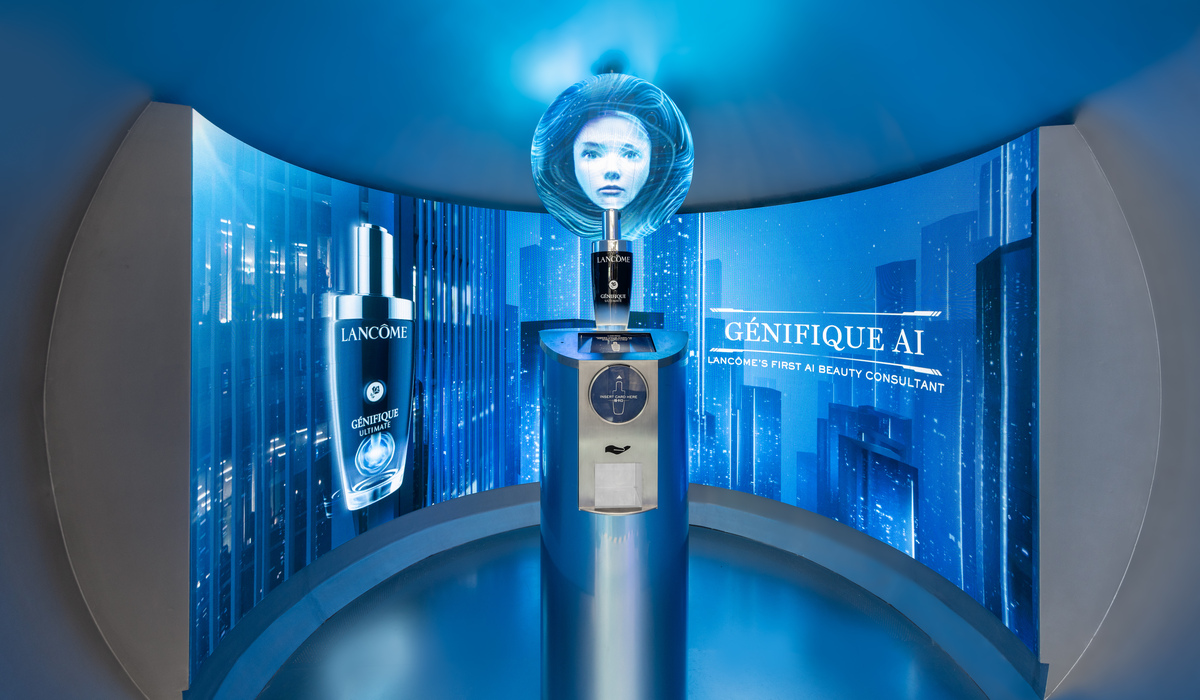
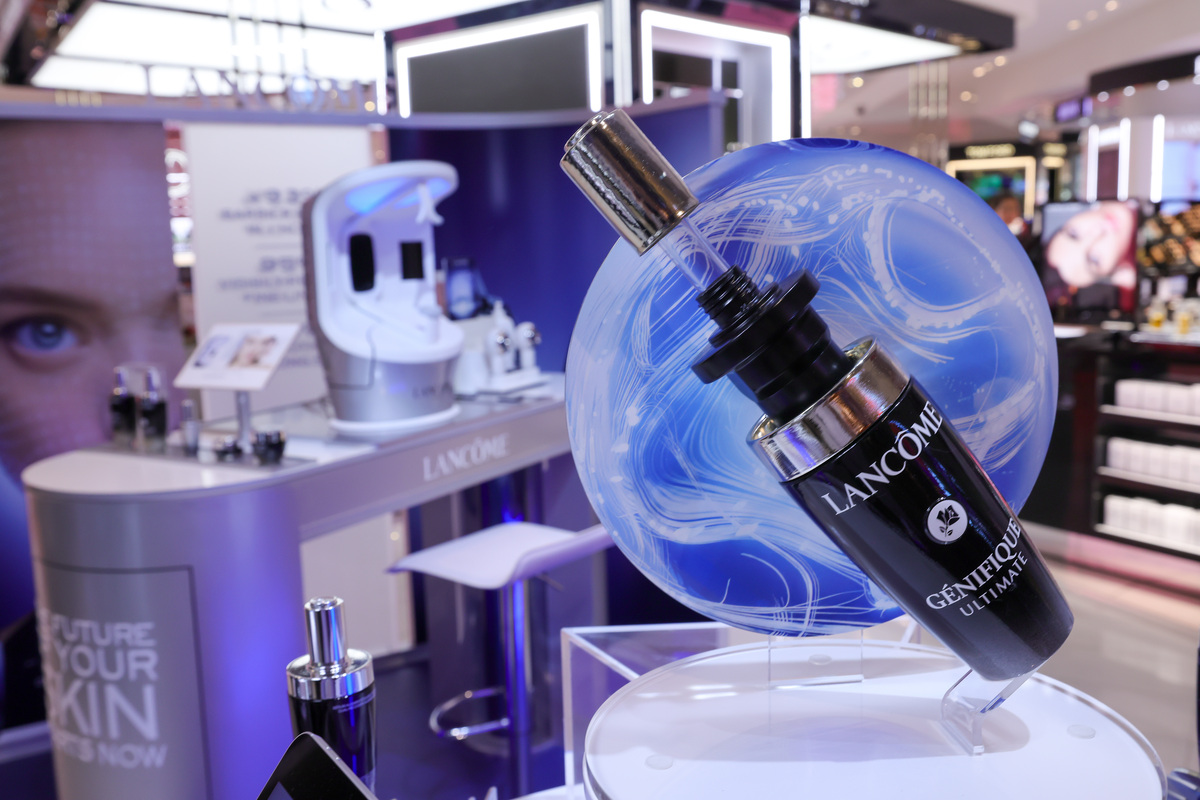
So that’s the first step of the journey, to have something that is meaningful for the client. But the perfect recipe is when you combine that with the human touch of a beauty advisor – enabling you to really deep dive clients/ travellers with the results. I used to say the more digital we are, the more human we should be. Because it’s this balance between both that will make the magic recipe.
PM: So what is otherwise new from L’ Oreal this year?
BB: I already mentioned many initiatives through this differentiation and innovation lens. I should also probably mention two other very important things. The first one is our new launch, Miutine, under the brand Miu Miu that we acquired the license from very recently. And we are very proud to tell you that the first results are amazing. I think that this brand is really in tune with its time. It’s an honour to work for this brand which is, for the third consecutive year, listed as the number one brand in the List Index, which is kind of a ranking of the hottest brands in fashion. With Miutine there is a play on the world with Mutin, and this perfectly encapsulates our capacity to show the irreverent spirit of Miu Miu. Echoing the fashion codes of course, but also showing through the bottle our capacity of glass expertise.
PM: It’s a sister brand to Prada, isn’t it?
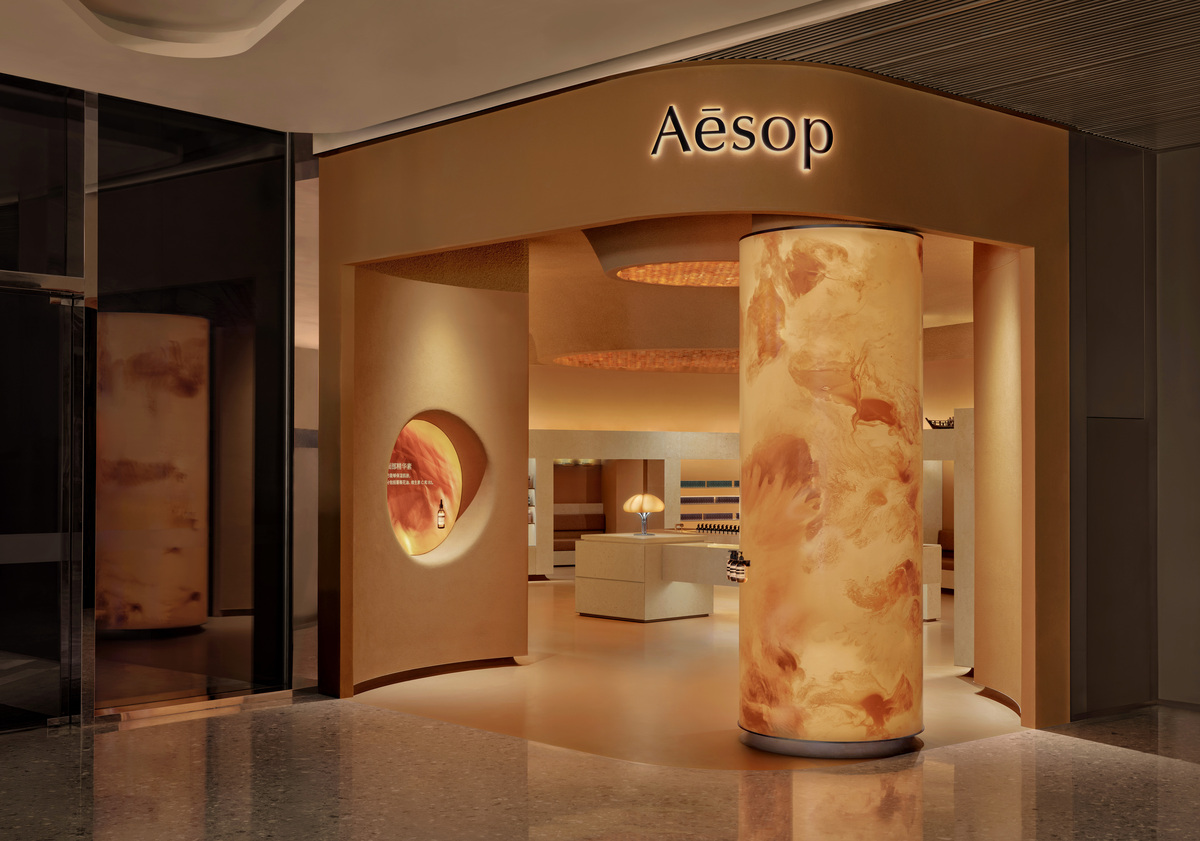
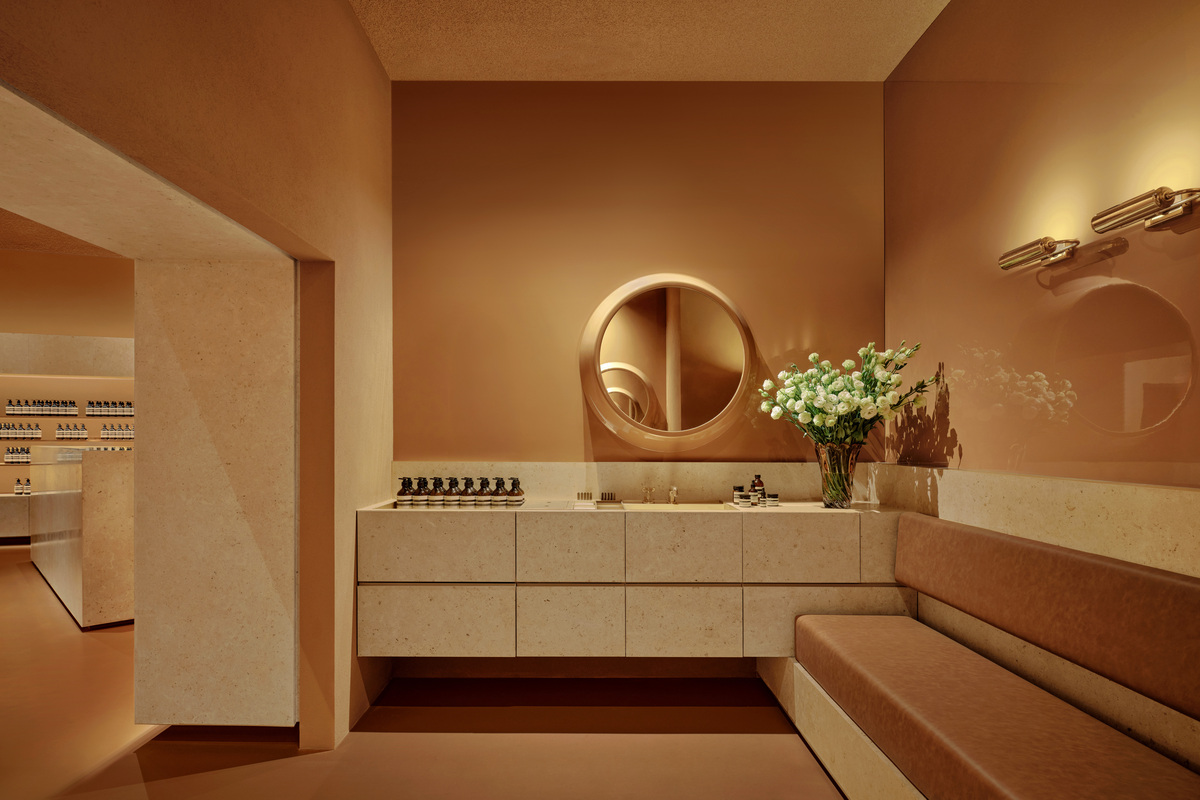
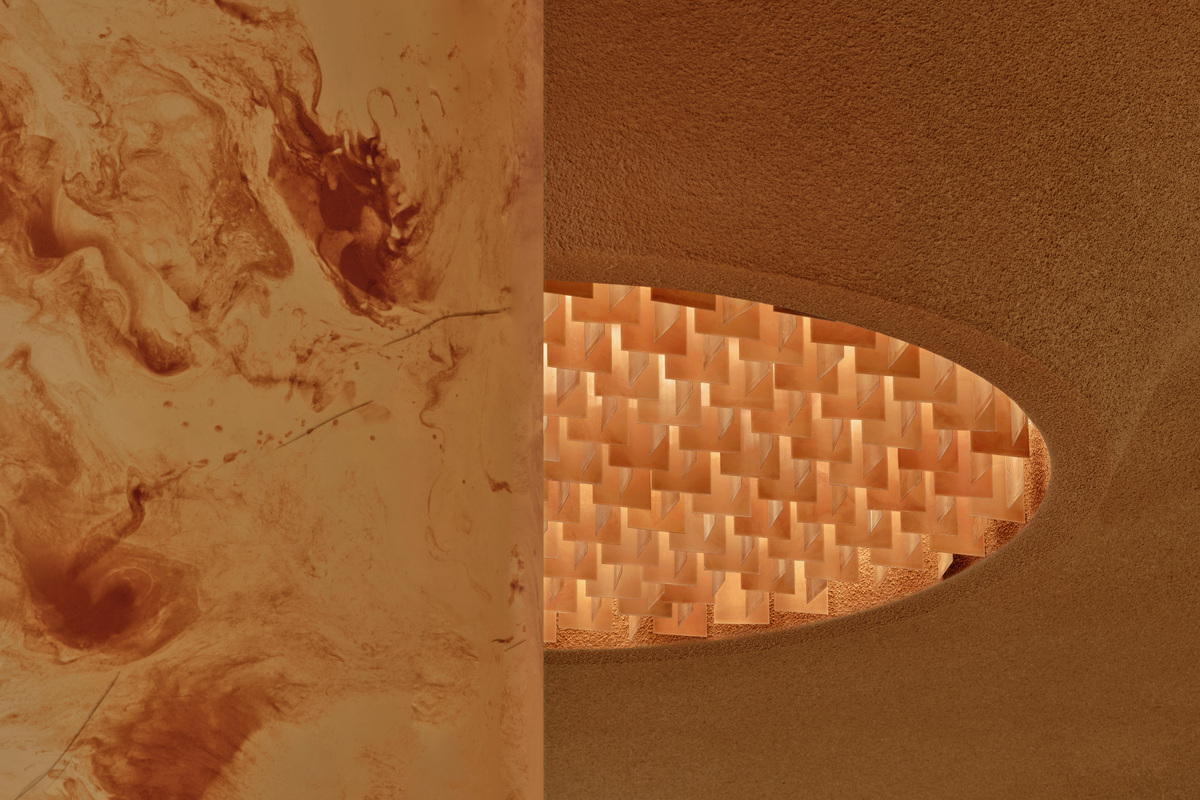
BB: Yes, it’s part of the same fashion group. And the second example is, of course, the exciting rollout for Aesop. As you know Aesop is a quite new and recent brand acquired by the company. We are very proud to tell you that we have opened many doors since our last discussion. Very recently we opened in Taiwan, in Fukuoka in Japan, we opened a second store in Hainan, and we opened in Amsterdam. We are shortly opening in Nice. What this again shows is our capacity to leverage our great portfolio of brands – and at speed. But also adapting to the local realities. And let me give you an example for Aesop, again, and. I mentioned this last year. Every store in Aesop is unique and is designed based on the cultural aspects of the country or the destination of the store.
PM: Let’s move on to looking at sustainable actions from the company. Now as we know, refills are assuming a real and meaningful importance. What’s next on the agenda here?
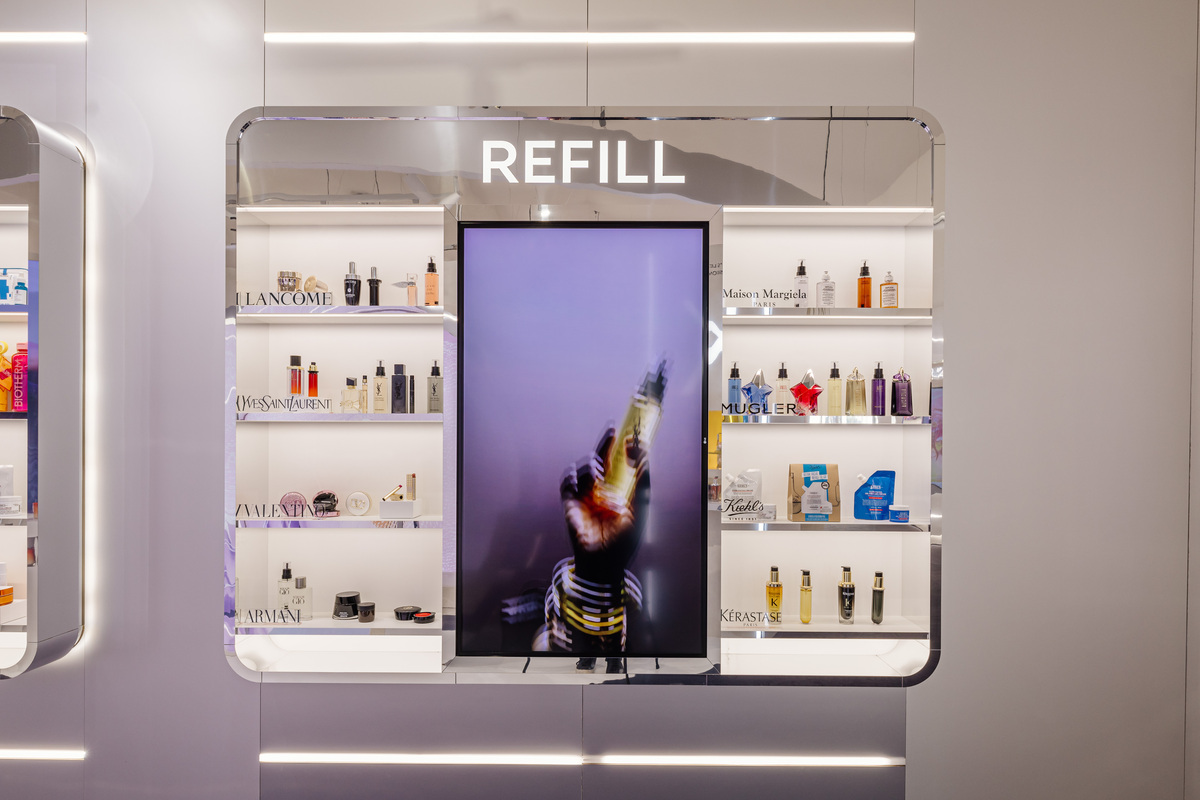
BB: What is next on the agenda is very simple. As a leader of this industry, we consider that we need to accelerate and be the spearhead of this topic of refills. Let me give you an example. If today you buy 250 milliliters of Paradox or if you buy a 100 milliliters refill, you are saving 74% carbon. And that’s exactly where the purpose is at the heart of what we do with refills. We need to spearhead a joint business plan with our partner retailers to be sure that we are the number one advocates of such an important gesture for beauty. That’s why also – by next year – one third of our sales in travel retail will be refillable. And that’s the number one priority that we need to have as far as sustainability is concerned.
PM: Linked to the last question, just how is l’Oréal balancing sustainability with the luxury packaging that you have that houses your products?
BB: I think that it’s a very good question. We are convinced that, today, working with our R&I, that we can combine both luxury and sustainability. All the latest fragrance launches within our portfolio were refillable and you were the first to tell me this. We do have amazing packaging. So it’s feasible, it’s possible, thanks to the investments of the group behind, to have a luxury yet sustainable offer.
PM: Moving on, as we know, we live in a data rich omnichannel environment? How does L’Oréal prioritize your investment in technology, talent and partnerships to ensure that the Travel Retail division continues to be a strategic and market leader?
BB: Globally we are lucky enough to work for a company that is investing a lot of money behind technology. And I have already given you some examples on how we can use AI, beauty tech devices to be sure that we are at the forefront of innovation.
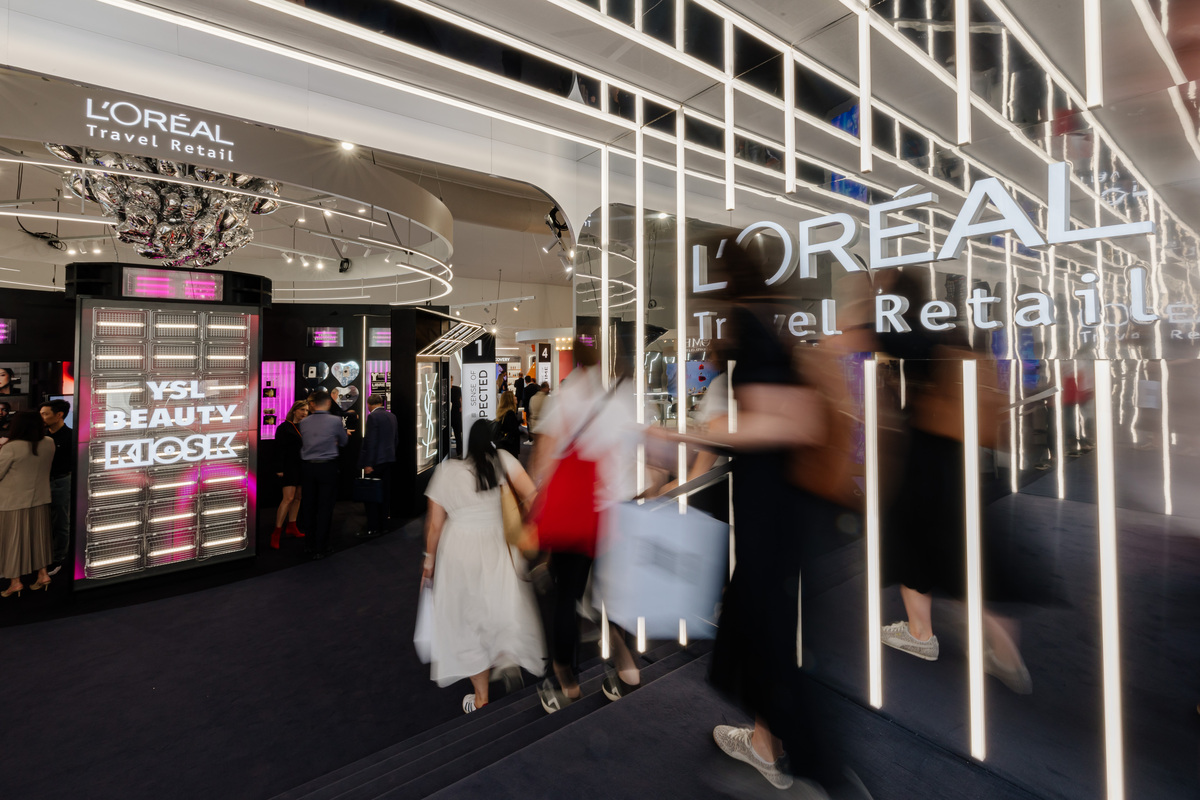
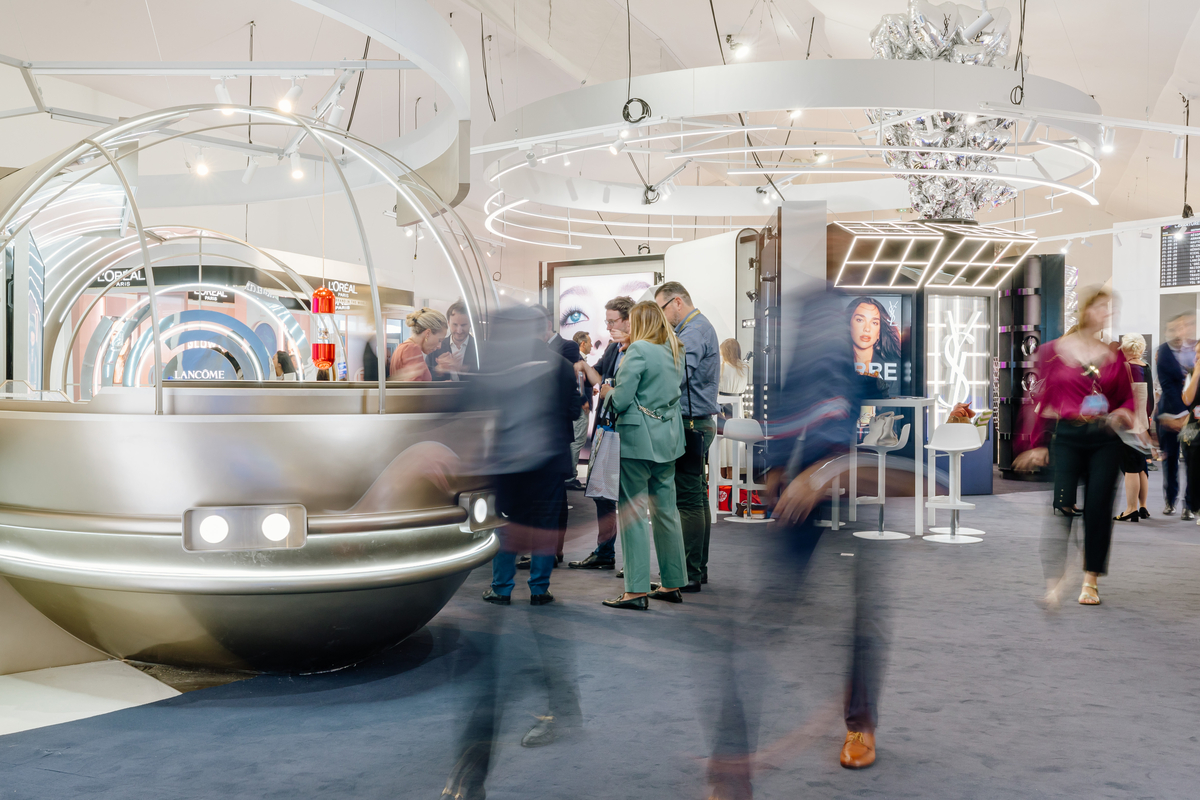
And that’s exactly what we are doing. We use the right technology every time to be sure that it’s at the service of the traveller at the end. What I want to avoid is the gimmicky approach, of trying to have something that is just a kind of a traffic stopper but makes no sense with no purpose behind. So for me innovation and science-led technology is at the service of personalization. And if it’s not the case then it’s not an interesting technology. Technology is as simple as that. And so for travel retail, within this environment, we consider that we are at the very forefront of this revolution, this renovation. And that’s why during your visit to the booth you will have discovered many opportunities of different experiences that are technology driven. But again, it must always be coupled with a human touch.
PM: Looking forward, what KPIs do you believe will be the most meaningful for travel retail brand success in the next three years and how do you think they’ll differ from the rather more traditional retail and pre- pandemic benchmarks?
BB: Another very interesting question. To try to answer you. I would say there are some very basic KPIs that we need to still work on which are linked to conversion. Because, today, if we do our job correctly, the conversion rate should improve and then it would mean that all the stakeholders, retailers, brands will have done their job. That’s the first one. But I would like to come back to what I said about the journey of senses. We will only really succeed in the future if we are able to create an emotional connection with travellers. So for me the question of engagement and the perception of travellers of the travel retail environment as being a real shopping destination, a memorable shopping destination, will for me be the number one KPI. Over time, technology will potentially deliver a reduced dwell time. But if passengers want to come to an airport to spend extra time there because there are many experiences and offers that are interesting for them, then we will have done the right job.
PM: Now here’s a broader question. If you could implement a single radical, and I mean radical change in the way travel retail brands go to market, what would it be?
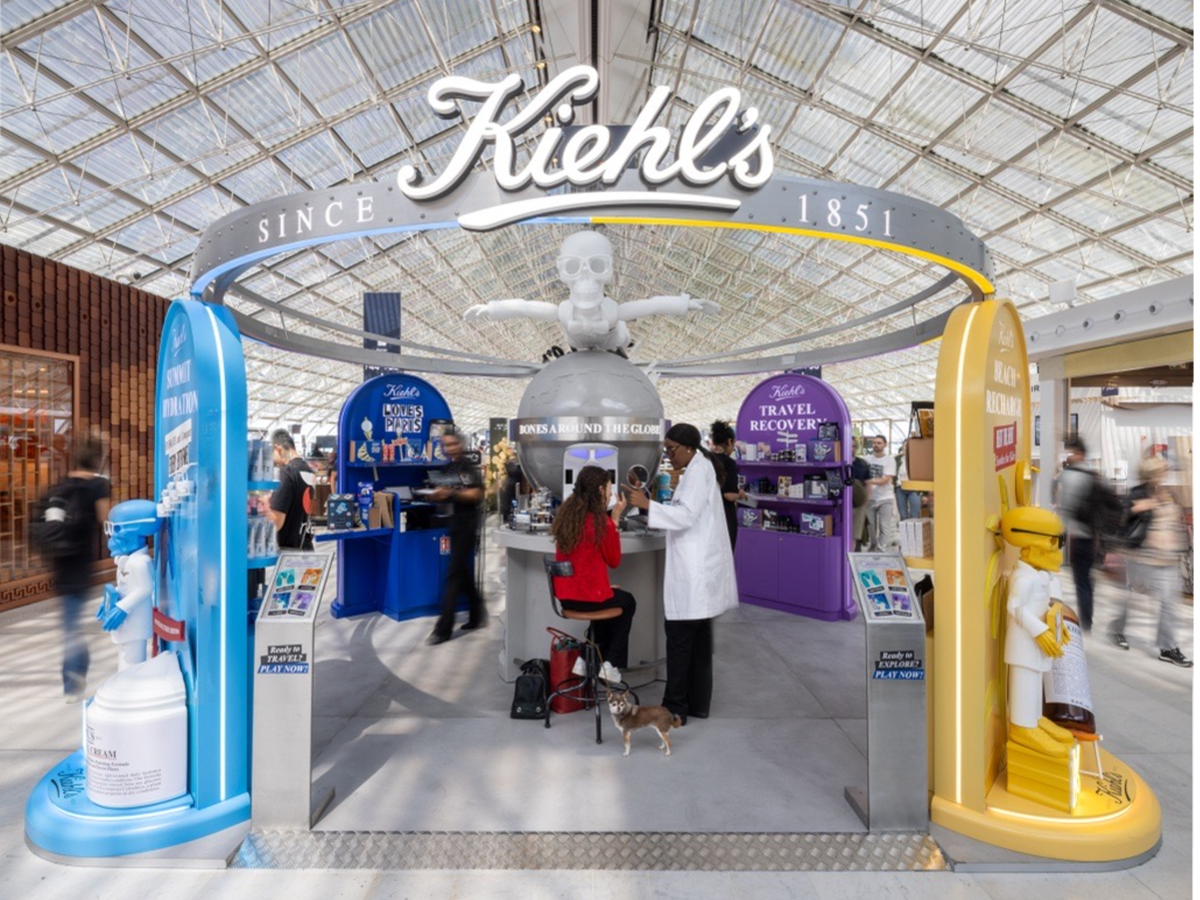
BB: I think that the answer is exactly what we did with the booth this year. This year we decided to take bold bets – meaning coming with our brands and showcasing travel-centric offers and experiences to be sure that we are not just a copycat of what we can see on High Street. Instead, by providing something that is relevant, really relevant and meaningful for the travellers. I gave you Helena Rubinstein as an example – what we showed with an interesting animation that we could replicate bound around the globe. For Kiehl’s we decided to do a specific travel-centric animation that is already live in few airports, one of which is in Charles de Gaulle, Paris, as we speak, where we came with the willingness to show that every skincare routine is related to the weather of the destination – that we go from humidity to dryness. And every time there was an explanation behind that goes beyond just the institutional aspect of a brand. So whenever you are able to come up with something that is exclusive and relevant, we are doing a bold bet for the industry.
PM: Have you got one for skincare – when you go from one continent to another for the plane journey itself?
BB: Yes. With Helena Rubinstein, we’ve got the Jet Lag Rescuer new travel exclusive kit where you can use it for precisely this kind of thing. And, on top of that, in our premium offer with Helena Rubenstein, you will also have a massage ring – just like doing face yoga during the plane journey – to be sure that you enjoy a perfect skin when you land at your destination.
PM: Alright, one last question, Baptiste. And it’s the usual one. If there are three things that you want to say to the industry to communicate where the company is going, where the brands are going, what you feel is going to be right that will lead the business forward, what would they be?
BB: I like this question. I don’t remember what I answered last year. So you will have to deal with what I’m going to answer.
PM: I’m not going to remind you.
BB: Okay. You will see if I am consistent or not. I would say, first, and throughout this interview, that I hope that you are as convinced as me that the future of travel retail can be bright and the major KPIs are there to testify that we have a bright future ahead of us. The second point is that it’s up to us to make the airport experience a real, memorable, entertaining experience. And it’s where again, and let me re-insist on this, that innovation, differentiation and experience are the three keywords that we need to work on. And the third point is that all this cannot be done only by L’Oreal. We need to join forces because we are stronger together. And that’s where, coming back to the question of the pentarchy, we need to be sure that all stakeholders – from airline to airport, to retailers, to brands and to the digital ecosystem – are joining forces to be sure that we make this a reality and that we scale this reality.
PM: Great stuff. Baptiste, Baptiste. A really good interview. Thank you.








To subscribe free, please enter your email address: