

SEKONDA’S NEXT MOVE: CAN A £79.99 SMART RING CRACK TRAVEL RETAIL?


The watch category in travel retail has plenty of competition, but the next battleground may not look much like a traditional watch at all.
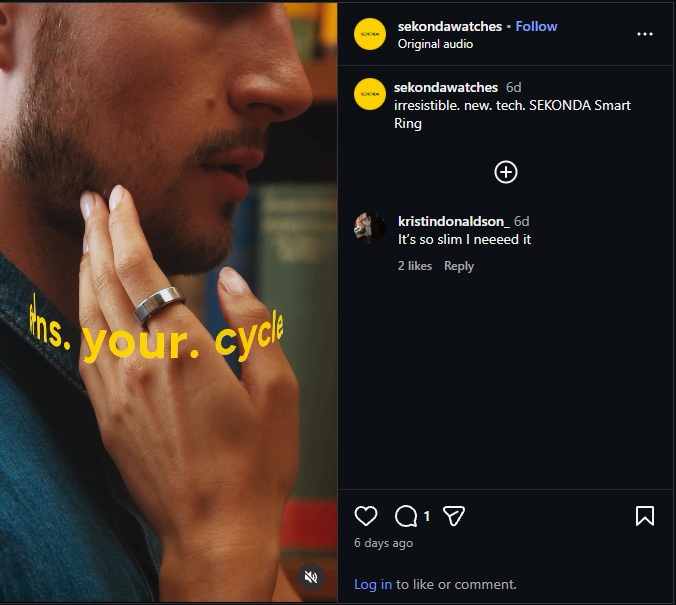
Sekonda, the British brand that has spent six decades building its reputation around accessible, design-led timepieces, is moving further into wearable technology with its first Smart Ring. At £79.99, with no subscription, it sits firmly at the accessible end of a category traditionally dominated by premium players.
But this is not simply another piece of tech. Sekonda approached the ring as a jewellery project first, with the technology built in – a distinction that could matter as consumers look for health and wellbeing insights without necessarily wanting another smartwatch.
With travel retail also looking for differentiated products, stronger gifting propositions and accessible price points, the question is whether Sekonda can turn that proposition into a genuine opportunity across airports, ferry and cruise.
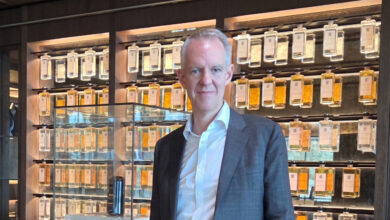
TRunblocked.com’s Colleen Morgan meets with Time Products UK CEO Pete Ogley to discuss wearables, accessible technology and why Sekonda believes the Smart Ring could open up a category still dominated by premium players.

Colleen Morgan (CM): What has changed most in the global travel retail watch category over the past two to three years – and where are you seeing the biggest opportunities?
Pete Ogley (PO): Accessible price points and impulse-led purchasing have become increasingly important, and watches remain well placed as an easy addition to the basket.
For us, there is also a bigger opportunity around the different reasons people buy while travelling – from gifting and self-purchase to simply finding something that feels right in the moment.
We see scope to build stronger partnerships with travel retailers by making sure the product, pricing and proposition are right for each passenger journey. That means working closely with retailers rather than taking the space we have for granted.

Sekonda has always been about making well-designed watches accessible, and we see plenty of room to extend that proposition into new categories.
CM: Sekonda’s first smart ring is a significant move beyond traditional watches. Why a smart ring – and why now? And how important is this launch to the brand’s future?
PO: Wearable technology is a genuine growth priority for us, and the Smart Ring is the next stage of a journey that began with our smartwatch collection in 2023.

We are seeing growing interest in technology that can fit naturally into everyday life rather than becoming another complicated device to manage. The Smart Ring gives consumers access to health and wellbeing insights in a discreet piece of jewellery, without the premium price tag or an ongoing subscription.
We also see the category as young enough for there to be significant room for growth. This is our first step into smart rings, and we are already considering how we could develop the range through different designs, sizes and features.

CM: At £79.99, with no subscription and a jewellery-inspired design, who exactly are you trying to attract?
PO: We are opening the category to consumers who have been interested in smart rings but have been put off by the price or complexity.
Our customer wants the benefits of passive health tracking but also wants something that fits naturally with how they dress and accessorise. We know smart rings are attracting interest among Gen Z and millennial shoppers, and those consumers also continue to wear traditional analogue watches.
That is an interesting combination for us. The Smart Ring doesn’t have to replace the watch they already love. It can sit alongside it.

The design was actually approached as a jewellery project first, with the technology built in. It is slim, made from stainless steel and available in gold and silver, so it is designed to be worn day and night rather than treated like another piece of technology.
That also makes it particularly relevant to travel. Five to seven days of battery life, 50-metre water resistance and passive tracking all help remove some of the practical barriers when people are away from home.
CM: But this is a category where consumers already know the big names. Why should they take Sekonda seriously?
PO: Because accessibility has always been central to what Sekonda does.
For 60 years, we have built the brand around well-designed products at accessible prices, without compromising on quality. Our smartwatch collection has also exceeded our initial growth expectations and given us valuable insight into what consumers actually want from wearable technology.

We have worked closely with our technology partners throughout the development of the Smart Ring. We focused on the features people are most likely to use – such as activity, sleep and heart-rate tracking – and on making the experience straightforward.
It is also important that we are clear about what the product is. It is a wellness product designed to support everyday health awareness, not a medical device.
CM: Travel retail is increasingly asking brands for differentiation. How do you make the Smart Ring work in an airport, ferry or cruise environment where shoppers have limited time?
PO: The proposition has to be immediately understandable.
Price is one part of that, because £79.99 with no subscription makes the category much easier to explore. But the design, the functionality and the simplicity of the proposition are equally important.
Travel retailers are also looking for greater differentiation and exclusivity, and that is becoming increasingly important across our analogue and smart-watch ranges.

We support our retail partners with team training, visual merchandising guidance and regular POS updates, but we also need to remain flexible. Different travel environments have different passenger profiles, so we want to test and learn rather than assume one approach works everywhere.
We have plans to launch the Smart Ring with multiple travel-retail partners across duty free, ferry and cruise in the coming months.
CM: As Sekonda celebrates its 60th anniversary, is wearable technology a way of future-proofing the brand – or is it simply another category opportunity?
PO: It is a strategic evolution of the brand rather than a pivot. Wearable technology allows us to take those same principles into a category that is growing and reaching a new generation of consumers.
The Smart Ring is the first step, not the end point. We will be listening carefully to how consumers respond and using that insight to shape what comes next.
We also have a range of analogue watches planned for 2027, so traditional watchmaking remains an important part of the business. At the same time, we will continue to explore where wearable technology can take Sekonda.
CM: What’s next for Time Products UK in travel retail? More Sekonda innovation, developments across Accurist and Limit, or a broader strategic shift?
PO: Each brand has its own identity and proposition, and we don’t believe travel retail should be approached with a one-size-fits-all strategy. Sekonda has a particularly strong fit with the travel-retail consumer because of its combination of accessible pricing, broad appeal and now its growing wearable proposition.
And as for what comes next, you’ll have to watch this space.









To subscribe free, please enter your email address: