

From Sampling to Storytelling: Inside William Grant & Sons’ Global Brand Ambassador Playbook.


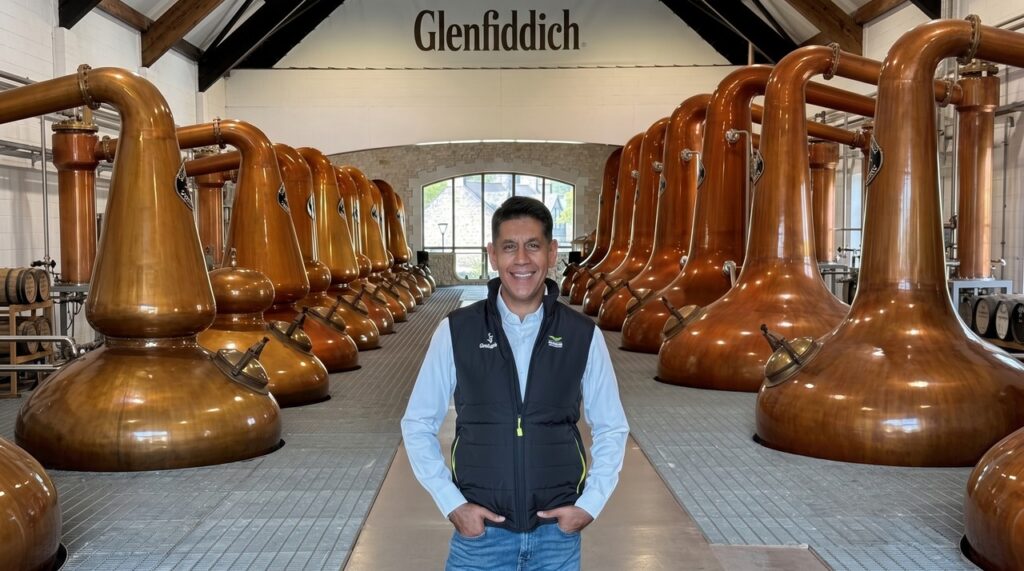
In the high-pressure theatre of global travel retail, the brand ambassador has become far more than a sampler with a tray and a target. At a time when airport passengers are time-poor, digitally distracted and often frazzled before they even reach the shop floor, the human ability to listen, read the moment and make a relevant recommendation has never mattered more. William Grant & Sons Global Travel Retail Global Brand Ambassador Ashvin Kumar Joshi talks to me about turning product knowledge into personal connection, training 150 ambassadors worldwide, and why traveller-first storytelling remains a commercial as well as emotional imperative. It’s a great read.
Peter Marshall (PM): Ashvin, welcome to Trunblocked.com. It’s great seeing you again. And what better location than here in Speyside? So let’s start our conversation with the craft itself. In travel retail, what do you think really separates a great brand ambassador from a good promoter with a tray of samples? And how can you tell on a busy shop floor which one you’re watching?
Ashvin Kumar Joshi (AKJ): I like the word craft, first and foremost, because we are surrounded by craft. Whisky making is all about craft. But I also take that into the world of BAs, our brand ambassadors, because they should be practicing their craft all the time.
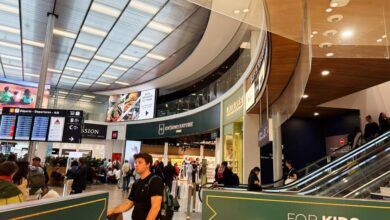
From the moment you walk into an airport and by the time you leave, there’s ample opportunity to practice your craft.


Now, back to your question about the differences, I started many years ago as that promoter standing in front of the store with a tray. It’s challenging because it tends to be very transactional. Passenger comes in, takes a sample, and straight away you’re into the tasting notes. And sometimes you’re halfway through describing the product, and another passenger comes with, “Excuse me, where’s gate number 45?” Suddenly, you’re disrupted.
During my time working at Heathrow when I managed teams, I used “front of store” as an opportunity for a lot of newcomers. Standing there with a tray you quickly learn the landscape of the airport and, importantly, you’ll meet passengers from different cultures and how to interact with them. It’s a great learning experience.
But the difference between that and being a great brand ambassador, for me, comes down to wanting to build relationships. A great brand ambassador will always start with the person in front of them, and not necessarily the bottle of whisky. They’ll be equipped (and this is something we focus on in our training) with a series of questions to understand who the passenger is, why they’re there and what they’re looking for, before making any recommendations or building rapport.
That’s the key difference.
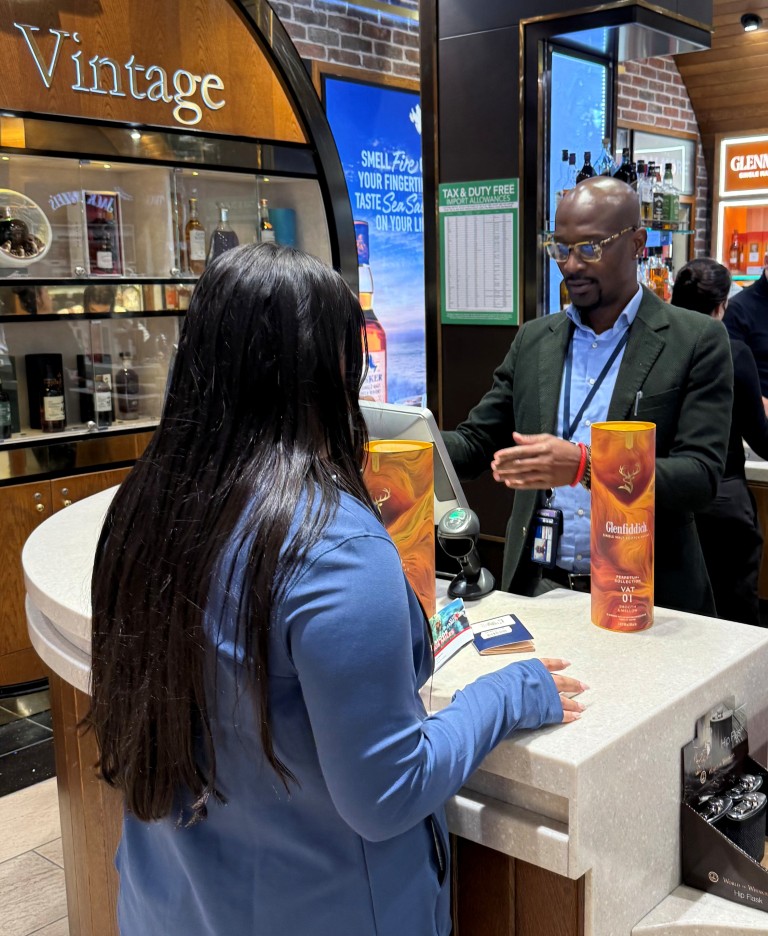
From there, they can guide the conversation into the shop floor, taking the passenger on a voyage of discovery to really find out together what they need. A great brand ambassador won’t simply sell you something. They’ll discover it with you, whether that’s a bottle of gin, whisky or something else. The hope is to find something that resonates with them, along with a story they’ll be able to take with them long after they’ve left the airport. For me, that’s the key differentiator between somebody standing in front of a store sampling and a truly great ambassador.
So, to the second part of your question: how can you tell? This is something I look for on a regular basis on my travels.
PM: Well, sorry to interrupt, you’ve got some 150 people working with you as brand ambassadors.
AKJ: Yes, we have around 150 globally. So, often I will stand in front of a duty-free store and simply observe. Most of the time, a great brand ambassador will be the one who is listening. They understand body language, they see and hear, then guide the conversation.
As part of the training, we have something called the WGS Mindset, which covers four key pillars of being a brand ambassador.
Number one, all our BAs must be curious about the traveler. Ask questions, learn about them and make a personal connection. But go beyond that. Be curious about the industry, listen and learn from many of the whisky reviewers out there. Build your wider industry. Read books, watch YouTube videos, and build your wider industry knowledge.
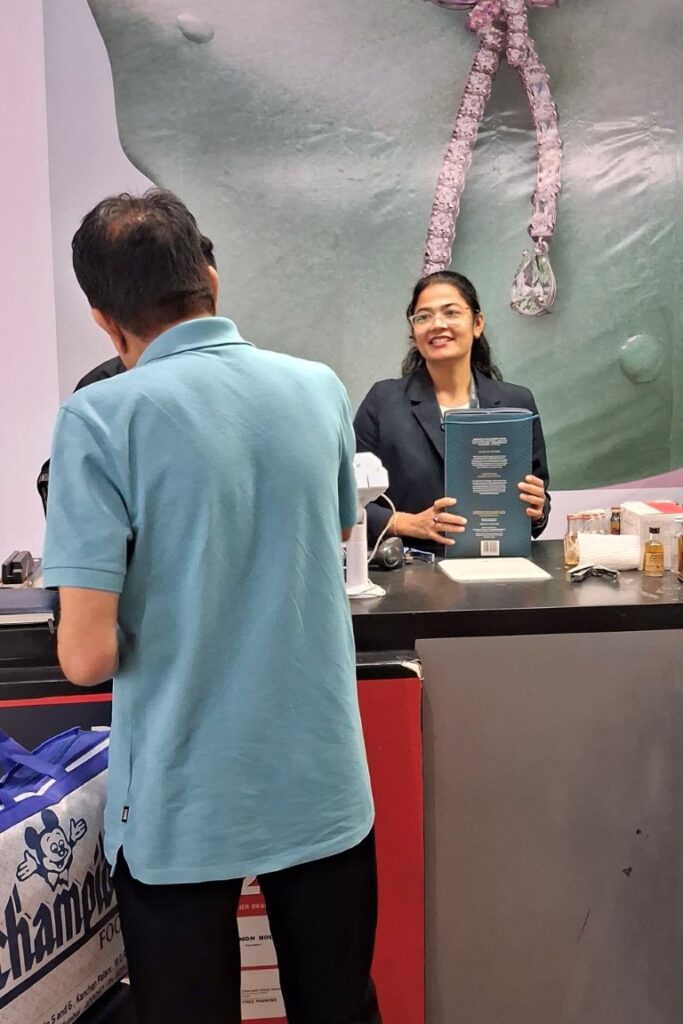
As a BA myself, I was highly interested in the world of whiskies, but also the history behind the brands. From there, I looked at the complementary industries. I started learning about the world of cigars, I spent time in Jerez in Spain to learnt about the sherry industry. Champagne followed next and Madeira.
Why is all this important? Because, having that wider knowledge allows you to educate the consumers because at the end of the day, what I discovered was passengers loved to hear personal experiences and stories from these regions in turn you build trust.
Two, be agile and able to adapt. We face many different challenges in airports. Putting Covid aside, during my time we had bird flu, SARS, volcanic eruptions, all unexpected challenges on the shop floor. You need to be able to adapt every day. The travelers’ needs can change, the retailer’s needs can change, and you must be agile enough to respond to the challenge.
Number three is be results-driven. Yes, numbers matter. We are a business, after all, and we need to sell bottles. At the end of each shift, look back at your numbers and ask yourself: Did I achieve the targets I wanted to achieve? Did I give the best possible customer service to everyone I interacted with? Where did I fall short, and how can I improve tomorrow?
PM: But your brand ambassadors, they’re all going to have clear targets though, aren’t they?
AKJ: Yes, absolutely. They will have targets. But beyond that, it’s all about building relationships. From my own experience of working with targets, I achieved better results when I shifted my mindset towards building relationships with passengers. And finally, from the moment our BAs walk into the airport to the moment they leave, whatever they do, they should always put the traveller, the customer, at the heart of everything. When you have that mindset, you’ll see a big difference between when you started and where you are six months later.

PM: So what is the average time you can identify that the connection can be made in real terms by the BA’s to be able to listen, chat, convert?
AKJ: That comes with time and practice. Sometimes you can establish that connection within seconds. It all depends on your approach and what you say. I always had a great way of breaking the ice. Passengers expect to be greeted in a certain way. A lot of the time, they’ll immediately put their guard up. You walk into a duty-free store and there might be eight or nine staff waiting to approach you. It can be intimidating. The traveller is already thinking, “They’re going to try to sell me a bottle. I just want some time to look around.”
So, break away from that. Say something they’re not expecting “Welcome to the most exciting shop in the airport”. I didn’t need to start talking about whiskies straight away, ask them, how was their journey to the airport, get to know them. It comes back to this idea of craft. You won’t crack it in a day. You won’t crack it in a week, but if you keep practicing those questions and keep practicing your craft, few months from now you’ll be a very different brand ambassador.

PM: I mean, if you’re looking at today’s airport operational systems, and especially with the new rigours of the EU security system that’s taking place and the nightmare that it has brought with it – effectively means that passengers are coming through to duty free stores airside frustrated, angry, and are not in the mood to buy. They just want to go straight to the gates and be done with it. I know from my own personal experience recently in Portugal. It was absolutely appalling. Nothing worked. When we first went in, 50% of these traveller entry identity screens worked. And when we left four days later, none of them worked. Lisbon Airport basically gave up using them and everything had to return to manual. The queues were phenomenal. The net result is that travellers enter duty free even more time constrained, and they’re seriously frustrated. Which means that you’ve got less time as a BA to truly communicate and make that connection. Have you found that?
AKJ: Yes, absolutely. I found that during my time. It was true in 2008, 2009, and it’s true today.
PM: It’s worse today.
AKJ: Probably worse in some cases. Yes, I completely agree. And I sympathize on two levels. As a traveler, I’m traveling almost every week so, like yourself, we go through this on a regular basis. But then I also sympathize with the brand ambassadors, because of that luxury of having 10, 15 minutes with a passenger
PM: Is a luxury now.
AKJ: Yes, time is a luxury now. Sometimes we have less than 30 seconds, or two minutes max. A great ambassador will make sure that every interaction with a passenger counts for something. You might have a passenger who doesn’t know much about whisky but has been asked to pick up a bottle. How do you serve that passenger compared to a connoisseur, a discerning customer who has a wealth of knowledge about the industry and knows exactly what they’re looking for? So how do you handle that?
A great brand ambassador who has studied and practiced their craft will have a series of questions ready. But most importantly, as I said earlier, if you put the traveller at the heart of everything you do, you’ll also be mindful of their time. It becomes a question of quickly understanding: How can I help? What are you looking for? What kind of whisky do you want? Is it for yourself or is it a gift?
Have those questions ready, understand the traveller in front of you and make their life easy.
PM: And budget?
AKJ: And budget, of course.
PM: Moving on, and just setting the job description aside, how do you personally define your role as global brand ambassador for William Grant and Sons in travel retail? I mean, on a typical day, who do you serve first? Who’s your priority? The traveller, the retailer, or the brand?
AKJ: Okay, let’s take the first part. When I tell people I’m a brand ambassador for a whisky company, nine times out of ten times they immediately picture someone standing with a glass of whisky in front of an audience conduction a tasting. And don’t get me wrong, that’s one of the best parts of my job, and my role certainly involves that. But when you add GTR in front of brand ambassador, you introduce a lot more nuances. It completely changes the game and makes my role very different.
First and foremost, I see myself as a coach for our brand ambassadors. In fact, a few of them have nicknamed me “The Coach”.
My job, predominantly, is to inspire confidence in our brand ambassadors so they can tell authentic brand stories but tell them in their own way.
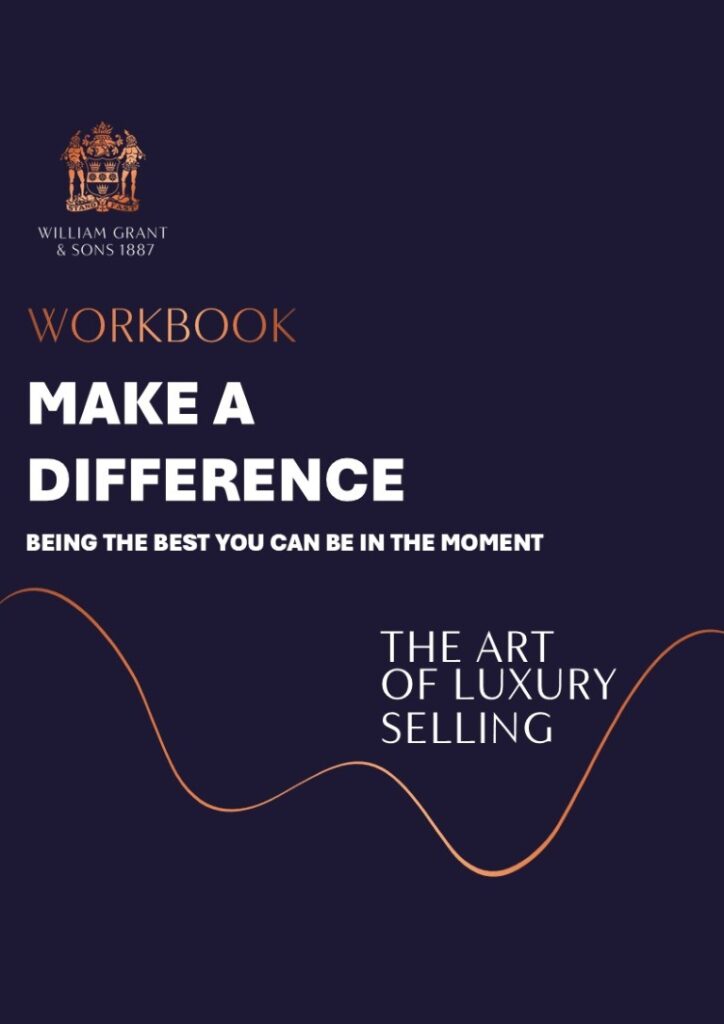
Then comes the education side. Of course, there are the fundamentals: you go through the brand history, tasting notes and, perhaps the best part, sit around a table and taste some whiskies. But where do you go beyond that? In travel retail, we have designed a series of programs for our brand ambassadors, including one called Luxury Selling. Together, we explore the differences between a transactional sale and luxury selling.
Beyond formal training, there’s the ongoing coaching. The brand ambassadors have access to me through social media, mobile and WhatsApp whenever they have a challenge or need advice. So that’s a large part of the brand ambassadorial role: training, coaching and developing educational programs that help our ambassadors grow.
Then we have the trade shows, such as TFWA in Singapore and Cannes, that give me the opportunity to meet the retailers. It’s an opportunity to bring them into our world, showcase our amazing portfolio and introduce our NPD’s. I also take part in whisky festivals in the Nordics, which are a fantastic opportunity to meet hundreds of whisky enthusiasts face to face. This also gives me the chance to spend time with our consumers and really understand them. They can be critical, and they’ll give you very direct feedback about your whiskies. I take that on board and feed it back into the business. All of this comes under the umbrella of being a GTR Global brand ambassador.
Then comes the question of who I serve first: the traveller, the retailer or the brand? That’s difficult to answer because I see all three as connected. We all need each other. We invest time and money in finding ambassadors and training them to become exceptional at what they do. As a result, they can deliver incredible customer service and a memorable retail experience for the traveller. That, in turn, helps the retailer build stronger relationships with their customers, while ultimately benefiting the brand.
So, in that sense, I don’t think I serve one head of the others. I serve all three, because when it works properly, we all win.
PM: That’s almost an answer, Ash.
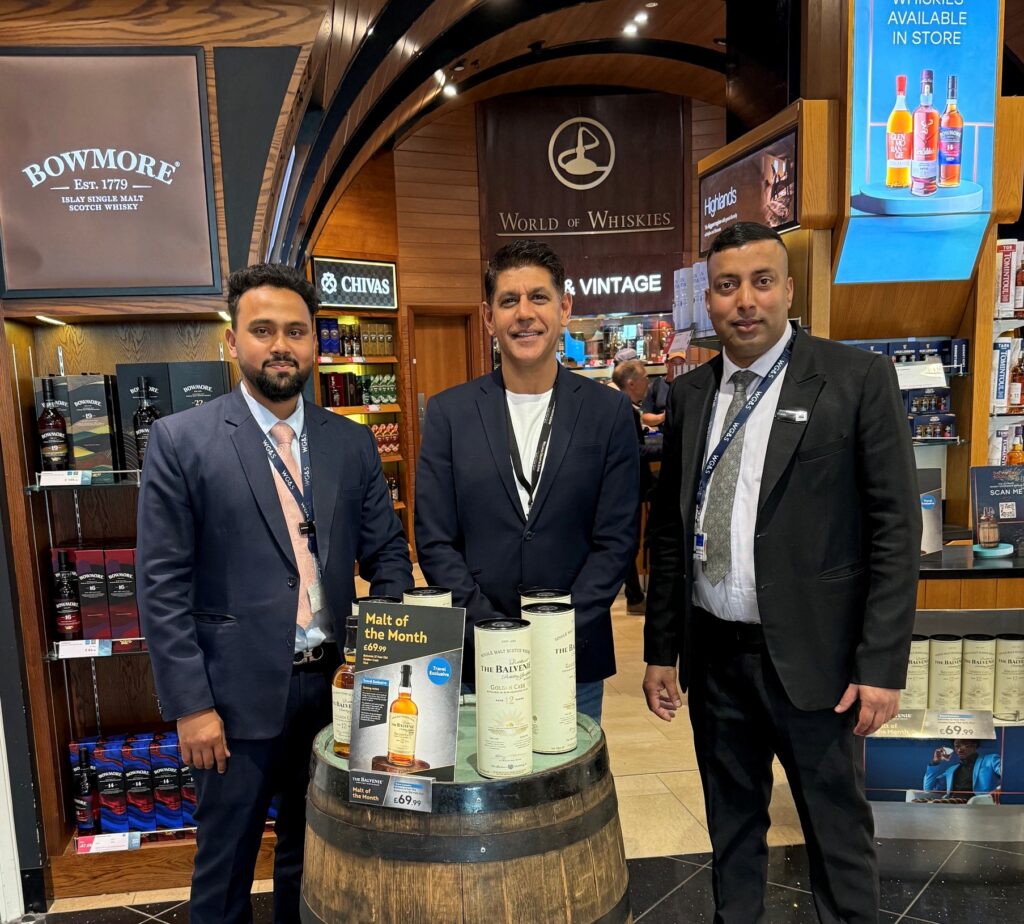
AKJ: It’s almost an answer! But hold on, if I had to prioritize one, it would have to be the traveller’s experience. And why do I say that? Because the moment one of our brand ambassadors comes face to face with a traveller, everything has to come together. All the training I’ve delivered, all the coaching we’ve done, all the programs they’ve been through – even the fixtures, fittings and incredible Glenfiddich and Hendrick’s wall bays around them – all of it comes together in that one moment. And ultimately, Peter, all of it has one purpose: to deliver the best possible experience for the traveller.
PM: Okay, let me just ask you another question. You have one of your ambassadors on the floor. One day they’re promoting Balvenie, the next Hendrick’s, the next Glenfiddich. Each of those brands have a different culture. Each of those brands have a different perception from the travelling passenger. Can your brand ambassadors be agile enough to reflect that culture? Basically, to switch horses in midstream if they need to. Can they talk about the culture when they’re selling Balvenie, and then talk a different way when they’re selling Glenfiddich? And another way altogether when it comes to Hendrick’s?
AKJ: Yes, that’s a fair point. And if they can’t do that, Peter, then I’ve failed in my coaching. When a brand ambassador first joins us, they spend an intensive period of time with me. We go through our brands, the history, the culture and the role they play within the industry today. The Balvenie is very different from Glenfiddich, which is very different again from Monkey Shoulder or Hendrick’s. I mention those four because they’re key brands for us, but we also have Silent Pool, Drambuie and others, including our Irish whiskey Tullamore Dew, and each plays a different role. Our ambassadors are coached across all these brands, and that learning doesn’t stop after the initial training. I test them regularly, and they receive regular brand refreshers throughout the year.

PM: So there are different trigger points for each brand.
AKJ: Yes, absolutely.
PM: Different emotional triggers, too.
AKJ: Yes, emotional triggers. But a great brand ambassador should also know the brands well enough to ask the right questions and understand what the traveller is really looking for. Someone might come in asking for a particular The Balvenie, for example. Through the conversation, the ambassador might discover that the flavour profile they’re describing points towards something different, and this becomes a great opportunity explore other expressions together. There’s no obligation to buy. What you’re doing is giving the traveller another option and allowing them to make an informed choice.
That’s where knowing the individual character of each brand becomes so important. It’s not simply about being able to switch from talking about Balvenie to Glenfiddich or Hendrick’s. It’s about understanding the person in front of you well enough to know which brand, and which whisky, is genuinely right for them.
PM: Got it. So in airports where shoppers, as we’ve just discussed, are seriously pressed for time and surrounded by screens, offers and noise distractions, what can a skilled brand ambassador achieve in a five minute – and shortening – interaction that no amount of digital or promotional spend can quite replicate? What’s the conversion?
AKJ: I hope the conversion is high for our brand ambassadors. And I think where we have highly skilled, highly trained and experienced brand ambassadors, the conversion should be higher.

PM: So just how high is high? What percentage are we talking?
AKJ: Probably about 60, 70%.
PM: That’s a good result.
AKJ: Yes, that’s a good result. Anything above 50% is a good start
PM: And…
AKJ: But from a skilled brand ambassador, I’d expect a little bit more. For somebody who’s new, it’s all part of the learning curve. If an interaction doesn’t go the way you wanted it to, so what? That’s an opportunity to learn. I’ve spent time with brand ambassadors who have asked “What am I doing wrong?” And I tell them, “It’s okay.”” The fact that you’re reflecting on something that didn’t go well is important. Think: “Today I got to practice my craft, and I discovered there’s a gap.” So, let’s fix that gap. That’s my job as a coach.
You also alluded to technology, and I think that’s important because when you walk through airports today, you see these huge, impressive digital screens everywhere. Technology is great at delivering information. It can give you provenance, tell stories and use incredible imagery to draw you into the world of a brand.
PM: But it’s also depersonalised.
AKJ: It is depersonalised, and that’s where the distinction becomes important. We currently have two very different activations. At Heathrow Terminal 2, there’s the Aston Martin Formula One and Glenfiddich partnership. You have this huge screen bringing you into the world of Formula One. Then you have something completely different from Silent Pool, where the imagery takes you into the Surrey Hills—the landscape, the flowers and the process behind the product.
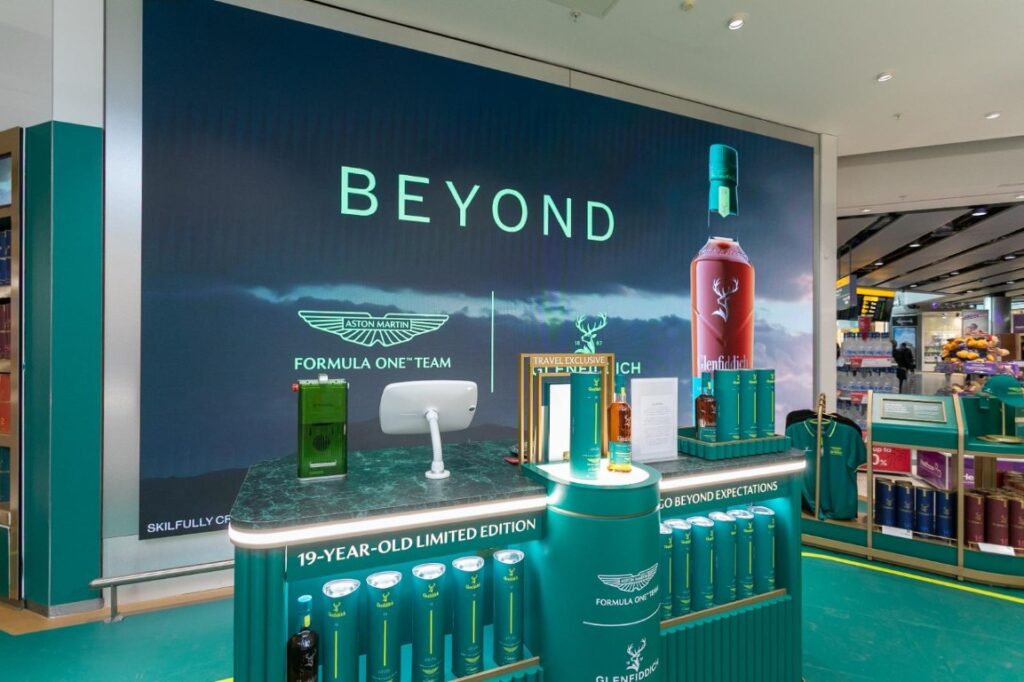
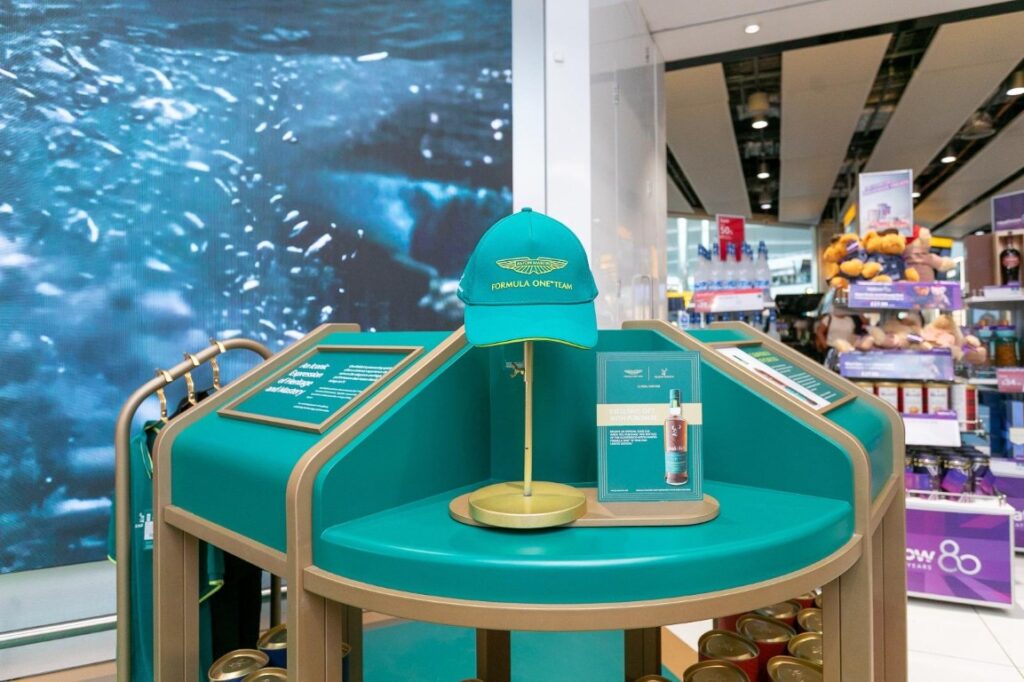

Technology can bring those worlds to life incredibly well. But what technology can’t do is recognize emotion. Think back to that passenger who has less than two minutes. A screen can’t recognize that they’re in a hurry. It can’t read their body language, understand their mood or adapt the conversation to what they need in that very particular moment. That’s where our brand ambassador becomes so important. They can adapt. They can be agile. They can be curious about the passengers and deliver a great experience within the time they have available. For me, that human ability to recognize, respond and adapt is the big differentiator between technology and a great brand ambassador in the airport.

PM: So let’s move onto this: what are the most demanding aspects of this job in travel retail? Is it language or cultural barriers, turnover of staff or shifting retailer priorities? All of them come into the mix. Just how do you keep the role focused on building the brand rather than just shifting bottles?
AKJ: Yes, teams will change. They always have. I used to be a brand ambassador in the airport myself, and I moved on, so naturally teams will evolve. Retailers’ priorities will change too, because the consumer travelling 20 years ago isn’t the same consumer we see today. There’s a lot of discussion about Gen Z and their expectations.
Then there are the cultural differences. A Chinese shopper can be very different from an Indian shopper, an American shopper, a Nordic shopper or an African shopper. But that’s the reality of travel retail. It’s a dynamic, exciting environment, and all these factors are part of it.

So, the question becomes: how do you keep brand ambassadors motivated and engaged? How do you keep them up to date while ensuring they’re building the brand rather than simply selling bottles? For me, that means training must go beyond brand education. Last year, we introduced a program called The Six Steps to Luxury Selling, which we developed based on my years of experience working in travel retail. It’s quite an intensive program, with storytelling at its heart, but it also involves a lot of role play. I’ll visit a region for a day or two and take the ambassadors through the program.
We recently did this in Nepal, where we brought together 45 of our brand ambassadors from across India for two days of intensive training and role playing. Through these exercises, we look at how ambassadors discover a shopper’s needs, how they recommend the right product, and how they approach upselling and cross-selling in a way that feels natural and relevant to the passenger. All those elements come together in the training. Yes it’s intensive, but the aim is to give our ambassadors the skills to go beyond simply knowing the brand. They learn how to understand the traveller, tell compelling stories and ultimately create a better retail experience.
PM: I guess it’s a great way to assess the talent amongst the brand ambassadors..
AKJ: Absolutely. But let me make one thing very clear: it’s a safe, closed environment. Whatever mistakes we make in that room, we learn from them, and from each other. What’s particularly valuable for me is that the program highlights where the individual gaps are. One brand ambassador might struggle with handling objections. Another might need help closing a sale. The program brings those things to the surface, which means I can see where each person needs additional coaching and support. Once we’ve worked on those skills and the art of storytelling, we let them put everything into practice on the shop floor. We’ve seen some great results from this approach, and what I’ve found is that making education fun, engaging and enjoyable really works.
PM: Okay, I want to go back to the return on investment. It’s not inconsiderable, the work that goes into the training for BA’s and assessment of how they do on the shop floor. But it is a real expense. And when you’ve got a promotion on site as well – beyond the tray – that’s a huge expense. You know, if you set aside the issue of marketing presence, storytelling and word of mouth etc., in real terms, how many of your brand ambassadors self-liquidate? Here I mean break even at worst or make a profit. It’s a commercial enterprise, after all. You want these guys to work for you and make money for you as a business. A lot of people I speak to from the brands say that they put money into airports knowing that they’re probably going to lose money. And that applies for brand ambassadors, too. Where’s William Grant in all this?
AKJ: We currently have around 150 brand ambassadors globally, and there’s a clear commercial model behind where we deploy them. First and foremost, we have a list of priority airports where we want to ensure our brands are properly represented. We then look at our key brands, Glenfiddich, The Balvenie, Hendrick’s, Monkey Shoulder and Silent Pool, and consider where each of those brands has the 


From there, our regional managers and Customer Planning & Activation Managers sit down with the airports and retailers and look closely at the performance of that location. So, it isn’t simply the case of placing a brand ambassador in an airport and hoping it works. There’s a commercial assessment behind that decision, looking at the airport, the passenger profile and the opportunity for our brands. And we have definitely grown and seen the results in the last five years.
PM: So they pay for themselves.
AKJ: We believe they pay for themselves.
PM: The numbers will show.
AKJ: Yes, absolutely. The numbers must make sense. If they don’t, then we must look at why. We have an Insights team within GTR that looks closely at the numbers, and that’s one of the reasons we’re very strategic about where we place our brand ambassadors.
India is a good example. I was recently asked why we have a great number of brand ambassadors there, we have around 15 in both Delhi and Mumbai.
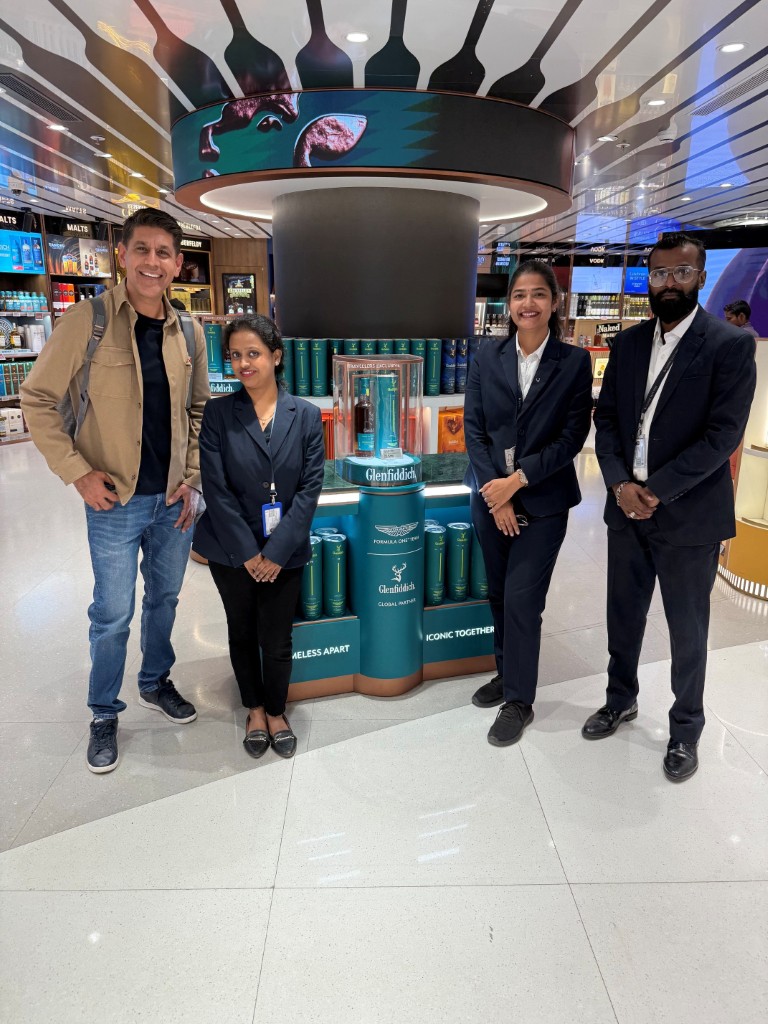
But there’s a strong rationale behind that. India is a huge whisky buying market, and whisky is deeply embedded in their culture. The country is also seeing significant growth in wealth, with an expanding middle class and more consumers discovering and developing an interest in single malts. So, there’s a clear reason why we have that level of brand ambassador presence in those airports.
But it’s never the case of putting people in place and leaving them there indefinitely. We regularly evaluate every location to make sure the numbers continue to make sense, and that having brand ambassadors there remains the right investment.
PM: Indian whisky itself is certainly on the march. Does William Grant have a distillery there?
AKJ: We don’t have a distillery yet.
PM: Not yet.
AKJ: That’s above my pay grade! But what I do know is that Monkey Shoulder is hugely popular in India and performing extremely well. We’ve also recently announced a major creative partnership with the DJ Fred. My son is crazy about his music, and when I mention his name to the younger generation than me, the reaction is immediately, “Oh my God, Fred Again!” As part of that partnership, we’ve announced three major concerts in India where we’re involved as creative partners. It’s really, really exciting.
PM: That’s smart marketing.
AKJ: Well, India is a great market for us. It represents a significant investment and a huge opportunity for us as whisky producers.
PM: Okay, let’s move on. You sit at the intersection of brand, retail and airport. What does the three way relationship really enable you to create a standout experience of travellers? And when does it make your job unnecessarily difficult?
AKJ: That’s a great question. I think it works when all three parties are aligned around one main objective: whatever we do, the traveller, the consumer must be at the heart of everything. To me that’s number one.
Secondly, airports and retailers create these incredible environments for us. They’re engaging, dynamic and full of energy. I love the Travel Retail industry. I can walk into an airport and immediately feel energized by it. It’s colorful, you have people from every culture, some are rushing for flights, others are having a coffee or shopping. It’s a fantastic environment.
So, the question for us becomes: what are we, as William Grant & Sons, doing to complement that environment and deliver on that same objective?
A couple of years ago, we trialled a shop-in-shop concept at Incheon, and it’s incredible. I like to use the analogy of a theatre. We’ve essentially created a piece of theatre centered around our single malts, Glenfiddich and The Balvenie. Within that theatre, you have all these different touchpoints, with brand ambassador as the main actor on the stage. They can curate the tasting depending on the traveller. It doesn’t have to be the traditional tasting from a tray. They can create a distillery style tasting or adapt the experience in another way to give that customer something much more engaging and memorable. There’s also a real opportunity to educate the consumer. Throughout the space, there are different ways to tell our brand stories, from the history of Glenfiddich’s famous triangular bottle to the craftsmanship behind The Balvenie.
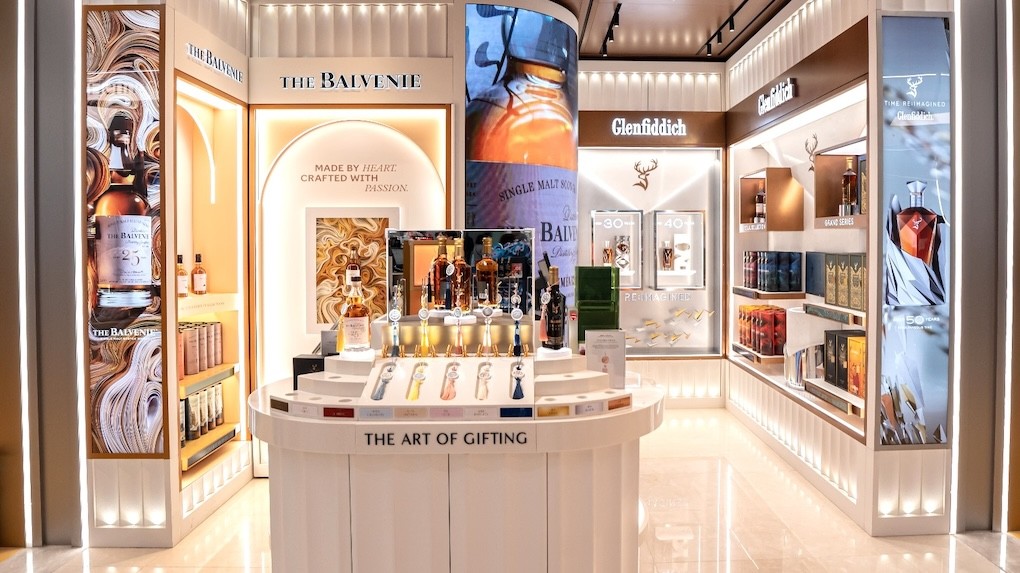
We have also introduced another important element: gifting. We’ve incorporated cultural gifting and personalisation into the experience, and that has proved incredibly popular.
What we learnt was that the model really worked. So, following the Incheon pilot, we took that same concept into Hainan, Hong Kong and Singapore. We’re now introducing the first one in Europe, Frankfurt’s new Terminal 3, and planning to open our first SiS next year in North America.


PM: That’s a considerable investment.
AKJ: It’s a huge investment. But from that initial pilot in Incheon, we saw that the return was there, and that gave us the confidence to continue developing the concept. Where my role becomes more challenging, and perhaps this is a personal frustration, is that I’d love to have a shop-in-shop in every airport where we have a brand ambassador. But, of course, budgets are finite. So, the question I’m asking myself now is how we recreate elements of that experience in airports where we don’t have a full shop-in-shop, where our brand ambassadors can still deliver elements of that richer, more immersive experience. For me it begins with storytelling.
PM: Looking ahead a few years, how must the brand ambassador role in travel retail evolve to stay truly relevant? You know, there are robots out there, you’ve got huge advances in AI. What type of support or investment would be critical for brand ambassadors to keep adding real value?
AKJ: That’s a fair point, and it’s something we’ve looked at internally. Technology is going to become much more advanced. We’re still at a relatively early stage, and AI is going to play a significant role. But I think that, within the travel retail environment, this will make the role of the brand ambassador even more valuable. It comes back to the human connection we talked about earlier. There are things that a great brand ambassador can recognise and deliver on a human level that AI and technology cannot fully replicate.
So, what does the brand ambassador of the future look like? I don’t think they’ll simply be brand ambassadors. They’ll also be coaches, storytellers and motivators. One of the ways we’re already preparing for that is through a programme we recently started called Train the Trainer. I’ve identified several key brand ambassadors across different geographical regions, and I’m now passing on much of what I’ve learned to them. The idea is that they become the trainers within their own regions and airports. They can motivate their teams, develop their storytelling skills and pass that knowledge on to others.
There’s also a significant cultural advantage to that approach. Those ambassadors understand their own cultures in a way that I never could. Someone can tell a joke in Mandarin and make a genuine emotional connection with a Chinese traveller in a way that I simply can’t.
Another initiative I’ve introduced is an internal podcast. I sit down with people such as our Malt Master, Brian Kinsman, and Lesley Gracie and have an open conversation with them. We talk about their personal journeys, but we also go deeper into the products. For the new Glenfiddich Voyage collection, for example, we can ask: What was the rationale behind it? Why did we create it? What was the thinking that went into it? We then invite all our brand ambassadors, along with key stakeholders from across the company, to join the conversation. They have a rare opportunity to ask questions directly: “Brian, tell me about this,” or, “Lesley, why did you do that?”
PM: That’s great for internal communication and bonding.
AKJ: Absolutely and bonding is a big part of it. Because once our ambassadors have access to those people, those stories and that knowledge, they can take it all back into their airports and use it in their own conversations with travellers. I’m always looking for new ideas about how we can expand that knowledge. At William Grant & Sons, we think a lot about longevity, and that means continually investing in our people.
Next year, I want to take the podcast beyond our own world and explore some of the industries that complement the whisky industry. I’d like to do episodes from Jerez, Madeira and Porto, for example, and perhaps explore the cigar industry. Then I’d like to take it even further into the wider world of luxury. Imagine bringing in somebody from a luxury watchmaker or a leading hotel group and asking them to share what luxury means in their world.
It’s about continually expanding the knowledge base of our ambassadors and bringing them all together into the same conversation
PM: Great idea, Ash. Well this interview was meant to be a 10 minute chat. It’s really stretched a bit, but more than worthwhile. I must say, the passion which you show is palpable. Great conversation. Thank you so much.
AKJ: Thank you, Peter.










To subscribe free, please enter your email address: