

Twelve Months, Five Million Passengers and Two Front Doors. Jägermeister’s Brave New Pop-Up World at Frankfurt T3. Tobias Witte, VP Global Travel Retail, Mast-Jagermeister SE, Interviewed.


At Frankfurt Airport’s Terminal 3, Jägermeister has delivered a very strong and vivid statement about the power of global travel retail to build brands, not simply sell bottles. In this referential conversation with Tobias Witte, he explains the thinking behind the brand’s dual-site “Destination Meister” and “Destination Jäger” activation. It’s a striking fusion of heritage, craftsmanship and quality with contemporary energy, colour and digital engagement. He discusses the importance of stopping power, the role of Fraport and retail partners, the forthcoming measurement phase, and why Frankfurt could become a blueprint for a broader international airport strategy.
Peter Marshall (PM): Welcome back to TRunblocked.com Tobias. Let’s start this conversation with the moment of the encounter at Frankfurt T3. A traveller rounds the corner into Pier J and sees green on one side, orange on the other. Now, in those first three seconds before they even read a word, what do you want that person to understand, to feel about Jägermeister?
Tobias Witte (TW): I think the first feeling that the traveller will have is likely to be surprised to see something unexpected. Surprise, but with immediate appeal. And then, when taking a closer look, it will feel relevant. I think, you know, we as a brand want to be dynamic, we want to be fun. We want to surprise. So if that is something that can be transmitted – because you wouldn’t expect it there when coming around that corner into that walkway – then that would be great if that feeling could be transmitted and felt by travellers.
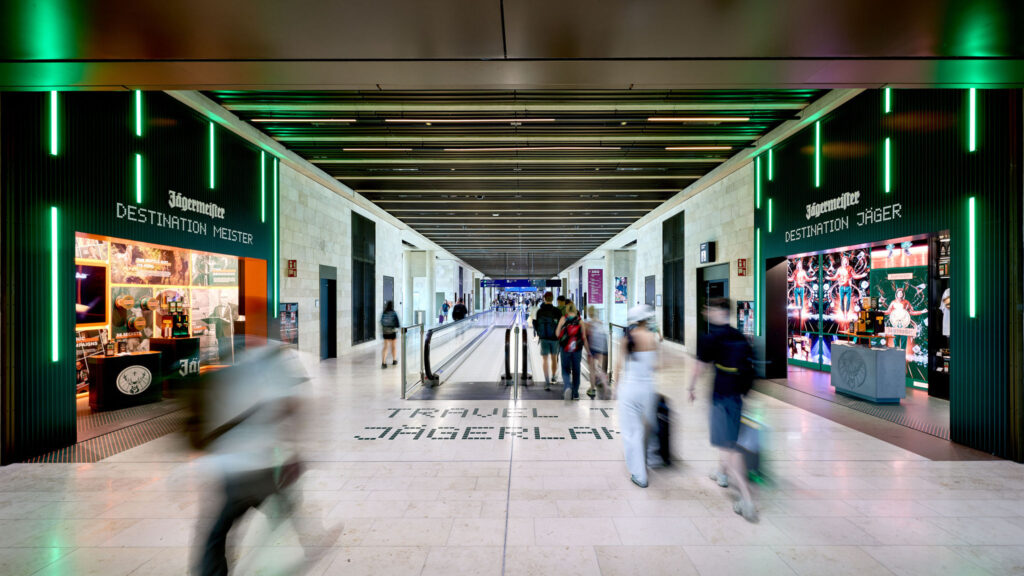
PM: Now the two spaces face each other. It’s a major statement from you, but it’s also a choice you’re forcing someone to make with limited boarding time ahead of them. Just take me through the logic of what you’ve actually created for T3. I mean, what does Destination Meister say that Destination Jäger can’t and vice versa?
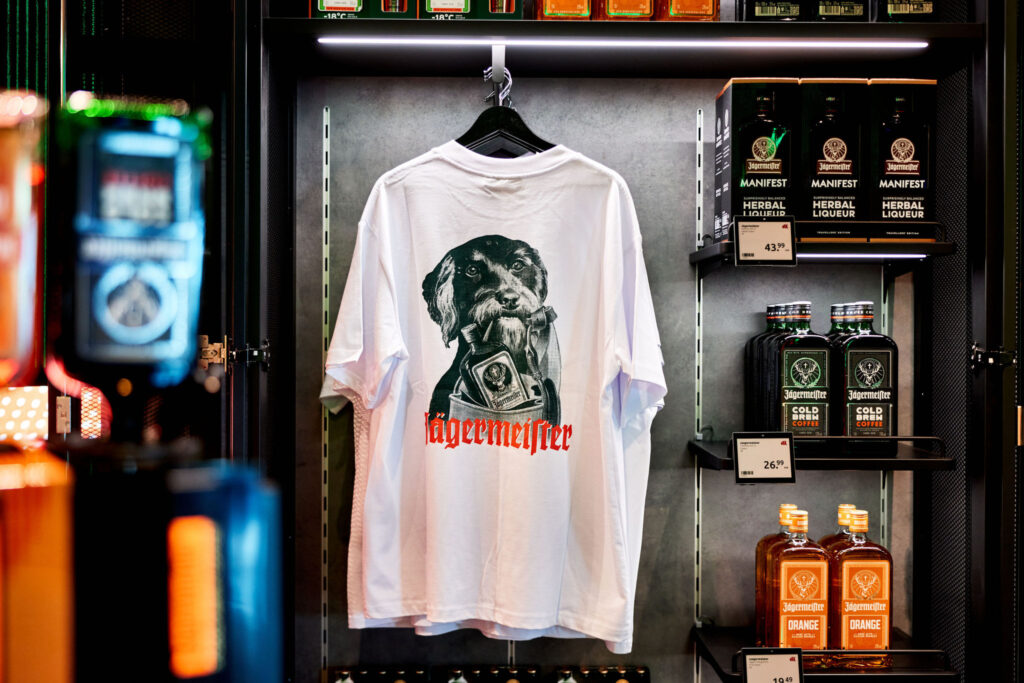
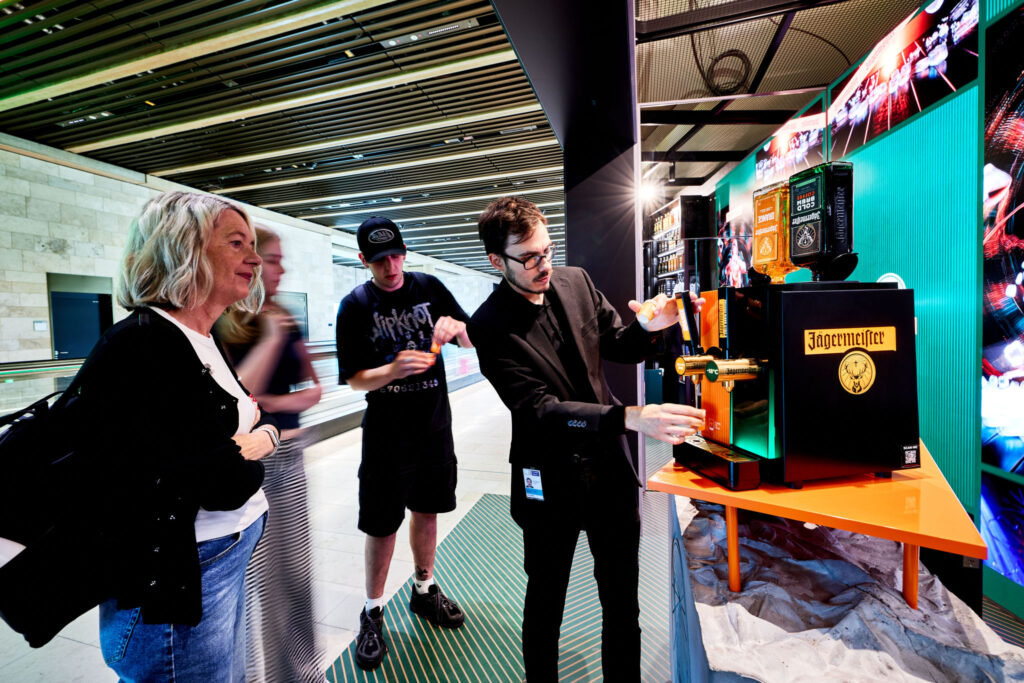
TW: Well, first of all, you don’t really have to make a decision. There is no decision to be made. Maybe a traveller is drawn to one side by colour before going to the other one. The two spaces are really complementary to each other and we are trying to showcase the heritage, the craft that goes into the product and the quality on the one hand, that a lot of travellers and even consumers might not be aware of and then on the other hand, we show the presence, the fun, the engaging side. So it’s a little bit what we call not really past and present, but maybe the yin and yang of our brand. I think that that is the idea without having to make a choice.

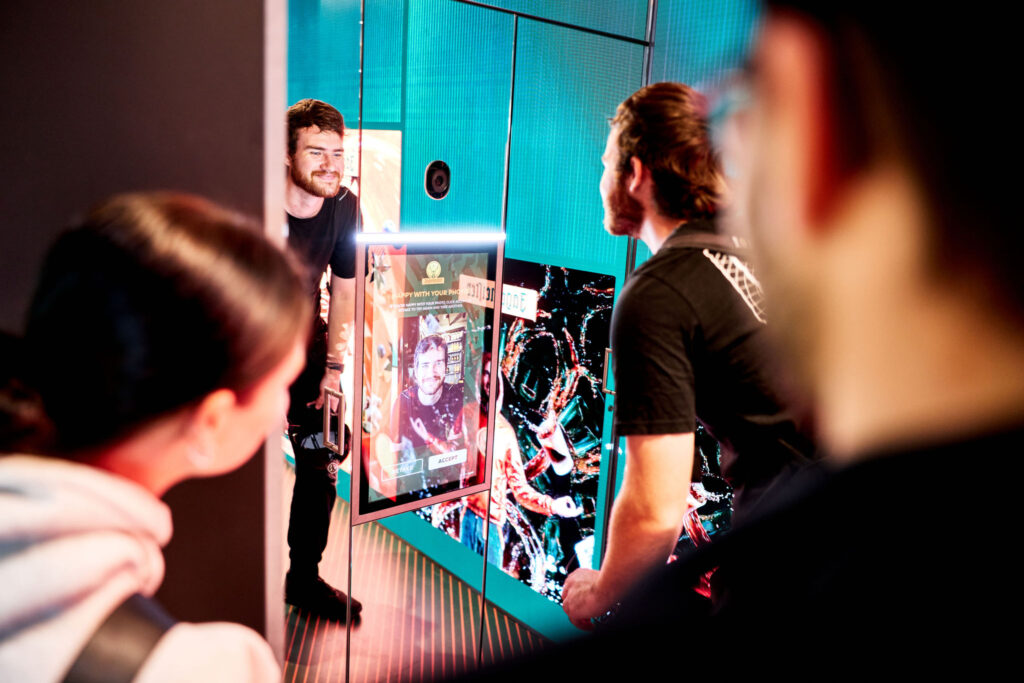
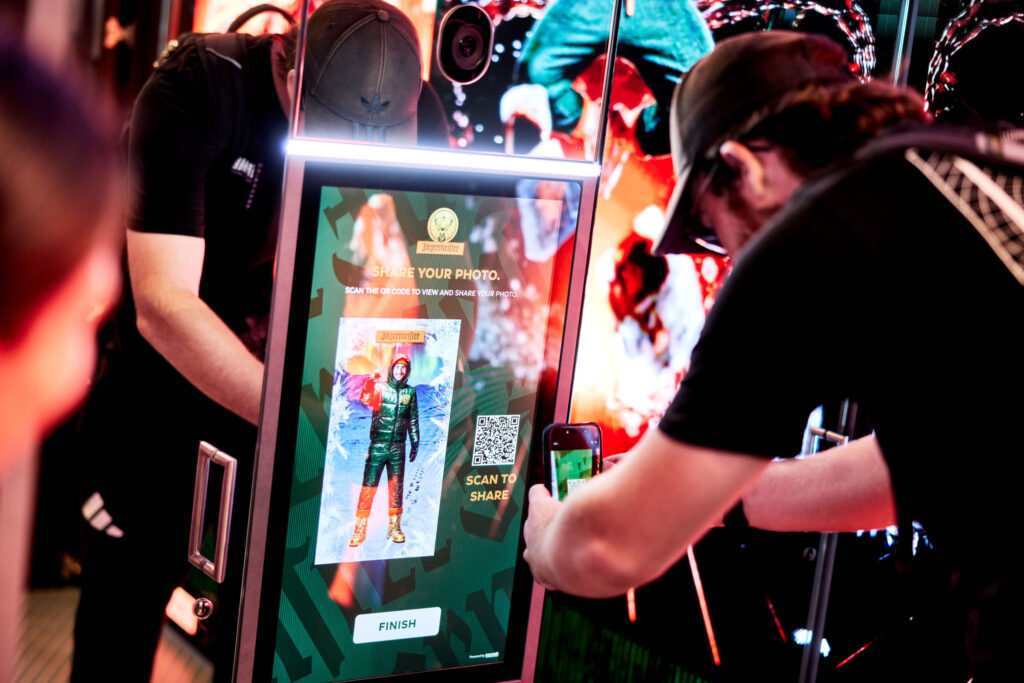
PM: Well, I like it because you’ve got craftsmanship and cultural, educational history on one side and a very funky, engaging AI booth on the other. But isn’t there a risk that you’re asking travellers to hold two contradictory ideas about a brand they may only have 90 seconds for.
TW: Well, we hope the traveller spends far more than 90 seconds there!
PM: So time enough to buy something.
TW: Yes, that would be ideal – if there’s conversion at the end as well. But I think they’re not contradicting each other. They’re complementary to each other and they should really reflect our values which are, on one hand, heritage and a lot of tradition as well as modern values. And that can go hand in hand.

PM: Now you’ve said Terminal 3’s long haul traffic lets you introduce the brand to people with little actual awareness of your history. We’ve covered this point earlier. I know it’s early days, but have you actually conducted any research since the launch to show how this is working for you?
TW: Not yet, but we will. At the moment, post launch, we are really focusing on getting initial insights, because it’s the first thing that we have done there and we don’t really have experience in retail shops. So we wanted to focus on running the shop properly and have the process up and running and to really ensure that we showcase a great experience to travellers. That, by now, is more or less done and we are really pleased and happy with the results.
 And the second step now will be awareness measurement. We will ask travellers: did they recognise Jägermeister at the airport before and after they have passed the store and really have an understanding of how the communication has helped.
PM: Well, we’ll get to the point about your presence at the airport a little bit later. But I don’t think they can fail to see your marketing presence before and after they get to your store.
So, Stephanie Cleary talks about illuminated ceilings and floor graphics stitching, weaving the two spaces together. Having seen the two spaces, there’s little question that it clearly works. Now, when you stood in that corridor for the very first time with everything switched on, what did it actually speak to you on a personal level? And what, if anything, would you change tomorrow if you could?
TW: Well, I had goosebumps. And I was really, really proud because, you know, it took 12 months to bring the bold vision that we had to life. This might seem long, but it’s actually quite a short period to turn a thing like this around, especially if there is a new terminal, you have no retail experience, and there are a lot of, you know, first tries. When Steph talks about the illumination, there has never been illuminated strips on ceilings in airports, in shops. There has never been floor branding. So also the talks and negotiations with our partners, you know, that was a long process. And I have seen the scribbles and we have adjusted the drawings and what not. But then to really see it live and to see how it speaks to travellers, how it has the stopping power, and travellers are really coming around the corner, stopping, then going into the store – that gave me goosebumps, and I was really, really proud of the whole team and all the partners for bringing this to life. So at the moment I wouldn’t change anything.
PM: So, while it was being built, were you still changing ideas about what you wanted to put into the two spaces? Or was it locked off in design terms?
TW: There were numerous rounds – we did a lot of creative rounds and ideations, had numerous concepts, also tested a couple of the concepts with target consumers in a digital format to be sure we have the most appealing concept that speaks to our consumers.
PM: Alright, let’s move on. The word ‘pop-up’ is doing a lot of work in the coverage of this. But 12 months on site isn’t, strictly speaking, a pop-up in most people’s view. So, is this a permanent temporary activation – an extended pilot, as it were – where you’ll stop next summer? Or is it just the beginning of a permanent Jägermeister presence at Frankfurt?
TW: Well, I like the phrase ‘permanent temporary activation’. It is the first time we do this, as I said. So we will now do this for 12 months to see if it works. And you know, I truly hope that this could turn into a blueprint to do similar things in the future. But I don’t want to jump the gun. So let’s really focus on what we have. Let’s see if it works. Let’s take the time. And we said, okay, it is still a pop up for us, even though 12 months might seem long. But you need that time to really evaluate, especially also when you do this in a new terminal that also doesn’t really have processes and experience or any data yet. So we really wanted to make the investment and take the time to properly evaluate if the concept works.

PM: So let’s just talk hypothetical then. If the numbers land where you want them, what happens next? Do you extend Frankfurt or replicate the two-site models somewhere else? And you know, I have to ask this question: which airport is next at the top of your list? Or should I say airports?
TW: Well, Peter, that’s a good question, but you really have to watch the space. I think the vision that I had initially wasn’t just one airport. The vision was what if we have the brand equity and the strength with our brand to really go into retail or pop-up stores on a global level, to showcase not just the product but also everything that goes along with our brand. So I truly hope that data will show that this concept is successful to drive this concept further, especially to the regions where we see the biggest potential within the emerging APAC regions for us as a brand.
PM: Well, from my perspective, I certainly think you’re on a winning formula with whatever you appear to be doing currently. Everything you touch, whether it’s Jägermeister Orange or whether it’s Teremana, seems to turn to gold. Liquid gold.
You’ve said you want to keep pushing boundaries rather than repeat the last 20 years. What you’ve achieved here at Frankfurt is both impactful and impressive. Do you think this actually sets a new benchmark for airport activations? And what’s the next step – two boutiques plus a dedicated bar at an airport? Isn’t that a good candidate?
TW: Well, I think what we have to watch as a brand is the different life cycles our brand is in, in different geographies. So I wouldn’t want to replicate something in our home market necessarily through an emerging market, because maybe the brand has different needs in terms of creating awareness. I do think that the general concept of showcasing everything a brand has to offer, especially with, ideally, a bar service is really good – because we’re producing drinks at the end of the day, right? You know, this could be a great, great opportunity. But again, it’s too early to say what’s next. Let’s focus on doing things right and get the insights. That’s why we said: let’s take 12 months.

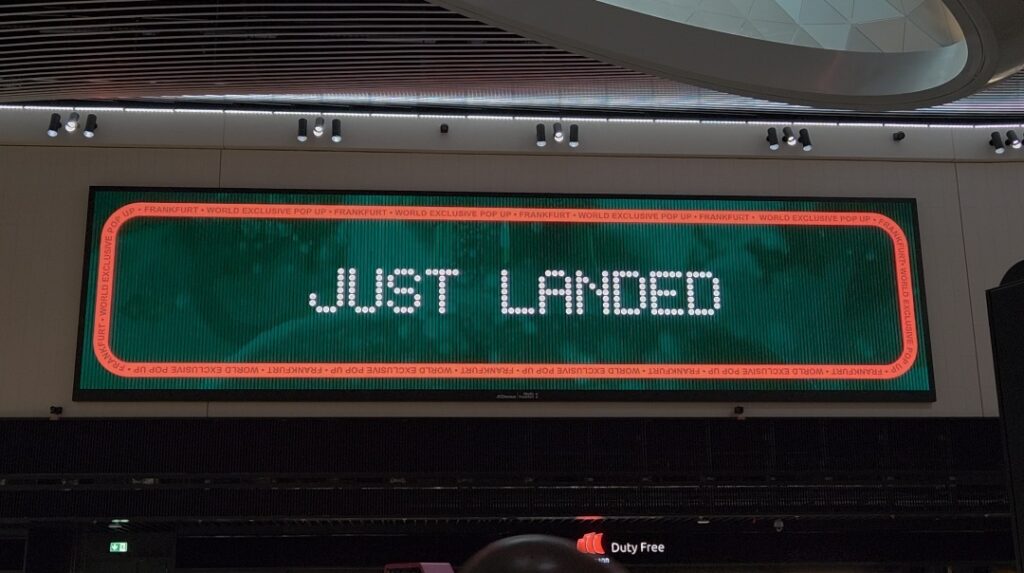
PM: Indeed. I think the bar concept could legitimately even include the likes of Teremana, if you look at your brand portfolio. Anyway, moving on, Babette Stapel, Senior Executive VP, Retail and Real Estate at Fraport, has said that brands at Frankfurt become part of the travel experience rather than simply gaining visibility. I mean, right now, and as we discussed earlier, you’re present on screens at the airport, at the point of entry, at check in, right up to the gate. When does following a passenger like that stop feeling like hospitality? And how do you know you haven’t crossed the line in terms of overdosing on advertising? Just how much of a balancing act is it?
TW: It’s always a balancing act. You’re right. We certainly don’t want to annoy our consumers or travellers. Though I think coming to an airport and coming to Frankfurt, you don’t really think about Jägermeister or our brand at all.
So it all starts with visibility, to create some relevance for the brand. And if that visibility that subtly remains on the journey of our consumer turns into an engagement and an experience with a brand that you can touch and feel and smell, I think to me that’s the holy grail and we hope we have achieved that.
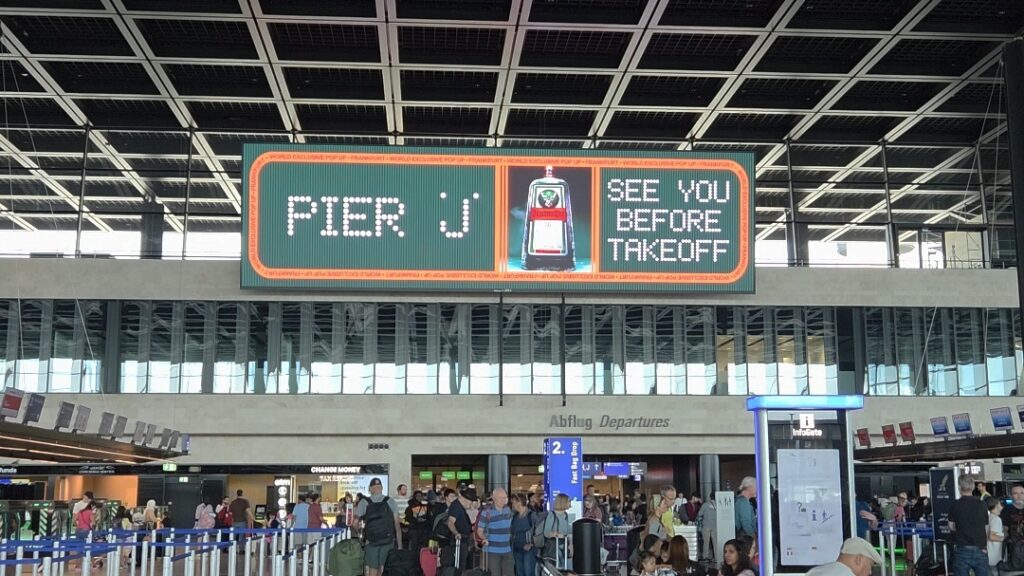
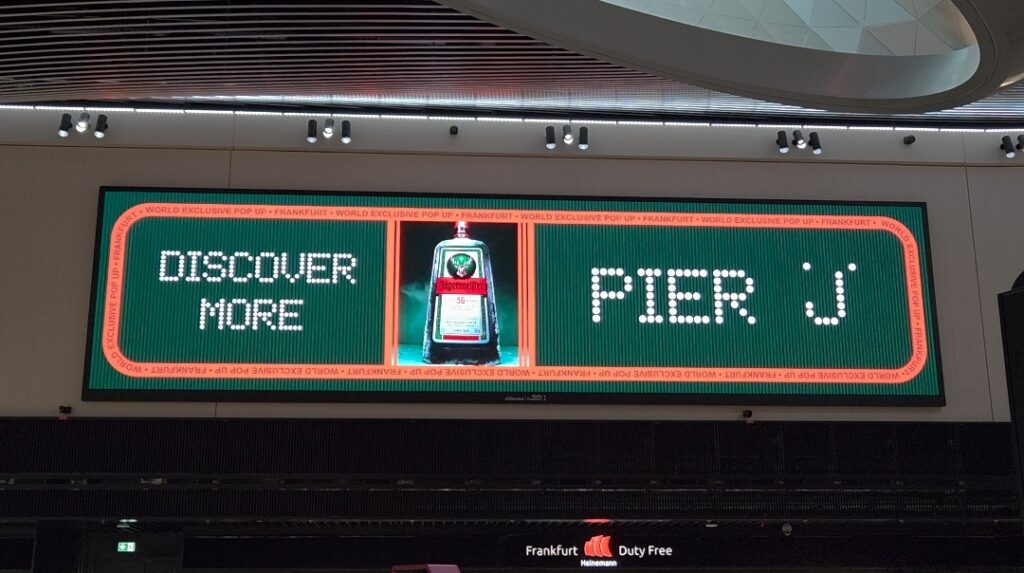
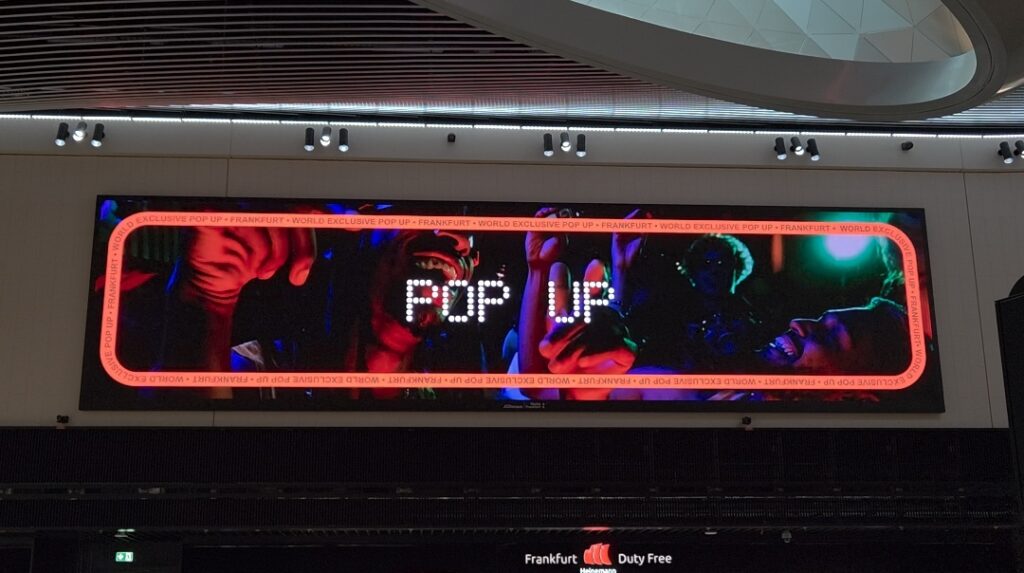
PM: Well, I certainly think strategic awareness for the brand is one consideration. But after a while, and maybe it takes 12 months, I’m sure the advertising is going to need to evolve, once you’ve gone past the awareness stage and the conversion stage, into something completely different.
TW: But you have to also keep in mind, Peter, you’re totally right, but the average traveller travels two times a year, right? So it’s not that the traveller goes through Frankfurt every week or every month in order to have relevancy. So for sure, what we are also trying to do in the future is to switch and change not only the assortment in the store because we have limited drops, we have global campaigns. So we are always able to switch a little bit the look of the store, the assortment of the store, as well as the advertising that potentially could target a new collection that we may offer.
PM: Well, the spaces here are small enough to be agile to manage that. Let’s turn to your partnership here with Frankfurt. From your point of view, just how important has that partnership been to get this project off the ground?
TW: It’s super important. And I think I said this in my opening remarks as well. It’s really that and only that trinity that could bring it to life. If retailer, brand and operator work together on a common goal, this is when magic happens. And I think this is the only success formula because without their support, without their belief in us that we can pull it off, it wouldn’t be possible.
PM: It’s a genuine partnership and clearly there for all to see. And certainly, in my early conversations with them, they feel very strongly about this. And, as you know, it’s not just you, but a couple of other players as well that are involved. And I think it’s the tip of the iceberg. I think that there’s a lot more to come.
So, one last question, Tobias. If there are three things that you want to say to the industry right now about what you’ve done at Frankfurt T3 and about the Jägermeister brand, what would they be?
TW: I think I would ask everybody to continue to watch this space because, as you rightly said, it’s the tip of the iceberg. And there’s plenty more stuff to do and to come from us. Because GTR is, and will continue to be for us and to me, the channel where we can actually drive brand awareness and relevance in a fun, entertaining and engaging way. There is no other channel like GTR that is able to do this. That’s the first thing.
The second thing I just touched on is that it only works if a brand, operator and retailer work together. We have a common goal. We have the same goal – to talk to one traveller, to one consumer and to engage them into our retail world. So it is utterly important that we understand our common goal and that we work together to create the best possible retail experience.
Which leads then to the last one. The consumer or traveller is key. We need to put them at the forefront of everything we do, everything that we try to establish has to go through the filter. It has to be relevant to the consumer. And if it isn’t, we drop it. And if it is, let’s be bold and try it out.









To subscribe free, please enter your email address: