

Inken Callsen: “Pricing Is No Longer The Magnet”. An Exclusive TRunblocked.com Interview


I’ve followed Gebr. Heinemann for more than 30 years, and I’ve rarely heard a senior leader speak this candidly.
In this remarkable interview, Inken tackles the assumptions travel retail would rather not question – that price wins, that today’s shopper is the only one worth chasing, and that this famously slow industry can afford to keep moving at its own pace.
Her answers on non-shoppers, clutter, GHARAGE Ventures and collaboration are essential reading for anyone serious about where this business goes next.
Peter Marshall (PM): Inken, welcome to Trunblocked.com. You now have Commercial Strategy and Operations as well as Global Supply Chain all under one roof. And that’s you. So, if I walked into Heinemann today and asked your teams where they would say you are really changing the rules, what would they say?
Inken Callsen (IC): Interesting. I would love for you to do that, actually. But let me give you my best answer. I think they would say it’s about collaboration and the way I manage the business changes the style. This means working across functions and bringing the knowledge of everyone around the table together to turn it into better solutions for the business.
PM: So there’s no boxed thinking on their side. You’re not facing any internal resistance?
IC: Well, you will never have everybody fully behind you. That would be unrealistic. But the better we explain why we are doing something, the better people will come along. There are people who are more open to change, and there are others who are more resistant. This is normal in any business. At the same time, I believe this willingness to change is exactly what has enabled Heinemann to evolve for more than 145 years. And today, we need to change more and faster than we probably did over the last 100 years. The pressure is higher than ever, but ultimately, it is change for the better.


PM: I’ve known the company for well over 30 years now, and I’ve seen some real changes, particularly in the last five to 10 years. As a business, you’re still growing very fast – in spite of the volatility of the marketplace right now. Indeed, and arguably, you’ve been facing geopolitical issues for much longer than most – and in more regions. So what, then, are the big strategic bets that actually keep you awake at night?
IC: That’s a difficult question. I would love to bounce one question back at you: how do we balance growth, keep up speed to market, and stay resilient at the same time?
When you talk about geopolitical shifts and a constantly changing world, it is usually the case that one region is affected more than another. Because we are globally present, and because we operate across different channels and categories, we have a very healthy mix. If one part of the business is under pressure, another part can offset that.
We will never have a situation where everything is growing everywhere at the same time. That simply doesn’t exist. But the way we are set up gives us a solid base and allows us to balance things out.

PM: It is Gebr. Heinemann’s vision to turn travel time into valuable time. Can you give me two concrete examples of where you actually stopped doing things in stores or in the assortment that you offer because they didn’t live up to that promise.
IC: We are becoming much tougher when it comes to delisting products. That can also apply to promotional activities that are not paying off, activities that are more about visibility than actual value creation. Personally, I think we have not always been tough enough in the past. And going forward, I think you will find even more examples of us stopping activities, products or sub-categories that simply do not generate enough value. It’s because we have so many new things we want to bring in and we need space for that.
PM: Well, I’m from the old school that believes that less is more and that I think that clutter is a genuine problem in travel retail – particularly in certain categories, notably fragrance, cosmetics and liquor. Against that, you’ve got ‘hot’ products in the domestic market that simply cannot find a place in travel retail. In perfume and cosmetics, it’s actually all about niche brands. So do you agree that there’s too much clutter?
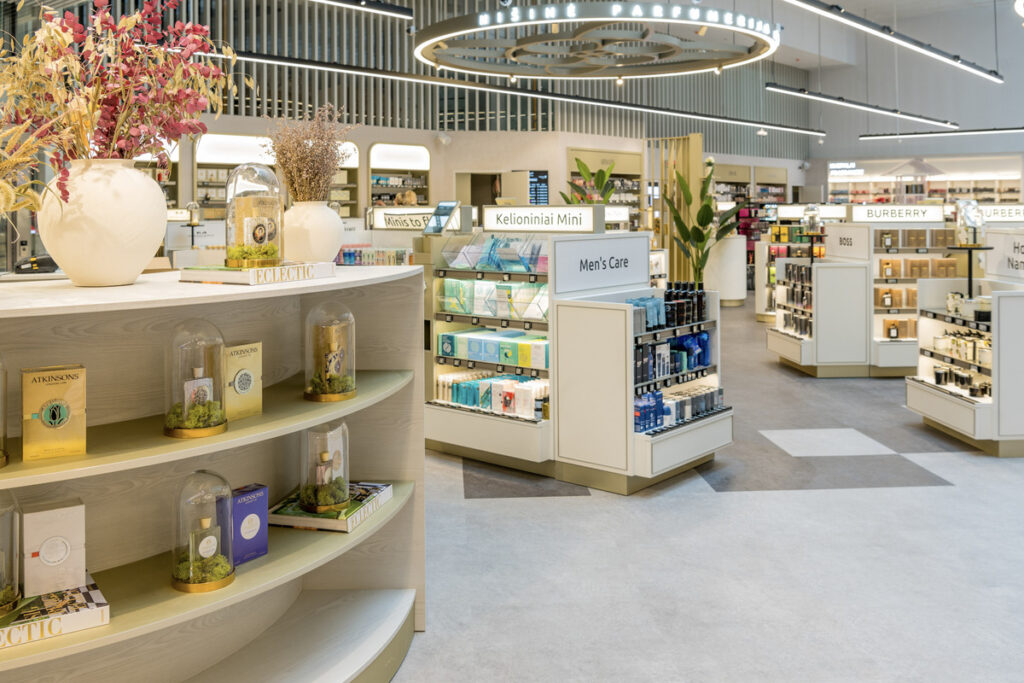
IC: Agreed. And that’s precisely why we kicked off our assortment efficiency project last year. There is too much choice. And the paradox of choice can mean that customers leave the store without buying anything simply because the offer feels overwhelming.
At the same time, there is an opportunity to broaden the offer by bringing in new categories or new types of products. I wouldn’t necessarily call that clutter – that is more about widening the offer. But within categories, we definitely need to simplify.


And it’s not just about assortment. The visual impact on the shelf plays a major role as well. The clearer the layout and the better the store environment, the easier it is for consumers to navigate the store.


PM: I get it. But it also inherently means that you have to accelerate the pace at which you make decisions because, as you well know, this is a slow business. No one really owns up to this.
IC: Yes, you’re right.
PM: It’s painfully true. Some brands who deserve space are waiting a year to get on the shelf. And so the immediacy of what’s trending is something that is often missed. So do you want to change the rules of the game by having stuff that’s hot available on the shelves sooner?
IC: There’s always a debate around whether we should be trendsetters or whether we should identify trends early and follow them quickly. That’s something we discuss internally all the time. Can we really be a trendsetter in travel retail, given all the restrictions we operate under?
Sometimes I think the more useful question is not whether we are slow, but whether it is occasionally the wiser business decision to wait until a trend has settled enough to show if it has real relevance for the consumers. Our business is complex. So no, we may not always be the fastest. But equally, we do not have to be trendsetters in every case. Sometimes it makes sense to observe, assess, and then move with confidence.
PM: I think Max alluded to this at the ACI Europe Commercial Forum – that Heinemann does not consider itself as a trendsetter, that you follow and identify the trends and then latch onto them in your own time.

I think what I’m just saying is that the timeline should be quickened a little in order to better accelerate consumer interest and demand.
IC: And it will be. But first, we need to reduce complexity in our assortment to create the space that allows us to react faster. That is the first step, and it is the step we are taking now. We have to dare to work differently, because in some areas we are currently not attractive enough to consumers. And I believe there is more to win than to lose by changing that.
PM: I want to talk about structural trends in the business. Can you identify categories that are structurally ‘over-earning’ versus their true, long-term potential? And which ones do you still consider are underdeveloped? In a nutshell, where do you see real growth coming from?
IC: Actually, it’s coming from two different ends: Premiumization as well as special offer and entry prices. But it depends very much on the market and on the customer profile. We don’t see the same trend at every airport. Istanbul is different from Berlin, for example, or Keflavik. So it’s very difficult to answer. What can be said is that we see this trend more and more on a global scale.
That means we need better premium products, but we also need sharper offers at the more accessible end. Those areas need more space. To achieve this, we have to become smarter about what sits in the middle and how we use that middle to attract more people. Because the question is not only how we serve today’s travelers, it is also how we convert all those travelers who are currently not shopping with us into the consumers of tomorrow.
PM: Let’s move on to a fun question. If you could redraw space allocation and assortment tomorrow based only on the shopper data that you have, and erased all historic contracts – no history, no MAGs, no politics, which three categories in your view would gain space and which three do you think would lose the most?
IC: Okay, that’s a bold question, but I love to think out of the box. I don’t think any category would disappear entirely, but the store would definitely look different. There would be a much stronger experiential area, especially linked to beauty. Hand care, nails, hair, facial care, whatever it may be. Beauty would be approached much more through experience. The same could apply to liquor, tobacco, and confectionery. They could all be built more strongly as experience zones. And we shouldn’t forget kids – they absolutely need to be part of that.
Another option would be to build much more around the experience of travelling itself and mix categories much more boldly. I’m not sure brands would love that idea, but you said to remove all constraints. The store would be less rigidly organized, less traditionally structured and more mixed, appealing and fun.
PM: Are you having conversations like that right now with your brand partners?
IC: Yes, we are. Maybe not always at the full-store level, but certainly within sub-categories. Toys may actually be one of the easiest entry points. In general, we are trying to create worlds and speak to customers in a different way.

PM: Well, you are pushing next generation products that involve snacking, toys for kidults and a number of niche fragrances, for sure. But which of these do you honestly see as a future global pillar for Heinemann and which will simply remain clever theatre that will remain there regardless – no matter how much you or the media may want to talk them up.
I mean, is it just that products are there because they are emotional triggers that drive traffic?
IC: Based on the data we see today, I definitely don’t think we will lose niche fragrances. We do not see niche as a short-term hype. We see it as a long-term evolution within fragrance, and that is positive because it supports premiumisation and a more luxury-oriented proposition.

The kids and kidult area could actually become even bigger. We are trying to build something playful that is not limited to children only.
As for NGPs, if you look at the direction of the tobacco industry and the move towards a smoke-free future, I believe that will remain an important category.
And then there is snacking. We are convinced that snacking – including healthy snacking – will play a much bigger role in the future. It can be an important traffic driver into the store and also a pocket opener for additional purchases.
PM: It’s a starting point for you to get more robustly involved in food and beverage, because you are quite behind other players in that respect – the likes of Avolta and Lagardere. Of course you did start in Sydney many years ago. I don’t quite know where else you’re doing in F&B now. But your Fine Food offer and snacking are obviously good starting points for you to look at as a market opportunity.
IC: Historically, the duty free shop has always been the anchor store. And food and beverage was never meant to distract from that anchor role or pull people away from it. That is why our view on snacking is different. It is not about encouraging people to sit down and eat a sandwich somewhere else. It is about bringing people into the store, increasing frequency and then increasing spend per passenger.
PM: Let’s move on. Arguably a lot of brand global strategies are still centered and designed around domestic and online retail – not airports, cruise lines or even borders. Can you give a recent example where you told a major supplier “no, this just isn’t going to work for travel retail” and enabled them to think differently?
IC: We have been having those conversations for many years. For Heinemann, the other channels – not just the airport channel – have always been very important. We have not only challenged travel retail, we have also challenged thinking around border shops, cruises and ferries and the inflight channel, because they all require totally different approaches. The big partners who listen to us, and who are willing to work on joint planning, joint forecasting and true collaboration, do find the right formula for travel retail. And when they do, they see the results in sales.
So I would say there are fewer and fewer partners today who still ignore the fact that travel retail is a business of its own. And the strongest partners are the ones that understand not only travel retail in general, but also the differences between the channels within it.
PM: Now, moving on, you have powerful data and you do run the successful Assortment Forum. When was the last time the data told you one thing and the experts insisted on another? And who won that debate? And did that episode change the way Heinemann takes decisions?
IC: We have so much data and we have so many experienced people. So the question is always: who has the right answer? What we have done is invest a lot in even better data and better systems, because otherwise you can debate forever; one person arguing from instinct, another arguing from numbers.
Basically, we fully believe that we still need people to make a final decision. But we need better data to reduce the debates in between. And the best way forward is to test and learn. There is data, there is a human input, and then you just test it and see what really works. You can put ten products on the table and ask how they will perform, but in the end you do not really know until you try. So for us, the way forward is more data, fewer debates, but still a human touch. And then the willingness to adjust quickly if something proves wrong.
That is agility. We need to be faster, without becoming purely data-driven. Gebr. Heinemann is a very human centric company, and we would never want decisions based on numbers alone.
PM: Do you then believe that the data that you collect more or less corresponds with your own instinctive feelings?
IC: Broadly speaking, yes. But that does not reduce the importance of data. Data remains essential.
PM: Let’s go back to traffic volatility. We see plenty of it right now. Supply shocks, inflation – in truth, the easy years are over. Is there a KPI that you’ve consciously deprioritized or sacrificed in favour of resilience? And how did you explain that to airport authorities and brand partners who still want more of everything?
IC: That is a difficult question because I would not say there is one KPI we simply stopped looking at. We look at all of them. And resilience in itself is not a KPI. What may change is the order in which we prioritise them. Obviously, profitability matters. But if we focus only on the bottom line, we risk missing the investments we need to make for the future, whether that is bringing more people into the store, creating better experiences or driving transformation.
So, profitability matters, but on its own it is not enough. We have to stay relevant for the traveller. This is what counts for the long-term strategy of our beautiful industry.

PM: OK, so let’s change tack. Sustainability has become an increasingly important topic across the travel retail industry. From your perspective, are travellers actively looking for more sustainable products, and how is demand evolving across different customer groups?
IC: Sustainability is very important for Gebr. Heinemann. And it’s not only the product, it is also about transport, operations and the social dimension.
And yes, we do see that there are customer groups – especially younger generations like Gen Z and Alpha – that are looking much more closely at sustainability-related aspects. The challenge is that we are still not reaching them well enough.
At the same time, I think the industry is not yet communicating clearly enough about what it is already doing. If you look at the big brands, many are making real progress on sustainable products – but that is often not visible on the packaging or at the point of sale.
As a retailer, we sometimes need to help tell that story and make those products easier to identify. We are not fully there yet, and I do think there is still work to do in how we present these products in-store. But the relevance is absolutely real.
PM: You know, customers are confused by what they’re reading everywhere. At least as an airport retailer you and others have the opportunity to put the record straight – as long as it’s managed in the right way. Just how does Gebr. Heinemann communicate sustainability-related topics to customers, both in-store and through digital channels?
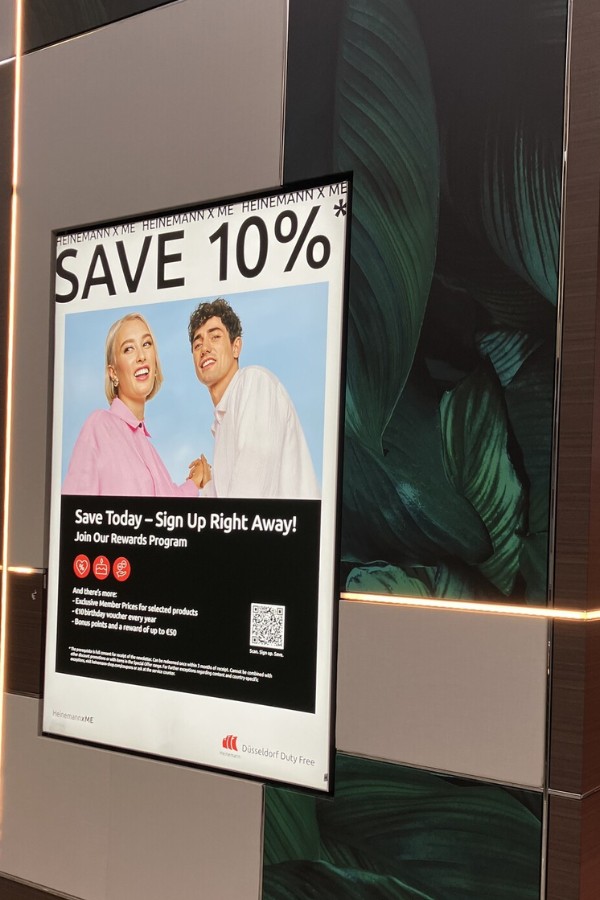
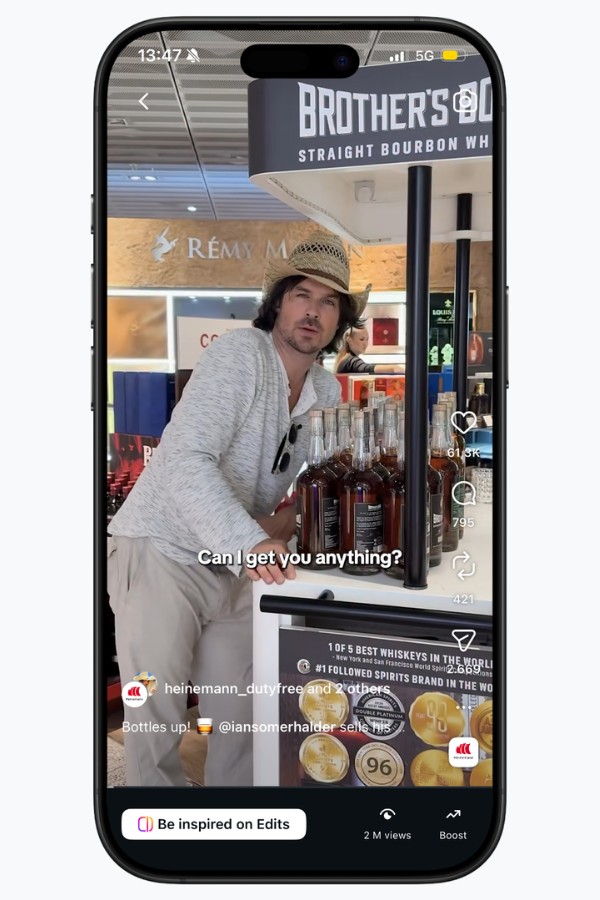
IC: Well, we have Heinemann x ME to talk to our loyal customers. We now are quite active on Instagram and Tik Tok, which is new. But basically, it’s the moment in the store where we have, for example, clean beauty as one of the talking points to the consumers, or where we put one liquor product in a promotional area.
 PM: Moving on, you talk a lot about innovation and are very clearly proud of it, whether it’s from digital to the likes of GHARAGE Ventures. So here’s the question. What are you actually most proud of? And flipping the script, which recent pilot did you like and then decide to kill because it didn’t work for you. What did that failure tell you about how far you can’t push innovation in a concession-driven business that often bites back and only largely offers you short contracts and complex landlords. Any views?
IC: If we step away from products for a moment and look at logistics, that is definitely one area we are very proud of. A lot of excellent work is happening there, even if consumers do not always see it directly.
We are also very proud of what is happening with GHARAGE Ventures. Through its investments it supports us to bring innovation to market faster than before.
And again, it comes back to speed. Through these venture activities, we invest in new technologies and new ways of working. But we also want to involve the broader industry. If the industry is trying to build the future of travel retail, then why should we do that separately?
To me, collaboration is the obvious answer. Why should everyone sit in their own office, working in silos, and then not share? If we work together, we can move much faster.
PM: And so to the last question, Inken. Is there one widely held belief about travel retail that you think out there is simply wrong? And if there are, as an ancillary question, three learnings that you can share with the industry right now, what would they be?
IC: If I start with the first part: when we look at data, we naturally focus a lot on our existing customers. But we are missing the big opportunities outside of that group, namely all the passengers who are not shopping with us today. So maybe the wrong assumption is that we should focus too narrowly on the current shopper profile. We need to look much more closely at non-shoppers and ask how we can turn them into shoppers. That is a major opportunity for all of us.
PM: Do you want to develop this?
IC: Yes, for sure. It is about creating a better experience, improving the assortment, talking to travelers before the journey even starts and using all relevant media touchpoints along the way. It is about thinking about airlines, lounges and the broader travel ecosystem, not to keep passengers away from us, but to bring them back into the store. There are many possibilities there.
PM: And about using Instagram, is that working for you now? It is still relatively new for you as a new learning.
IC: Yes, it is. We can already see that it gives us a very different kind of connection to younger consumers. In Heinemann x ME, we naturally speak more to a rather traditional and somewhat older audience. The idea now is to turn Instagram users into Heinemann x ME members, because that gives us a deeper relationship and better understanding of them.
So yes, we are convinced this is the right direction if we want to reach non-shoppers and turn them into shoppers.


Regarding our learnings, the first would be that pricing is not the magnet anymore.
PM: It is still a magnet though. Different customers have different needs, different budgets.
IC: Yes, it still matters. But it’s not the magnet. We need to move away from the belief that people come into our stores simply because we are cheaper. They also come for experience, discovery and the opportunity to test and explore new products.
As I said at the beginning, in response to your question about the wrong assumption in travel retail, we should not focus solely on current shoppers, but look more closely at non-shoppers and ask what experiences and discoveries would resonate with them. Ultimately, we need to understand the traveler better, to convert the non-shopper into a shopper.
Coming back to the three learnings, apart from the first learning that pricing is no longer the main magnet, the second learning is a clear test-and-learn mindset. We should never stop learning, and we should never assume that what worked in the past will automatically work in the future.
And the third is collaboration. If we combine the knowledge of retailers, airports, airlines, cruise operators, brands and media, that is where real transformation will happen. That is how we move the industry forward together and stay relevant for the consumer.












To subscribe free, please enter your email address: