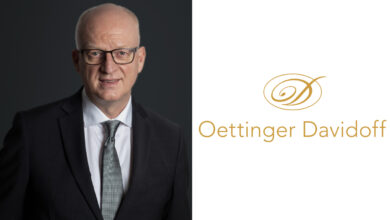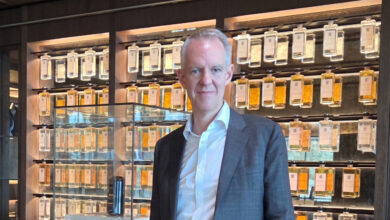



Braver, More Honest, More Grounded. Marco and Vittoria Passoni of 2.0 & Partners On Why Travel Retail Training Has To Change


In this straight-speaking conversation, travel retail training experts Marco and Vittoria Passoni challenge the industry to treat people development as a business lever, not just as a support function. They expose the persistent gaps between polished briefs and frontline reality, and question where “customer experience” ambition still outpaces execution.
Drawing on their work across airports, operators and brands, Marco and Vittoria explore what makes training stick, when a hospitality mindset helps (and when it doesn’t), and how tools like mystery shopping can build people up rather than tear them down. Their message is simply stated: travel retail must get braver, more honest and more grounded.
Peter Marshall (PM): You often say that training in travel retail should be treated as a business lever, not as a support activity. When you look at a new project, what tells you that a client is taking it seriously?
Marco Passoni (MP): For me the first signal is very simple. The client does not start from the question: how many hours of training do we need? They start from the business problem they want to address. Maybe conversion is weak, maybe the welcome is inconsistent, maybe the team is not able to read different passenger profiles, or maybe the brand experience is not translating properly on the shopfloor.
That is when training starts to become serious. Not because someone adds more slides or more modules, but because there is a clear link between what happens with people and what happens commercially. I am always careful not to sell training as a magic button. It does not work like that. But if it is connected to clear behaviours, clear standards and a proper reading of the store reality, then it becomes much more than a support function.
PM: So, Vittoria, when a client first asks for training support, where do you most often see the gap between the brief and the reality on the frontline?
Vittoria Pasoni (VP): Very often the brief starts with clear priorities like “better service” or “more engagement,” but the real gap only appears once you look at the frontline reality.
In most cases, the issue is not intent, but execution under pressure. Teams are operating in fast-paced environments, so behaviours become automatic, especially when customers are rushed, tired, or undecided. Without clear structure, even experienced staff can miss key moments in the journey.
Coming from hospitality, I focus on those micro-moments, because that is where experience is actually built. In travel retail, this becomes even more critical: you have seconds, not minutes, to connect, guide, and convert, so clarity and simplicity in execution make all the difference.
PM: Marco, customer experience is now an integral part of the industry vocabulary, but it is still interpreted in very different ways. Where do you see the biggest disconnect between ambition and execution?
MP: The biggest disconnect is that customer experience is often described at a very high level, while it is delivered in very small moments. Everyone agrees that experience matters. The problem is what this actually means at 9.30 in the morning, in a busy airport store, when three customers walk in, one member of staff is at the till, another is checking stock and the manager is dealing with something else.
That is where the truth is. Not in the statement, but in the behaviour. Travel retail has become very good at talking about experience. It still needs to become better at observing it, measuring it and connecting it to the way teams are trained and managed every day.
PM: When airports, operators or brands try to understand the quality of the experience they are delivering, what gives them the clearest picture, and what can still remain difficult to see from a distance?
MP: The clearest picture comes when you put different layers together. Sales data, passenger data, conversion, spend per passenger and average transaction value are important, but they do not explain everything on their own. You need to see what is happening on the floor. You need structured observation, mystery shopping, conversations with teams and a proper understanding of the environment
.From a distance, you can see the result. What is more difficult to see is why that result is happening. A weak conversion rate can come from many different causes. It can be traffic quality, assortment, staffing, layout, confidence, language barriers or simply a team that has never been trained to recognise buying signals. If you jump too quickly from the number to the solution, you risk treating the wrong problem.
PM: If, then, the starting picture is incomplete, how does that affect the training response? Where do programmes most often become too broad or too far away from day to day reality?
VP: When the starting picture is incomplete, the risk is that training becomes too generic. It may be well designed, but it ends up addressing an idealised version of the frontline rather than the operational reality.
If key elements are missing such as passenger profiles, peak time pressure, team confidence levels or the role of management on the floor, the content can quickly drift away from what actually happens during a shift. In that case it may sound relevant, but fail to support real decision making in the moment.
This is why I believe training has to stay close to reality. The examples, exercises and language must feel familiar to the people taking the course. Otherwise, they may complete the programme, but they will not necessarily change the way they behave with customers. In travel retail especially, relevance is what drives impact and ensures learning translates into action on the floor.
PM: You work across different airports, operators, brands, teams and languages. How do you decide where adaptation adds value, and where it risks diluting consistency or commercial sense?
MP: Adaptation is necessary, but it cannot become an excuse for losing the core. In travel retail, every airport is different, every passenger flow is different and every brand has its own standards. So yes, the content must be adapted. But the business logic has to remain clear. What are we trying to improve? Which behaviours matter? Which standards cannot be negotiated?
If customisation becomes endless, it can become expensive, slow and sometimes confused. The objective is not to make every project completely different. The objective is to protect the core model while making it relevant to the specific environment.
VP: I see adaptation mainly through the eyes of the learner. A sales assistant in an airport needs examples that feel close to their daily work. If the course speaks in a language that does not belong to their reality, it loses impact.
At the same time, hospitality has taught me that consistency matters. You can adapt tone, examples, cultural references and exercises, but the basic service principles must remain recognisable. Otherwise people receive too many messages and the training becomes less clear.
PM: You often speak about bringing a hospitality mindset into airport environments. Where is that comparison useful, and where does the airport context require a different logic?
MP: The comparison is useful because hospitality trains you to focus on the guest before a problem appears. It is about anticipation, care, body language, tone of voice and taking ownership of the experience. These elements are highly relevant in airport environments as well.
The difference lies in the context. In a hotel, the guest experience has time to unfold and the relationship can build gradually. In an airport, everything is compressed. Customers may only have a few minutes, they are focused on the gate, travelling with family, or dealing with stress from security or delays.
So the hospitality mindset needs to be adapted, not copied. The goal is not to turn an airport into a hotel experience, but to bring a stronger culture of attention and care into an environment where speed, clarity and commercial awareness are essential.
PM: Now your work includes interactive e-learning as well as live coaching and development on the ground. Which behaviours can realistically be influenced digitally, and where does in person work remain essential?
VP: E-learning can be very effective when it creates a shared foundation. It helps teams understand traveller profiles, cultural expectations, service standards, brand logic and the key moments of a customer interaction. It is also powerful in aligning large teams around the same language and expectations.
However, some behaviours need to be developed live. How you welcome a customer, how you ‘read’ hesitation, how you move from a simple interaction to a meaningful conversation, or how you recover a difficult moment, these cannot be fully learned in theory. These are behaviours shaped by confidence, timing and body language.
For me, digital learning builds the starting point. In person coaching is where you observe, refine and reinforce behaviour, turning knowledge into consistent execution on the floor.
PM: Let’s move on. Mystery shopping and CX assessment can be used in very different ways depending on the culture around them. What matters most if they are to lead to development rather than simply judgement?
MP: The starting point is to be honest about why you are measuring. If the purpose is only to catch people out, the whole system becomes defensive. People will either fear it or try to perform for the audit. That is not development.
Mystery shopping and CX assessment are useful when they create a clearer view of what is really happening. Sometimes the issue is the individual. Sometimes it is the process, the staffing model, the layout, the training, or the way the store is managed. If you are not prepared to look at all of that, the measurement becomes partial and unfair.
VP: From the team perspective, the tone is very important. People need to understand that the objective is to help them improve, not to make them feel exposed. The findings should become practical coaching points. What can I do differently tomorrow? How can I approach the next customer better?
That is when assessment becomes useful. It gives direction, not just a score.
PM: The media recently covered your agreement with Avolta for the use of the Onboarding programme by staff at Bologna Airport. How does a project like this fit into the broader evolution of people development in travel retail?
MP: I would not present it as an isolated event, because that would probably be the wrong reading. What matters is the direction. Travel retail is starting to understand that people development cannot remain occasional or peripheral. If airports and operators want a better passenger experience, and if brands want their standards to be represented properly, the frontline needs a more structured base.
The Bologna project with Avolta sits within that logic. It is about creating a more consistent starting point for people who work in the airport environment. For me, that is part of a broader shift from training as an event to training as an operating layer.
VP: From my side, I see it also as a way to make the airport culture more accessible to people. Onboarding is not only about rules or procedures. It is about helping staff understand where they work, who the passenger is, what kind of experience is expected and why their role matters.
That is especially important in airports, because many people arrive from different backgrounds. A good onboarding programme can help them feel more prepared and more connected to the environment from the beginning.
PM: Across very different markets, brands and traveller profiles, what is the assumption you still see repeated most often in global travel retail, even when the reality on the ground is more nuanced?
MP: The most common assumption is that the passenger can be understood through a simple label. Nationality, traffic volume, destination, category preference. All of these elements matter, but none of them is enough.
A Chinese traveller, an American traveller, an Indian traveller or a Middle Eastern traveller is not a fixed commercial formula. Behaviour changes depending on the airport, the trip purpose, who they are travelling with, how much time they have, what they already know about the brand and what kind of mood they are in.
The industry still likes simple segments because they are easier to manage. Reality is more complex. The opportunity is to use segmentation as a starting point, not as the whole answer.
PM: So when larger operators or brands invest in training, what makes the difference between a programme that becomes part of the operating culture and one that remains peripheral?
VP: The difference is what happens after the programme goes live. A training initiative can be well designed, relevant and engaging, but still remain peripheral if managers do not embed it, if teams do not reference it and if it is not connected to daily operational routines.
When training becomes part of the culture, it shows up in simple, consistent behaviours. Managers use it in briefings, teams share a common language, new joiners quickly understand expectations and coaching continues well beyond the initial delivery.
Training is not just the moment when someone teaches you something. It is the way standards are repeated, reinforced and lived every day. I think travel retail needs more of that discipline. This is where travel retail has a real opportunity, by making learning an ongoing part of operations rather than a one off intervention.
PM: Back to you, Marco, and looking across airports, operators and brands, where do you think people development is still approached too mechanically, and where could a more grounded perspective make a stronger difference?
MP: It is still approached too mechanically when it becomes a calendar exercise. One course this month, another course next month, a platform, a certificate, a completion rate. These things may be useful, but they do not prove that anything has changed in the store.
A more grounded perspective would start from the real friction points. Where are customers not being acknowledged? Where are selling opportunities being missed? Where is the team unsure? Where are brand standards not surviving contact with the airport environment?
People development should not be separated from commercial reality. It should be built around it.
PM: One last question to you both. You often say that travel retail needs to be braver, more honest and more grounded in reality. Looking at your own work, where do you still see room to push the model further?
MP: We also have to apply the same discipline to ourselves. I think there is room to push further in making the link between measurement, training and coaching even more continuous. Too often the industry treats these as separate activities. Our view is that they should speak to each other more directly. You measure to understand, you train to address what you have understood, and you coach to make the change stick.
The next step is to make this model more scalable without making it generic. That is the real challenge.
VP: For me, the opportunity is to keep building formats that are practical and close to the frontline, but also more engaging for the people taking part. I do not think training should feel heavy or distant. It should help people recognise themselves in the situations we describe.
I also think we can keep bringing more hospitality culture into travel retail, not in a decorative way, but in a useful way. More attention, more ownership, more care for the customer, adapted to the speed and pressure of the airport.












To subscribe free, please enter your email address: