

In Travel Retail Innovation Is Not The Problem. The Shelf Is. And It Has An Execution Problem. By Garry Stasiulevicuis, Managing Director, Shelftrak.


Travel Retail Exclusives remain one of the industry’s greatest growth opportunities – but only if brands and retailers execute them properly. I am proud to publish this excellent, thought-provoking and insightful feature from Garry Stasiulevicuis of Shelftrak, who explains – in a very direct way – why execution and the future of Travel Retail Exclusives will be decided on the shelf.
This is essential reading.
Every year, the industry proudly unveils another wave of innovation.New whiskies. Limited-edition spirits. Premium confectionery gifting formats. Travel Retail Exclusives. Seasonal chocolate packs. Cask finishes. Flavour extensions. Luxury collaborations. Exclusive bottles. Airport-only formats. The list is almost endless.
The industry loves newness. And, to be clear, it should.
Innovation is one of travel retail’s greatest strengths. It gives airport stores a reason to exist beyond convenience and price. It gives shoppers a reason to browse, discover, trade up and buy something they cannot easily find at home.
In alcohol, that might be a limited-edition whisky, a travel-exclusive gin or a premium vodka format. In confectionery, it might be an exclusive flavour profile, a seasonal sharing format or a premium chocolate range designed specifically for the travelling shopper.
These products matter because they tap into what travel retail should do best: create a sense of discovery, excitement and engagement.
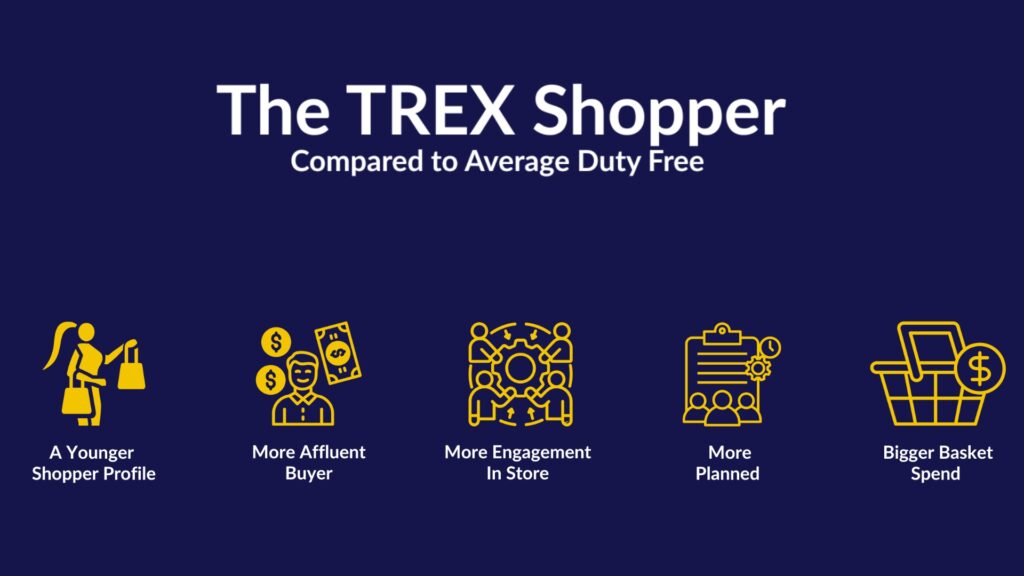
The latest m1nd-set research on Travel Retail Exclusive shoppers reinforces this point powerfully. TREX shoppers are younger, more affluent and more engaged than the average duty free shopper. They are more likely to plan purchases before arriving at the airport. They are more willing to try products for the first time. They respond strongly to marketing touchpoints and promotions. Crucially, they also spend more and buy across a wider range of categories.
For an industry searching for growth, this should be extremely good news.
The shoppers travel retail most wants to attract are actively looking for exclusivity, discovery and newness.

So perhaps the biggest question facing the channel is not whether we innovate enough. It is whether we give innovation a fair chance to succeed. Because travel retail does not have an innovation problem. It has an execution problem.
Domestic retail often competes on convenience. Travel retail competes on excitement.
Very few travellers walk into an airport store simply because they forgot to buy a bottle of whisky, a box of chocolates or a fragrance. They walk in because the environment promises something different. Something more special. Something they may not be able to buy when they get home.
That is why Travel Retail Exclusives matter so much. They create a point of difference versus domestic retail. They support gifting. They encourage trade-up. They give shoppers permission to browse rather than simply transact.
The principle is remarkably consistent across categories. Whether the shopper is considering an exclusive single malt, a premium chocolate gifting box, a limited-edition liqueur or a seasonal confectionery range, the motivation is often the same. They want to find something that feels distinctive, relevant and worth carrying through the airport.
The m1nd-set research shows that around three quarters of TREX shoppers plan purchases before travelling. It also shows that a similar proportion are willing to make a first-time purchase. That is hugely significant.
These are not passive shoppers drifting aimlessly through stores. They are engaged consumers who are open to influence and actively looking for products that feel different.
That makes innovation essential. Without it, travel retail risks becoming a slightly more expensive, slightly less convenient version of domestic retail. With it, the channel has a genuine reason to command attention.
But innovation only becomes commercially powerful when the shopper can see it, understand it and feel motivated to buy it. That is where the industry too often falls short.
One of the biggest misconceptions in travel retail is that securing a listing means a launch has succeeded. It has not.
A listing is simply permission to compete. It gets the product into the race. It does not guarantee that shoppers will notice it, understand it or choose it.
Too many meetings end with congratulations because a retailer has agreed to take the product. Far fewer ask the harder and more commercially important questions. Will the shopper actually see it? Will it stand out from the core range? Will the proposition be clear? Will it recruit new consumers? Will it create incremental value? Or will it quietly disappear into an already crowded fixture?
This is where the gap between innovation and execution becomes painfully clear.
Innovation without visibility is just expensive inventory.
A product can be beautifully conceived, well-packaged, genuinely differentiated and strategically important. But if it receives limited space on a crowded shelf with no clear communication, the shopper experience does not match the ambition behind the launch.
That is not a product failure. It is an execution failure.
The same challenge exists in confectionery. Retailers introduce seasonal concepts, new sharing formats and travel-exclusive packs every year. Yet too many arrive with little differentiation at shelf level. The shopper is left to decode whether something is genuinely exclusive, genuinely better or simply another version of a familiar product in a slightly different pack.
If shoppers cannot immediately understand why the product matters, much of the innovation value is lost.
The uncomfortable truth is that shelves are not elastic. Every year the number of launches grows, but airport stores do not magically create more space. Fixtures have limits. Shelf metres have limits. Shopper attention has limits.
Every new SKU has to find a place within an existing retail ecosystem. When a launch arrives, one of three things usually happens. The retailer creates incremental space. An existing product loses visibility. Or another SKU is removed.
In reality, the second option happens far too often.
New products are squeezed into existing fixtures. Facings are reduced. Shelves become more cluttered. Product stories become harder to read. Store teams inherit more complexity. Shoppers are left to navigate a wall of increasingly similar choices.

The irony is obvious.
The very products designed to create excitement can become almost impossible to discover.
This challenge is particularly acute in alcohol and confectionery because both categories continue to generate significant innovation while operating within relatively fixed shelf footprints. Whisky launches compete against existing whisky portfolios in exactly the same way that new gifting formats compete for limited confectionery space.
More innovation without more space does not automatically create more growth. It often creates less visibility.
This is not a reason to stop innovating. It is a reason to become far more disciplined about how innovation is launched, supported and measured.
Shelftrak recently tracked sixteen significant alcohol launches across ninety two major travel retail stores globally.
The results reveal a clear and important point: not all innovation travels equally.
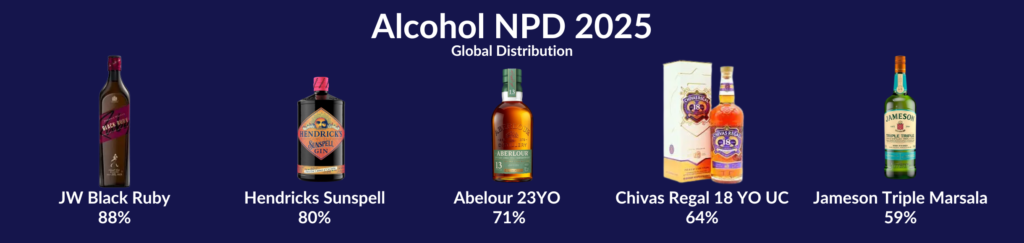
Johnnie Walker Black Ruby achieved exceptional global distribution, reaching 88% of monitored stores. It was present in every monitored EMEA store, almost 94% of European stores, 83% of Asian stores and 75% of stores in the Americas.
That is what a serious global launch looks like.
Hendrick’s Sunspell Gin also performed strongly, achieving more than 80% global distribution, with particularly strong execution across Europe.
Aberlour 13 Year Old Distillery Speyside Single Malt reached over 70% global distribution, while Chivas Regal 18 Year Old Ultimate Cask Collection Pauillac Wine Cask reached 64%.
These launches were not simply theoretical innovations. They had the retail footprint needed to give them a genuine chance of success.
By contrast, several other launches struggled to reach critical mass.
The Lakes Distillery Boundless was present in fewer than one in ten monitored stores globally. The Glen Grant Exploration range was largely concentrated in Asia. These may have been designed that way or maybe it’s a result of performance.
That does not mean these products are poor. It does, however, show how difficult it is for innovation to succeed without distribution.
A brilliant product that shoppers never encounter creates no value.
Although this analysis focuses on alcohol, the same execution dynamic is visible in confectionery. The products change, but the commercial principles remain identical. Distribution, visibility and availability consistently separate launches that gain traction from those that quietly disappear.
A travel-exclusive chocolate gifting range may be creatively strong, beautifully packaged and well-suited to the travelling shopper. But if it is present in too few stores, poorly positioned or overwhelmed by established brands, it will struggle to deliver its full potential.
Even distribution only tells part of the story. A product can be listed widely and still fail to make an impact if it does not receive meaningful visibility.
This is where the Shelftrak data becomes especially revealing.
Hendrick’s Sunspell did not just achieve strong distribution. It also secured a meaningful share of space within gin. Johnnie Walker Black Ruby achieved broad distribution and a strong share of space within blended Scotch. These products were given room to breathe. They were visible enough to communicate their proposition.
Jägermeister Orange is another interesting example. Its global distribution was lower than some whisky launches, but where it was listed, it often benefited from strong visibility and a clear proposition. It felt genuinely different while still being unmistakably connected to the parent brand.
That matters.
It matters because shoppers do not study shelves like category managers do. They do not stand there calculating range architecture. They respond to what is visible, clear and compelling.
By contrast, several whisky launches achieved respectable distribution but secured only a very small share of category space. They were present, but presence is not the same as impact.
This is one of the most important lessons for travel retail. Distribution creates the opportunity. Visibility converts that opportunity into sales.
The same principle applies to confectionery. A travel-exclusive gifting range may secure listings across major airports, but unless shoppers immediately recognise its exclusivity and understand why it deserves attention over an established favourite such as Toblerone, Lindt, Kinder or M&M’s, much of its commercial potential is lost.
A listing gets the product into the store. Visibility gets the product into the shopper’s mind.
Travel retail loves launch success stories. A new product arrives, sales are reported, listings are celebrated and the launch is declared a success.
But the harder question is rarely asked with enough discipline. Where did those sales come from? Did the product recruit new shoppers? Did it encourage existing shoppers to spend more? Did it bring value into the category from competitors? Or did it simply transfer sales from another SKU within the same brand portfolio?
That distinction matters enormously.
A launch can look successful in isolation while doing very little for the total brand or category. If a new whisky takes volume from the same brand’s existing core expression, the launch may be exciting, but the commercial gain may be far less impressive than the headline sales suggest.
The confectionery category faces exactly the same challenge. Does a new gifting format genuinely recruit new shoppers, encourage premiumisation or increase basket value? Or does it simply divert shoppers away from an existing product within the same brand portfolio?
These are questions that deserve far greater attention when assessing the true value of innovation.
This is not an argument against innovation. It is an argument for better measurement.
The best innovation should create incremental demand. It should recruit new consumers, unlock new occasions, support premiumisation or bring new energy into the category. If it only reshuffles existing demand, then the industry needs to be honest about that. Innovation should not be judged by trade show buzz, press releases or the number of listings secured. It should be judged by the value it creates.
Retailers face real pressure when managing space. They cannot list everything. Every new product requires compromise.
That has led many to adopt a simple one-in, one-out approach. If a supplier wants to list a new SKU, another product from that supplier has to come out.
On the surface, this feels logical. Space is finite, so something has to give. But it is also a crude way to manage a category. The shelf does not belong to retailers or suppliers. It belongs to shoppers.
If a genuinely strong innovation enters the category, the question should not be which product from the same supplier needs to disappear. The question should be which SKU across the total category is contributing least to shopper value and commercial performance.
A supplier should not be forced to remove a strong-performing product simply because it has launched something new, while weaker competitor products remain untouched. That is not category management, it’s administrative tidiness.
The objective should be total category productivity, not balanced supplier SKU counts.
This matters in alcohol, where whisky portfolios are becoming increasingly complex. It matters just as much in confectionery, where new formats, propositions and promotional packs often compete for the same limited space.
If a travel-exclusive confectionery range genuinely improves shopper appeal, supports premiumisation and creates incremental basket value, it should earn space on merit. If an existing product no longer contributes enough value, it should be challenged on the same basis.
Travel retail needs to become more mature about this. Innovation should earn its place through category merit and underperforming SKUs should lose theirs by the same standard.
This is where Perfect Store thinking becomes essential.
The industry often measures launches too late. It waits for sales results and then tries to explain success or failure after the event. But by that point, the biggest execution decisions have already been made.
Perfect Store thinking changes the sequence. It asks whether the conditions for success were created in the first place.
At Shelftrak, the Perfect Store approach looks at whether a priority launch is properly distributed, available, visible, compliant and supported in the way originally agreed. It examines whether the product is in the right stores, on the right fixture, on the right shelf, with the right number of facings, the right pricing, the right communication and the right level of consistency across markets.
These questions may sound basic and that is precisely the point. Too many launches fail because the basics are not consistently delivered. A brand can invest heavily in product development, packaging, sales materials and launch activation. A retailer can agree to list the product. But if the execution in-store is weak, the shopper never experiences the launch as intended.
The product may be there, but it is not truly launched.
While the examples in this article focus primarily on alcohol, the Perfect Store philosophy is deliberately category agnostic. Whether measuring a new whisky launch, a premium gin innovation or a travel-exclusive chocolate gifting range, the principles remain the same.
Priority innovations should achieve agreed distribution, meaningful visibility, consistent pricing, strong availability and strong execution. The categories may differ, but the disciplines required for success are remarkably similar.
Perfect Store thinking gives brands and retailers a practical framework for improving this. It moves the conversation away from opinion and towards evidence. It shows where execution is strong, where visibility is weak, where availability has broken down and where stores are not delivering the agreed plan.
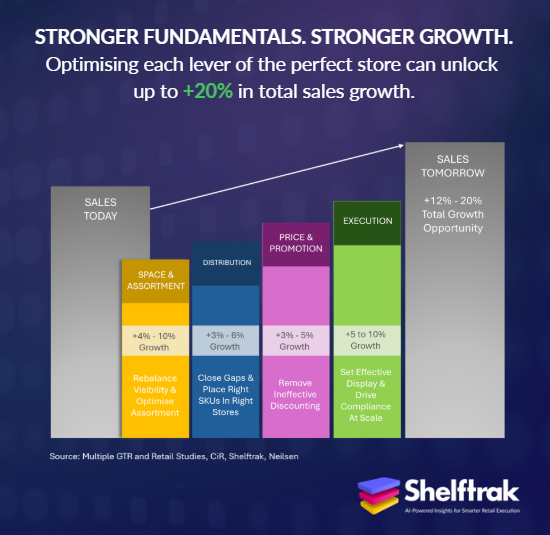
Most importantly, it allows action to be taken while there is still time to influence performance.
That is critical for NPD and TREX. Launch windows are short. Momentum matters. If execution is poor in the first few weeks, the opportunity may be lost before the product has had a fair chance.
The latest m1nd-set research should be a wake-up call.
Travel retail’s most valuable shoppers are actively looking for products they cannot find elsewhere. They are more engaged, more experimental and more willing to spend. They are exactly the people the industry says it wants to serve. Yet too often the industry makes those products surprisingly difficult to discover.
We celebrate launches at trade shows. We announce them in press releases. We talk about exclusivity, storytelling and premiumisation. Then, in too many cases, the product is squeezed into an overcrowded fixture with limited visibility and inconsistent execution.
That is not a serious growth strategy, it’s just wishful thinking.
TREX shoppers are valuable because they are open to discovery. But discovery does not happen by accident. It has to be designed into the retail environment.
That means clear ranging. Meaningful visibility. Strong availability. Consistent pricing. Proper communication. Disciplined measurement. It means treating every priority launch not as a SKU to be listed, but as a shopper experience to be executed.
The product is only one part of the experience. The shelf is where the promise is either delivered or diluted.
None of this means travel retail should innovate less.
The channel needs innovation. It needs Travel Retail Exclusives. It needs products that create excitement and give shoppers a reason to engage. Without newness, travel retail risks losing one of its greatest points of difference.
But the industry does need to become more selective, more disciplined and more honest about what good innovation looks like.
Good innovation is not just a product with a new label, flavour or finish. It is not just another premium box, another limited edition or another seasonal wrapper.
Good innovation fills a genuine shopper need. It improves the category. It creates a reason to buy. It earns visibility. It recruits new consumers or encourages trade-up.
And once it is launched, it must be measured properly. Did it reach the right stores? Did it secure the right space? Did shoppers see it? Was it available? Did it remain compliant after launch week? Did it create incremental demand? Did it strengthen the category?
These are the questions that matter.
Travel retail’s most valuable shoppers have already told us what they want.
They want discovery. They want exclusivity. They want products and experiences they cannot find elsewhere. They want exclusive whiskies they cannot buy at home. They want premium spirits that feel worth trading up to. They want premium chocolate gifting ranges designed specifically for travel. They want confectionery formats that feel more special than the everyday ranges available in domestic retail.
That should give every brand and retailer confidence in the future of TREX and NPD.
But confidence is not enough.
The next phase of growth will not come from launching more products for the sake of it. It will come from launching better products and executing them with far greater discipline. The winners will not be the companies with the longest launch calendar. They will be the companies that understand how to turn innovation into measurable retail performance.
They will build portfolios that work as systems, not collections of disconnected SKUs. They will challenge weak listings regardless of supplier ownership. They will give meaningful space to products that genuinely deserve it. They will measure execution continuously, not occasionally. They will use Perfect Store thinking to ensure the fundamentals are delivered every day, in every priority store.
Whether the category is alcohol, confectionery, beauty or tobacco, the challenge is no longer simply creating great products. It is creating great retail execution.
The brands that combine meaningful innovation with disciplined Perfect Store execution will be the ones that recruit the valuable TREX shopper, generate genuinely incremental growth and ultimately strengthen the entire travel retail channel.
Travel retail does not need less innovation, it needs smarter innovation. Innovation that earns its place and that shoppers can actually find.
Innovation that creates incremental growth for brands, retailers and the category.
Because the future of Travel Retail Exclusives will not be decided in product development meetings.
It will be decided on the shelf.











To subscribe free, please enter your email address: