

What’s Next For Toronto Pearson. By: Luke Barras-Hill.


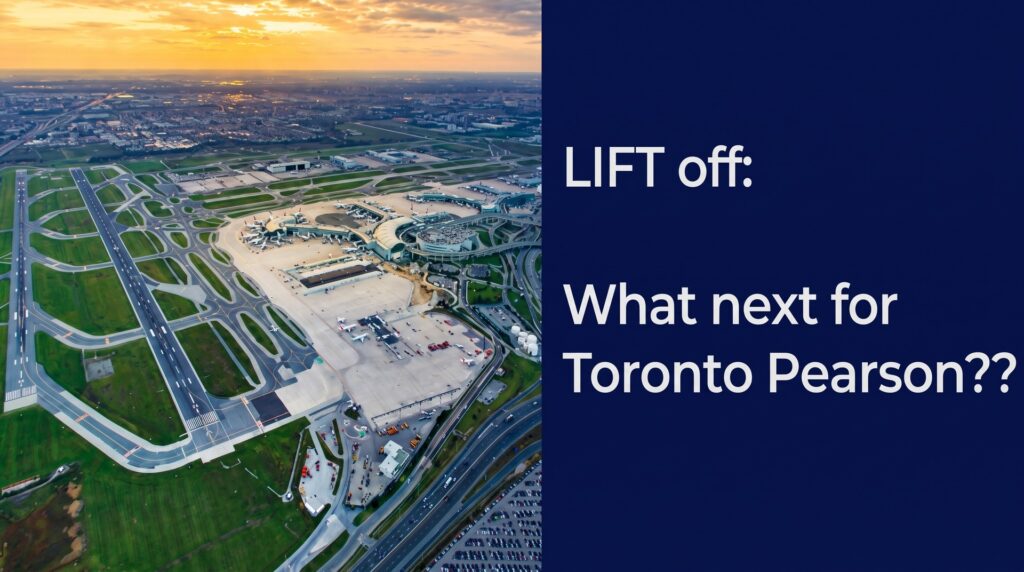
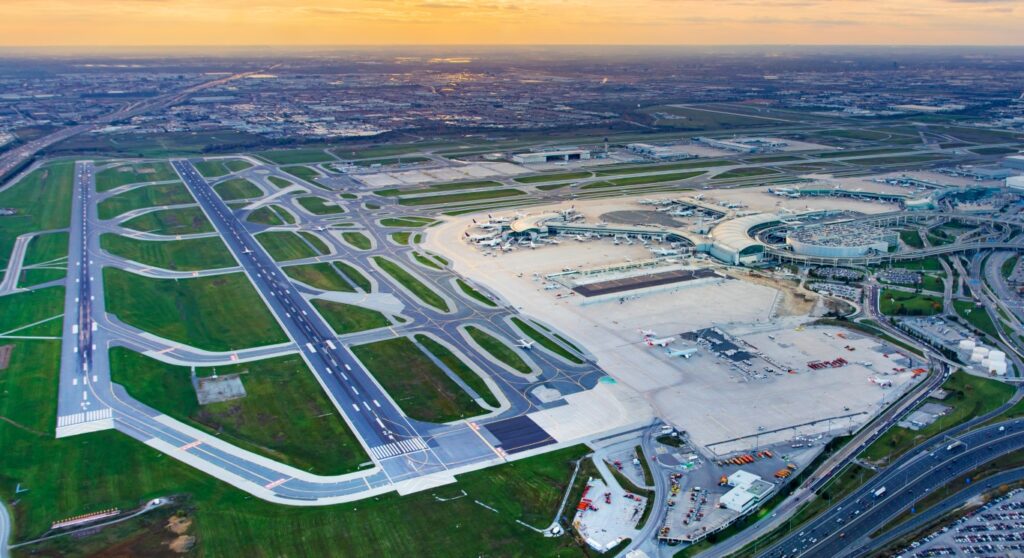
Greater Toronto Airports Authority (GTAA), operator of Toronto Pearson Airport (YYZ), is taking big strides to refresh its commercial offer under the decade-long, multi-billion-dollar Pearson LIFT transformation programme.
TRunblocked.com Editorial Contributor Luke Barras-Hill visited Canada’s principal hub to soak up the vision for the shopping and dining experience and assess the changes. In customary fashion, TRunblocked.com questions, probes and challenges the macro and micro: from space planning, capacity management and leasing agreements through merchandising, retail execution and spending dynamics. The next few years mark a critical phase of development for Pearson, so the visit is timely.
As you will learn from Joe Daiello, Director, Concessions and Partnership Development, and Kurush Minocher, Chief Commercial Officer, this is a tale of agility, adaptability and trend-led transition. Read on for an enlightening exchange, plus a curated selection of visuals.
It would be an understatement to say Toronto Pearson, North America’s second largest airport for international passenger traffic, is ‘busy’. In the conventional sense – yes, volumes were up marginally in 2025 to just over 47 million passengers. However, the ‘story behind the story’ is Toronto Pearson’s ambition to scale capacity while delivering a bold commercial experience.
Pearson LIFT – a clever acronym for the more functionally sounding ‘Long-term Investment in Facilities and Terminals’ – includes plans to modernise the retail and passenger service amenities across Terminals 1 and 3.
YYZ is eyeing 65 million passengers in the early 2030s. Should that forecast materialise, Toronto Pearson will want to ensure its non-aeronautical activities capture the upside from those traffic gains.
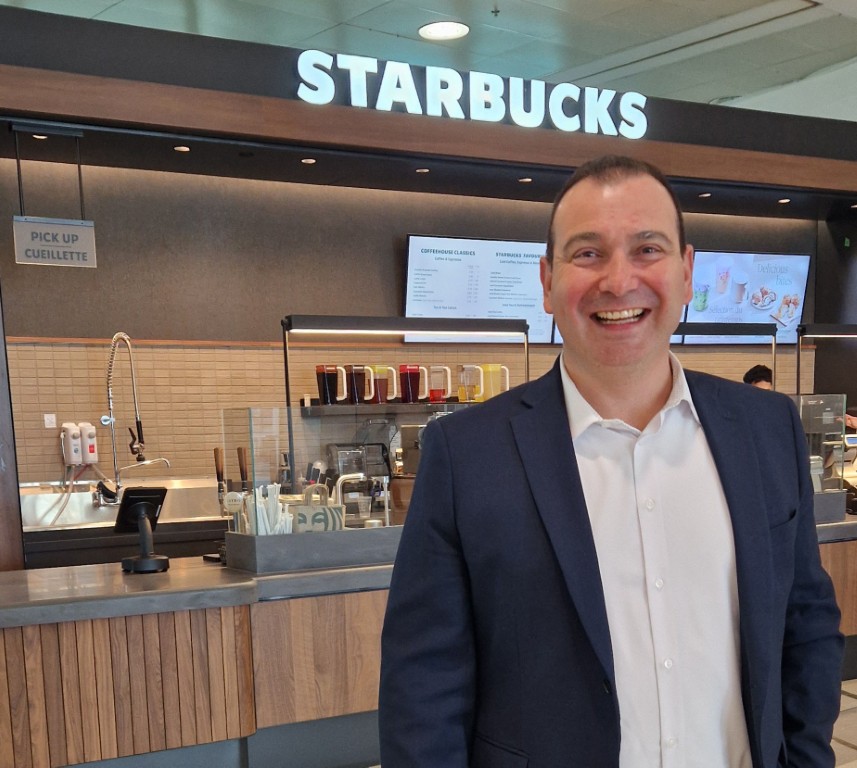
TRunblocked.com met recently with Joe Daiello for a tour of Terminal 1. As a long-term strategic partner, Avolta/HMS Host announced in February 2026 that it had secured a new 12-year dining concession at Pearson (one of the longest contracts awarded by Toronto Pearson) that paves the way for refurbishments across more than 5,300 square metres in T1 and T3.
Local outposts for Mary Brown’s Chicken, Dillon’s, OEB Kitchen + Bar, Libretto Slice Shop and Kinton Ramen will join a fresh F&B concept from Trinidadian-Canadian Chef Roger Mooking. Accompanying the new doors are upgrades to Starbucks, Tim Hortons and Fionn MacCool’s, all part of renovations to Avolta/HMS Host’s existing footprint.
The need to refresh the broader food service offer post-pandemic presented an ideal opportunity to renegotiate contractual agreements with its partners, says Toronto Pearson.
A number of HMS Host’s leases were consolidated into one larger agreement, helping the airport maximise investment potential. With Lagardère Travel Retail also renewing its travel essentials concession with YYZ in 2025, Toronto Pearson will demand that such partnerships accelerate spending.
“On the F&B side, we’re seeing a strong domestic recovery in both terminals, and these renegotiated contracts are helping support the revenue growth we’re projecting from that,” commented Daiello.
“With markets specific to the international and US trans-border sector, we are seeing effects on duty free and foreign exchange even though we are seeing slight growth in international [pax],” he added, while acknowledging the almost double-digit downturn in passenger traffic into the US market.
“Luckily we are able to recover a lot of it in food, lounge and other programmes. We are at budget; not where we were in 2010-2020 where we saw explosive growth every year. It’s steady growth out of the pandemic.
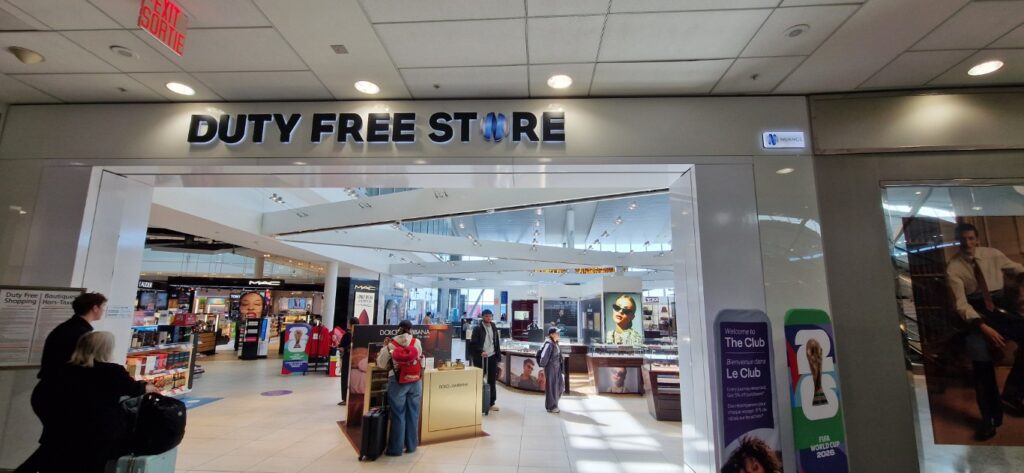
“At a per passenger level, our performance in F&B versus retail is much stronger – a couple of dollars more per passenger per head. Our strongest performer still is our duty free programme though it is a different profile of passenger and mix. We are focused now on rebranding our [F&B] programme.”
Indeed, Toronto Pearson continues to observe segment shifts in air traffic in the context of declining cross-border US flights.
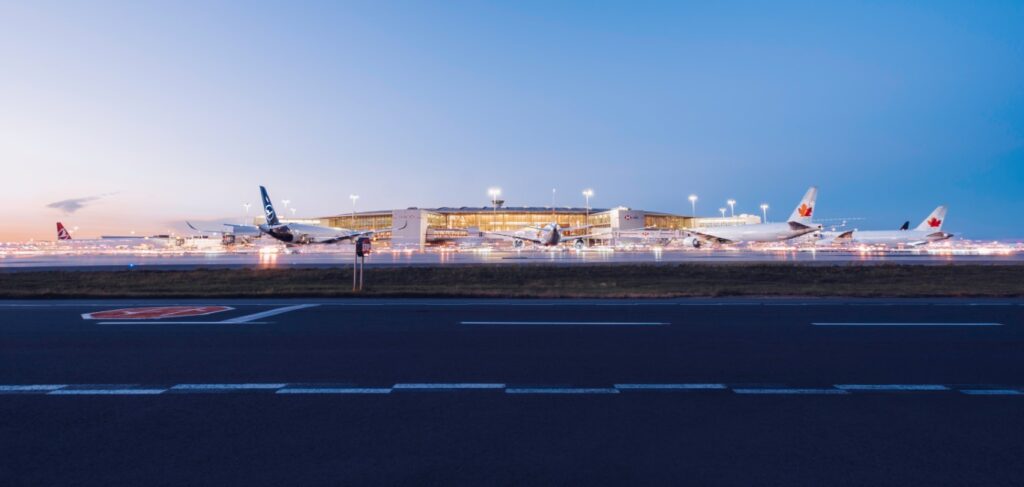
International volumes [US- and non-US destination traffic are bundled for reporting purposes – Ed] contracted modestly (-0.8%) in 2025 year-on-year. Despite this, growth in commercial revenues (+3.8%) outstripped that of total traffic (+1.1%).
“What we saw was domestic and non-US international [traffic] over-indexing year-on-year,” commented CCO Kurush Minocher. “Where carriers were no longer flying into particular destinations in the US and cutting back capacity in certain sectors, they were actually increasing in domestic and international flying.
“Duty free isn’t obviously available for domestic passengers – what we saw instead was a shift into other retail and concessions at the airport, whether it’s travel essentials or passengers looking for a burger or coffee before their flight.
“The joy and challenge of this industry is it is always changing,” he continued, citing challenges including the Middle East conflict and knock-on effect to fuel supplies and oil prices.
Elsewhere, major Canadian airlines including Air Canada, WestJet and Air Transat have suspended services to Cuba – a hugely popular vacation destination for Canadians – linked to an ongoing energy crisis and lack of aviation fuel.
The removal of Cuba from major airline itineraries has allowed international destinations such as Mexico and the Dominican Republic to over index. Florida-bound travellers have also shifted their travel plans to southbound destinations such as Mexico, which itself suffered cartel-related disturbance in February that dampened travel demand.
International passenger traffic increased by 2.1% in the first quarter of 2026. Meanwhile, domestic markets are benefitting from redistributed spending into areas such as travel essentials and F&B. In the six months ending 30 June, growth in international pax notched +1.5% year-on-year.
Despite the aviation headwinds, the pace of retail activity continues. Dubbed by Daiello as the ‘Grand Central Station’ of Pearson, the central Node E area that branches out towards the various piers (Concourses D and E) handles north of 17 million passengers through a combination of connecting, departing and arrivals traffic.
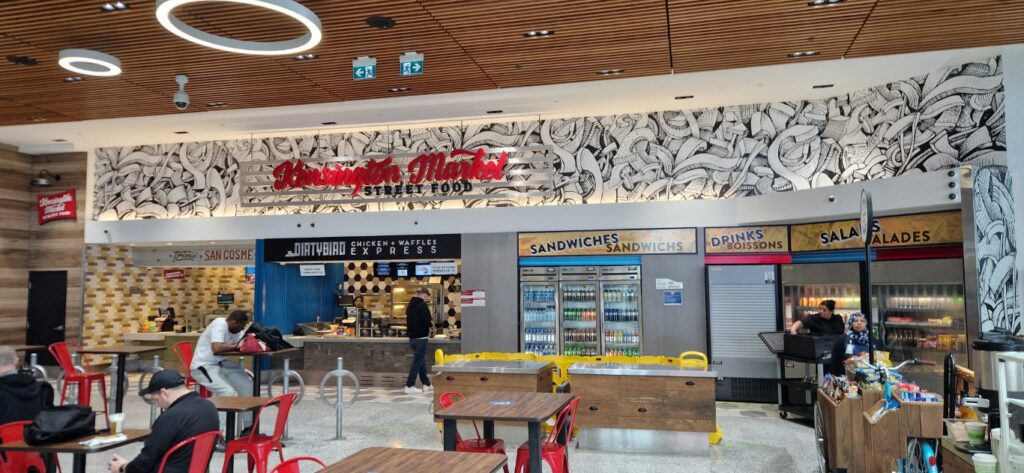
The opening of a Chanel unit this summer close to Gate D38 adds luxury clout and competition with the nearby Dior store.
Elsewhere, among several other new or reconfigured units set to arrive is apparel maker Hatley Canada under a directly negotiated concession.
Novelty and newness is welcome, but Pearson, like many airports in North America, remains space constrained. Consequently, introducing passenger choice, convenience and innovation means existing square metres have to sweat hard commercially. That is not always an easy balance to strike.
“There is only a finite amount of space, so we have to balance what passengers want; we can’t give everything to everybody,” responded Daiello, emphasising the importance of creating the right mix of brands. “Passenger feedback remains important here.”

During the FIFA World Cup this summer – Toronto hosted six tournament matches – YYZ recorded more than 140,000 passengers on peak days through its terminals, bringing massive operational and security hurdles.
“Every day is game day from an airport perspective,” commented CCO Minocher, who said preparedness measures were three years in the making.
Beyond FIFA, the retail and F&B transformation of T1 and T3 – not the long-term vision – will do more to define the airport’s commercial success in the near term. The luxury quarter helmed by Avolta features high-end fashion and watch boutiques and is located at the large international Pier F, where Air Canada has a marked presence. The area boasts a curved ‘Hammerhead’ design and is prominent for its Richard Serra-inspired sculptured spherical works.
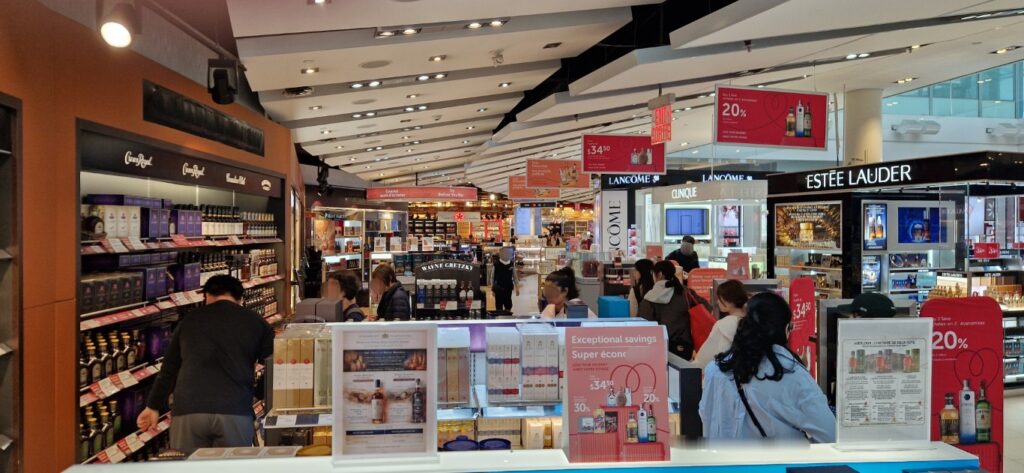
To address the challenge of passengers moving past core duty free assortments post- security, Avolta has introduced dedicated perfumery and liquor adjacencies into the mix at Toronto Duty Free to add merchandising variety to the luxury-heavy district.
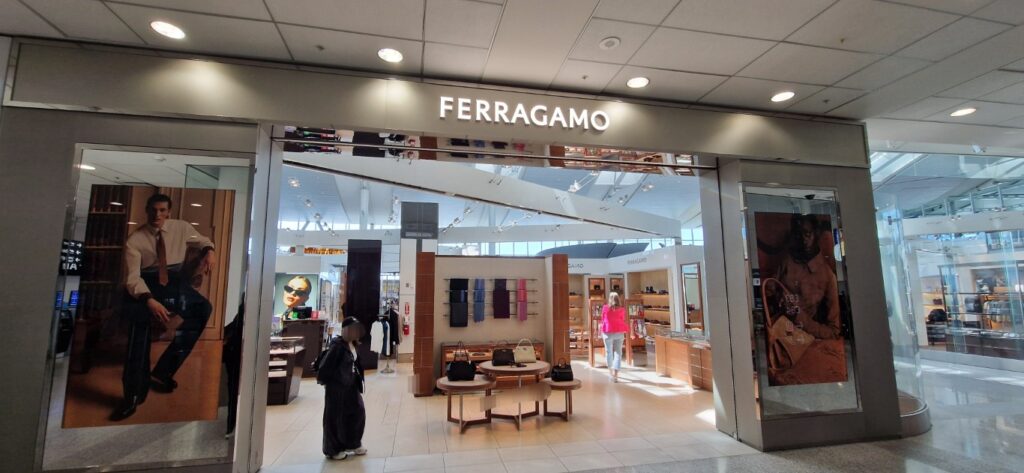
Avolta/Dufry operates approximately 50,000 square feet of duty free concessions space across Terminal 1 and 3 with a luxury presence spanning stores from Chanel, Estée Lauder, Lancôme, Dior, MAC, Burberry, Ferragamo, Omega, Bulgari and other luxury brands.
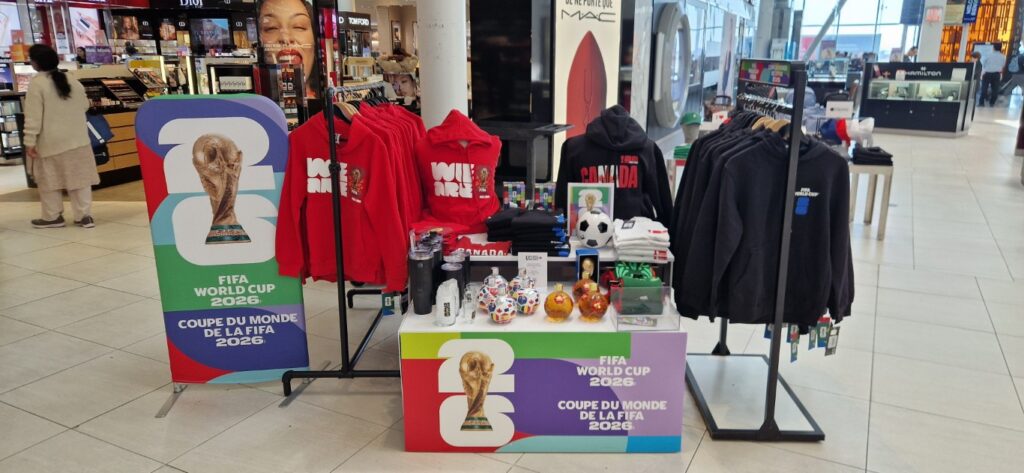
“With the new partnership with Avolta, there is a component of revitalisation into the existing retail outlets including improvements to duty free and new shops and restaurants that will be coming over the course of the next few years,” said Minocher.
In the bigger picture, the multi-billion-dollar Pearson LIFT programme is driving change in three concurrent phases (Accelerator, T1/T3 Revitalisation and Gateway).
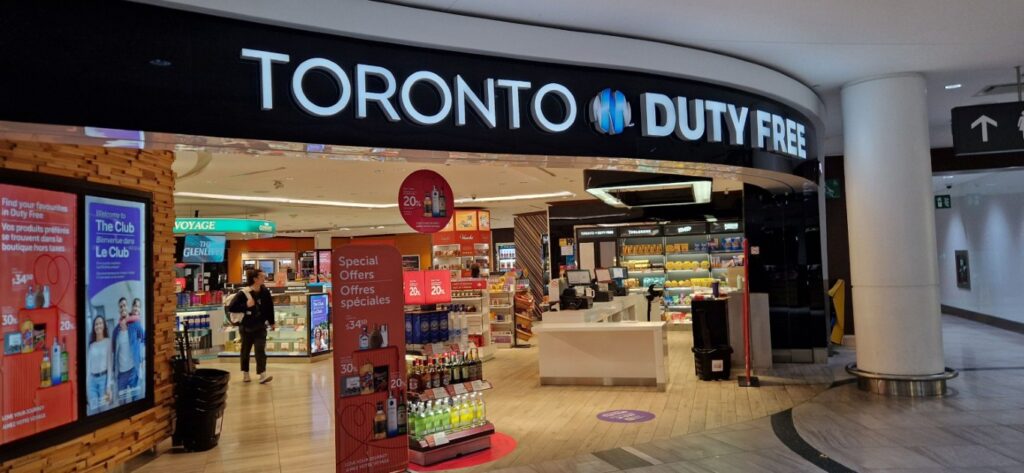
The T1/T3 Revitalisation phase concentrates on regenerating or replacing assets and improving passenger services, while Gateway will expand the airport facilities by around 300,000 square metres of new estate.
“There is a lot of change happening,” added Daiello. “Now we are phasing in those larger projects as a part of LIFT; it’s really working with our construction teams to ensure that we are building in an educated, phased way together. There is a huge planning exercise underway today.”












To subscribe free, please enter your email address: