Lacoste: Keeping The DNA, Changing The Game. Erin Lillis and Inès Baylacq Interviewed.


Lacoste hasn’t exactly been shouting about its travel retail strategy in recent years. That, it turns out, is quite deliberate. While the ‘croc’ has remained highly visible in airports, the brand has been quietly working on its positioning, product and retail concepts – and extending Lacoste beyond fashion into a broader lifestyle universe.
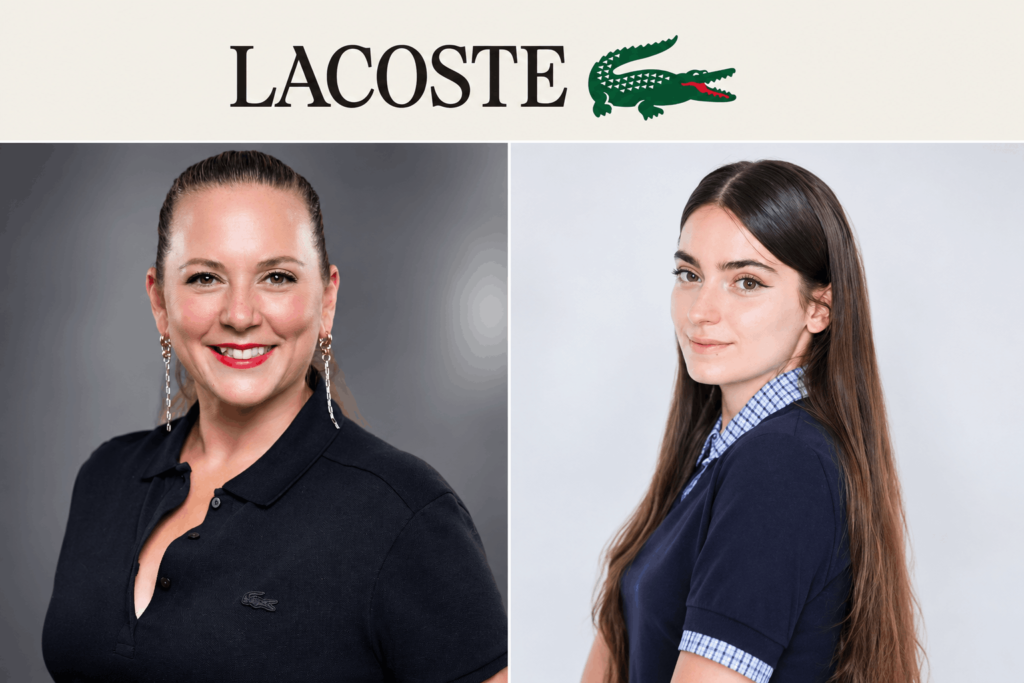
In this exclusive conversation with TRunblocked.com’s Colleen Morgan, Erin Lillis, Lacoste Travel Retail and Corporate Director Asia Pacific, and Inès Baylacq, Travel Retail & Corporate Business Executive APAC, offer their perspectives on where the brand goes next.
Erin brings more than two decades with Lacoste and 17 years in Asia Pacific. Inès brings a younger-generation lens on what feels outdated, what makes an airport experience worth stopping for, and why Gen Z doesn’t simply want to shop.
From Courtlines and the tennis heritage that still shapes the brand to hospitality, sport, culture and the changing role of the airport, the message is clear: Lacoste may have been quiet, but it hasn’t been standing still.
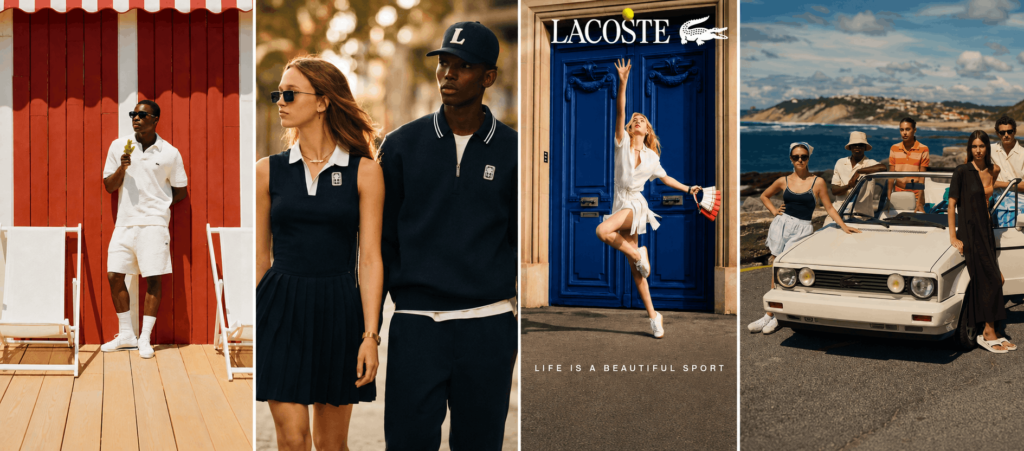
Colleen Morgan (CM): Lacoste has maintained a strong airport presence but has been comparatively quiet in travel retail communications over recent years. In an age where brands are expected to constantly generate noise, has Lacoste deliberately chosen a different path?
Erin Lillis (EL): Absolutely. We’ve never believed that volume equals relevance. We’ve always preferred to let actions speak louder than headlines.
Over the past few years, we’ve focused on strengthening the fundamentals: elevating our brand positioning, investing in product and concept innovation, refining our distribution and creating experiences that genuinely reflect who we are.
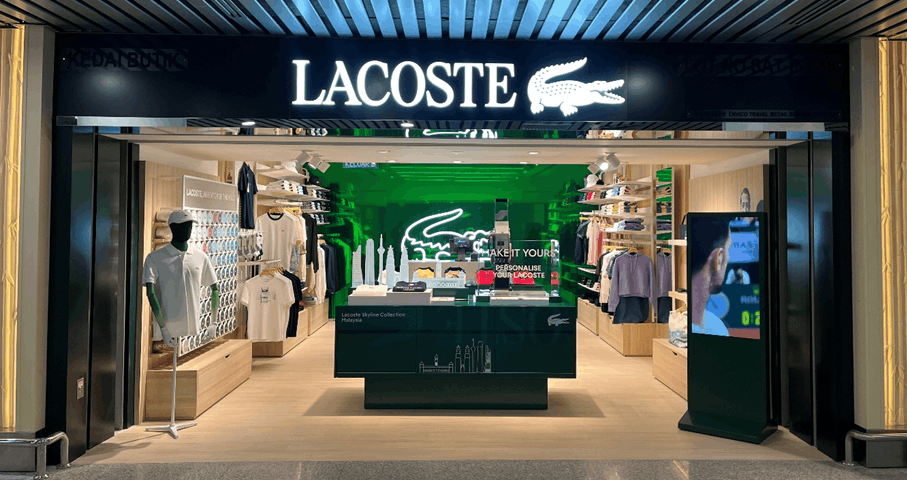
Travel retail is an important channel for us, but we approach it with consistency and purpose. We’d rather surprise travellers with a great experience, an unexpected activation or a memorable product assortment than generate noise simply for the sake of being heard.
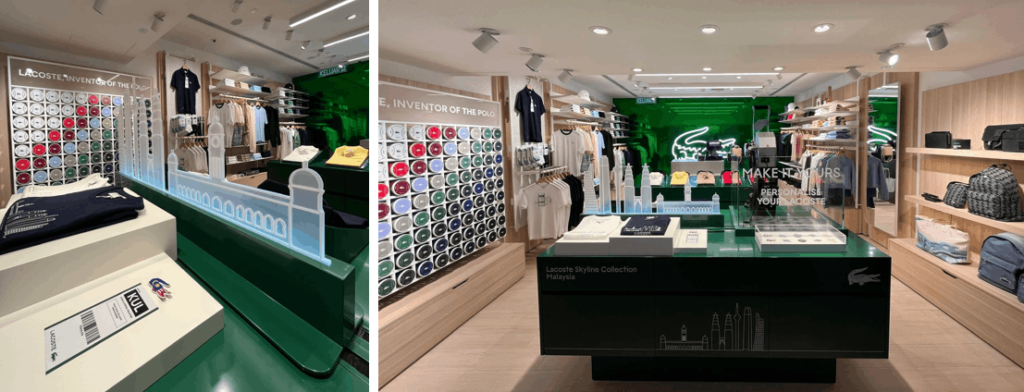
The crocodile has never needed to shout. It’s one of the most recognised symbols in fashion, and our focus is making sure every encounter with the brand lives up to that recognition.

CM: Lacoste today feels less like a traditional fashion label and more like a broader cultural and lifestyle brand. How is that evolution reshaping your vision for travel retail?
EL: Travel retail is the perfect stage for that evolution because airports bring together people, cultures and lifestyles from all over the world.
Historically, the channel was heavily product-driven. Today, we’re thinking much more holistically. We want travellers to experience the spirit of Lacoste – not just purchase a polo shirt. Whether through design, storytelling, sport, hospitality or innovation, we’re creating touchpoints that express the complete Lacoste universe.
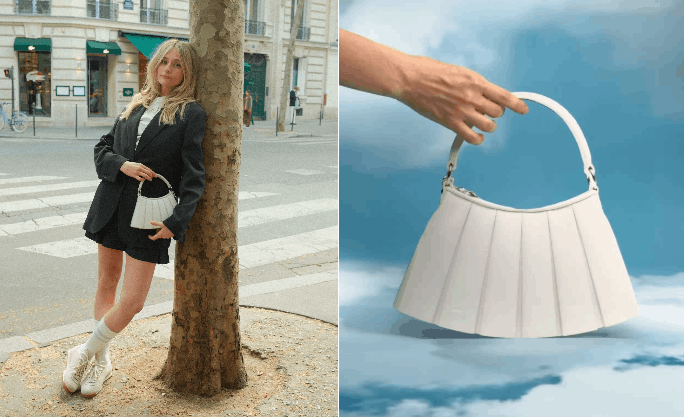
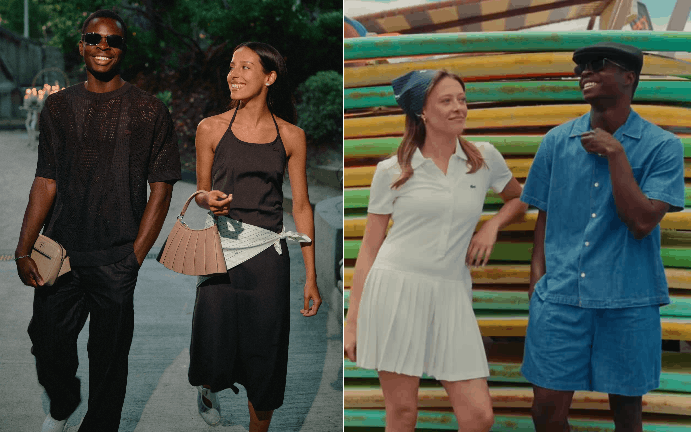
Inès Baylacq (IB): For my generation, brands aren’t defined by categories anymore. When people engage with Lacoste, they’re connecting with sport, fashion, creativity, music, culture and increasingly hospitality.
What’s also changed is the speed. Social media has accelerated trends to the point where a brand can be everywhere in a month and fade within a year. That volatility raises the stakes for us: it’s no longer enough to sell products. We have to create moments and experiences that travellers remember and want to share.
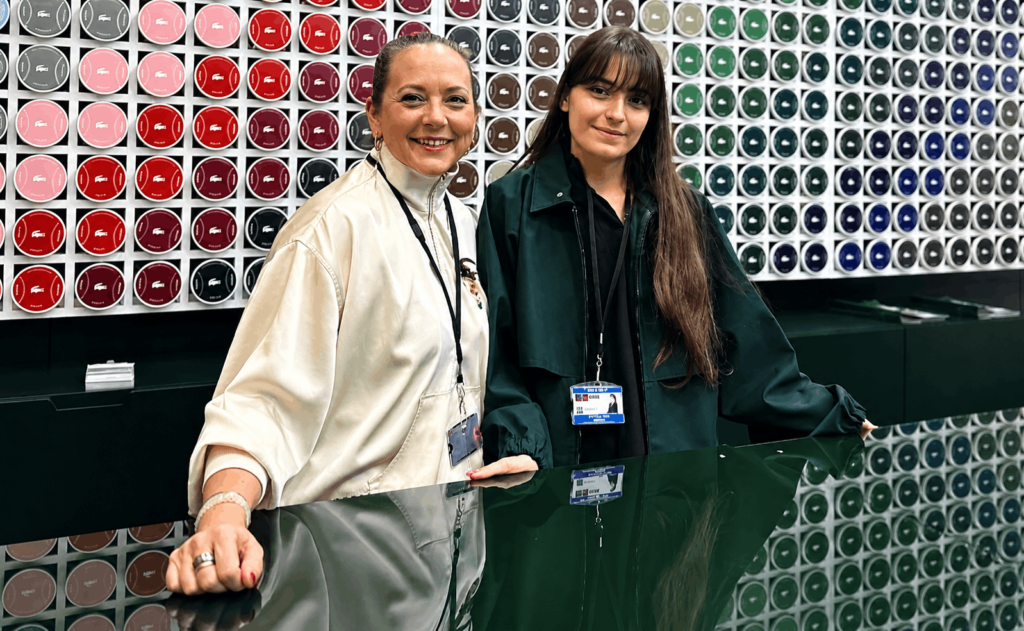
CM: Inès, in Singapore earlier this year, Erin described you as the “new croc on the block”. Coming into the business as part of a younger generation, what felt immediately outdated to you in travel retail – and what felt full of opportunity?
IB: What surprised me most was the scale of the audience. There is no other channel where such a diverse, international customer walks past your door every day.
If something feels dated, it’s the assumption that presence is enough – that a well-located door does the work on its own. That used to be closer to true. Today, attention has to be earned, and travellers decide within seconds whether a space is worth their time.
The opportunity lies in creating experiences that feel shareable, personal and culturally connected. Airports already have energy, emotion and anticipation built into them. Brands that tap into that can create something really powerful.
CM: Erin, you joined Lacoste in 2000 and have spent more than 17 years in Asia Pacific. Has the airport consumer become harder to emotionally connect with – or simply more demanding?
EL: I would say more demanding – and that’s a good thing. Travellers are more informed, more connected and have more choice than ever before. They expect brands to understand them and deliver value beyond the product itself.
The emotional connection is still there. In fact, travel remains one of the most emotional consumer environments in retail. People are beginning adventures, reconnecting with loved ones, celebrating achievements or discovering new places.
What has changed is that brands have to work harder to earn their place in that journey. Authenticity matters. Consistency matters. Experience matters. If we deliver those things, the connection follows naturally.
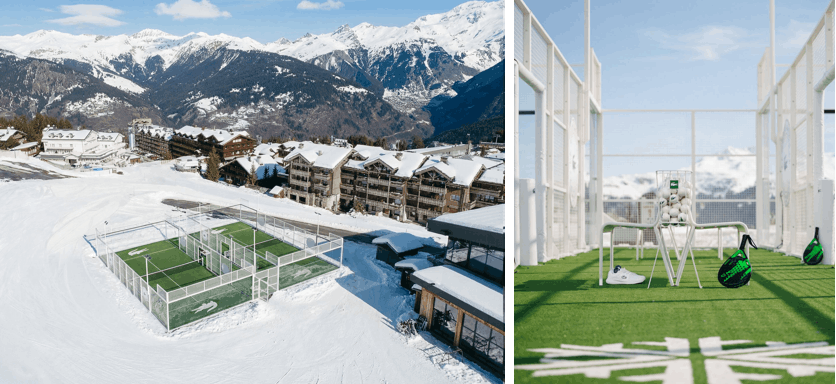
CM: We’re seeing Lacoste move into hospitality concepts like Café Lacoste in Paris and branded padel environments in Courchevel. Will airports become part of that wider Lacoste lifestyle universe?
EL: I believe they absolutely can. Airports are evolving far beyond their traditional role as transit hubs. They’re becoming places where travellers expect experiences, discovery and moments of enjoyment.
For a brand like Lacoste, that creates exciting possibilities. While I can’t reveal future projects, we’re always exploring ways to express the broader lifestyle dimensions of the brand within travel environments.
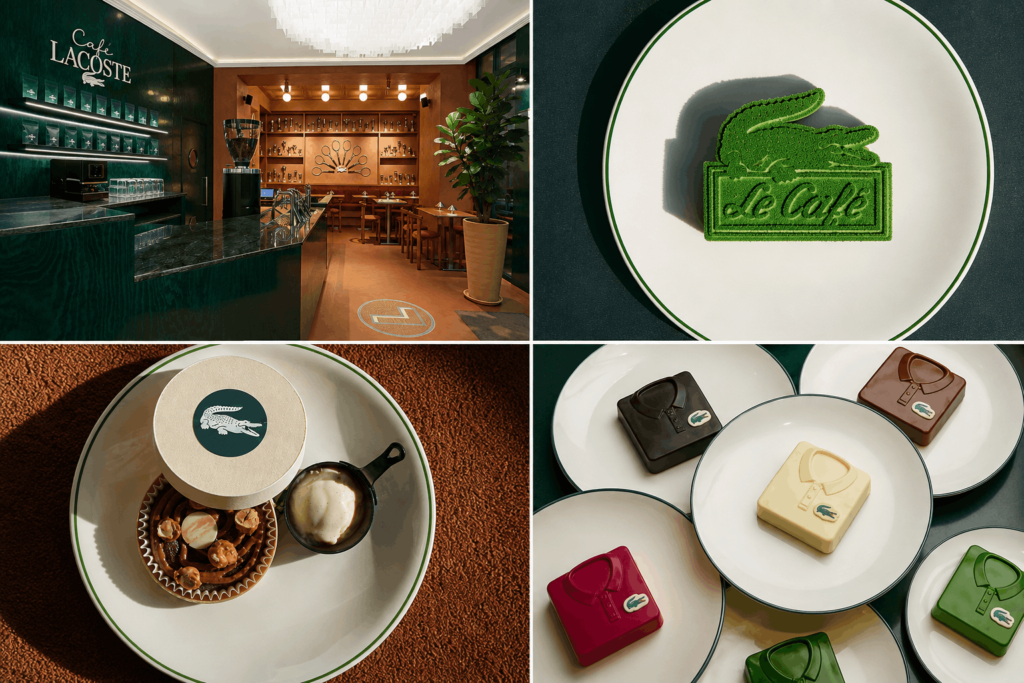
IB: What excites me is that travel naturally brings together the passions that define Lacoste – sport, culture, fashion, food and social connection. Travellers increasingly want experiences, not transactions, and that’s exactly where a lifestyle brand has the advantage.
The opportunity is to build environments that feel immersive and unmistakably ours, so the traveller steps into the Lacoste world rather than simply passing a product wall.
CM: Erin, you mentioned the importance of “people power” within the Lacoste team. Tell us about the development of the new Courtlines retail concept and how it’s likely to play out in travel retail.
EL: Courtlines is a great example of people power in action.
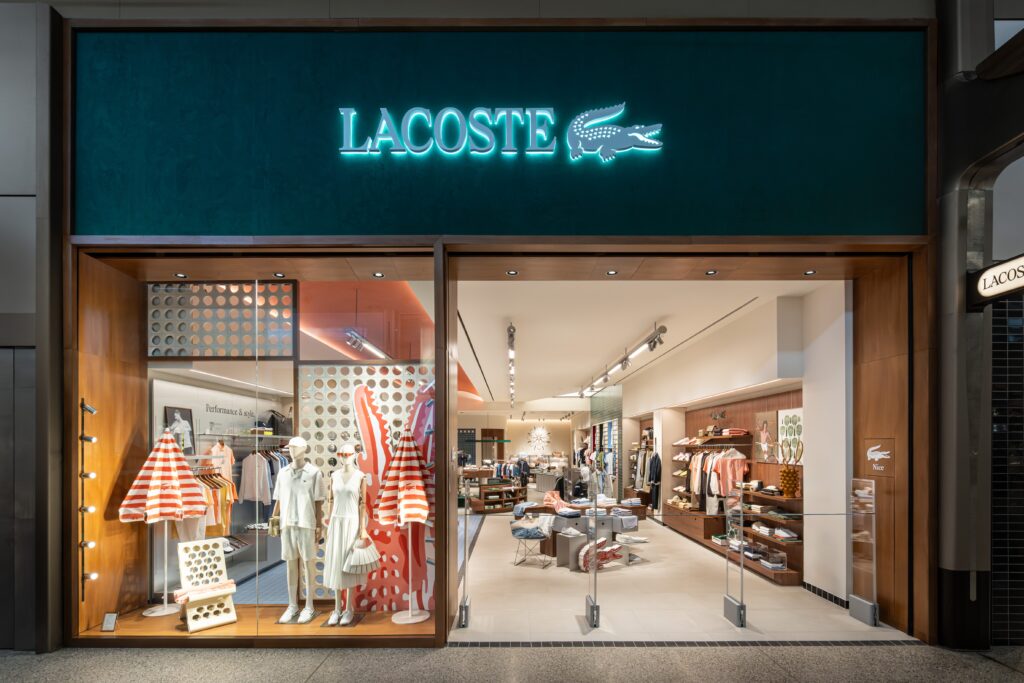
It started with a simple question: how do we create a retail environment that feels unmistakably Lacoste without relying on obvious branding cues? We looked back to the sport at the heart of our heritage and found inspiration in one of tennis’s most iconic objects – the tennis ball holder.
What’s exciting is that the idea emerged through collaboration across multiple teams and markets. Everyone contributed perspectives, challenged assumptions and helped refine the concept.
The result is a design language that feels modern, distinctive and deeply connected to our DNA. In travel retail, where differentiation is increasingly important, that authenticity creates immediate recognition and emotional resonance.
CM: René Lacoste was not only a champion athlete but also an inventor, engineer and rule-breaker. In today’s world, where does the brand still challenge convention?
EL: The biggest convention we challenge is the belief that heritage and innovation sit at opposite ends of the spectrum. René Lacoste disrupted tennis by questioning accepted norms and creating something better.
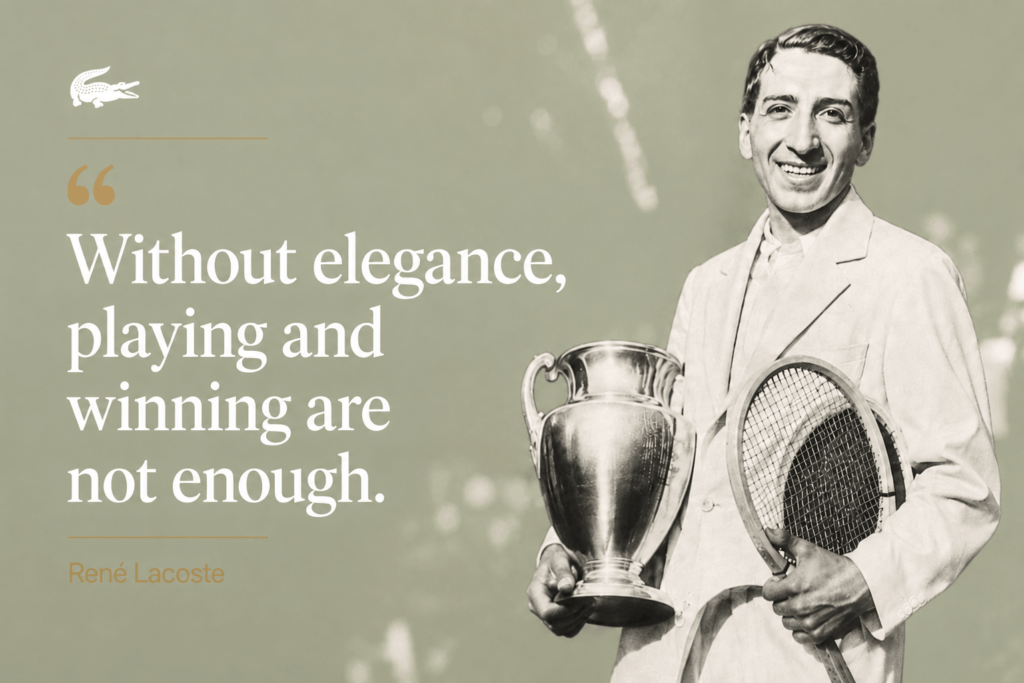
That mindset remains central to the brand today. We honour our history, but we’re constantly looking at how to reinterpret it for a new generation. René Lacoste didn’t just invent the polo shirt – now a staple in wardrobes around the world – he also developed the modern tennis racket, the tennis ball throwing machine and, in an important link to travel, the nose cone for Concorde. Inspiring to the extreme!
I think we challenge convention by refusing to be just one thing. We’re a fashion brand with a sporting soul. A heritage brand that speaks to younger audiences. A global icon that continues to collaborate with contemporary culture.
In a market that likes to file brands into neat categories, Lacoste is most interesting precisely because it moves between them.
CM: Gen Z travellers move fast, film everything and expect brands to feel culturally authentic. What does a great Lacoste airport experience look like for that generation in 2026?
IB: A great experience starts with authenticity. This generation can tell instantly when something has been built purely for attention, and they move on just as fast. For Lacoste, that means spaces that are visually distinctive, easy to navigate and rich in storytelling – blending the physical and digital so naturally that travellers want to capture and share the experience themselves.
But technology is never the only point. What matters is making people feel something in the few minutes they’re with us. Emotional connection is what they remember, and what they carry onto the flight.
CM: For years, airports were largely transactional retail spaces. What does the next chapter of travel retail look like for Lacoste – and how different might it feel from today’s airport experience?
EL: I believe the next chapter is about experience, exclusivity, emotion and discovery. Airports will continue evolving into lifestyle destinations where retail, hospitality, entertainment and culture intersect. The winning brands will be those that contribute meaningfully to that ecosystem rather than simply occupying space within it.
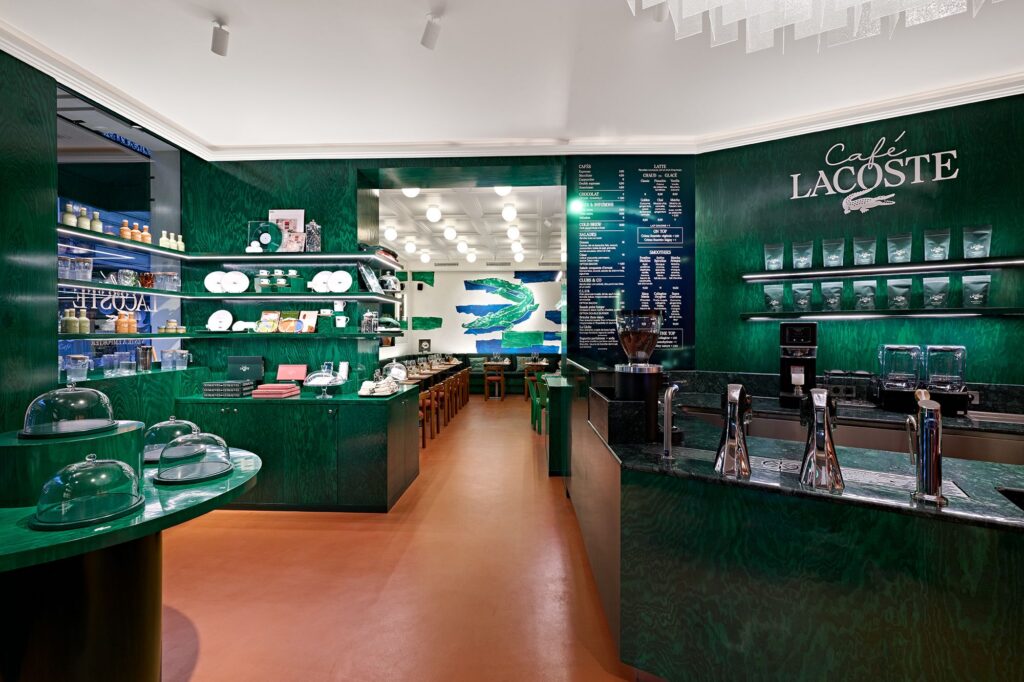
IB: For travellers, I think the distinction between shopping and experiencing will continue to blur. People won’t remember an airport because they bought something. They’ll remember how a place made them feel. The most successful travel retail experiences will be those that create lasting memories.
EL: And that’s very much aligned with the Lacoste vision. We don’t want travellers to simply pass through our stores. We want them to step into our world – even if only for a few moments before boarding their flight.





To subscribe free, please enter your email address: