

Can Tobacco Harm Reduction Actually Deliver? A Scientist’s Perspective. Gizelle Baker, VP Scientific Affairs, PMI.


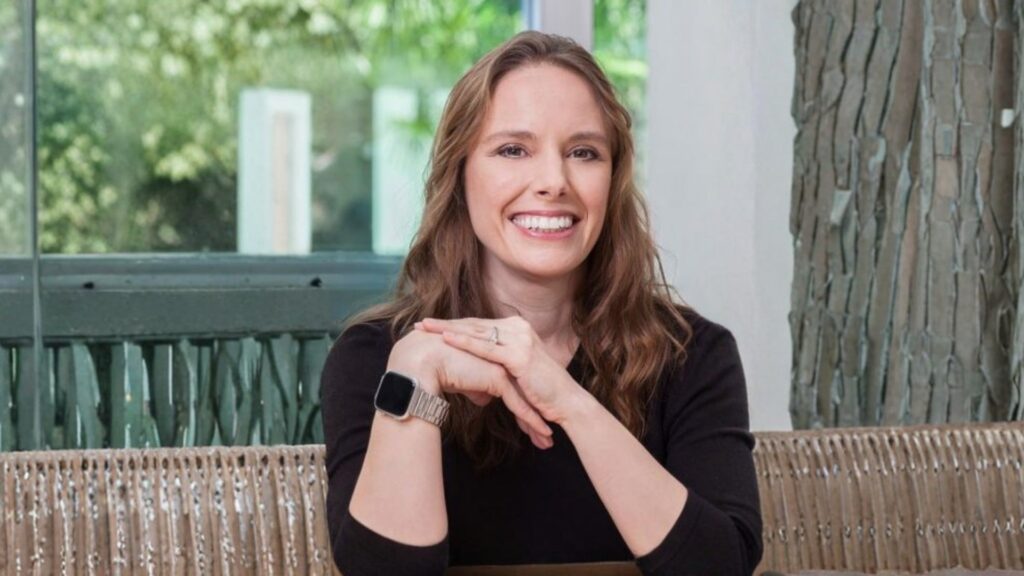
This was not the interview I expected. Instead of technical scientific jargon that is often difficult to decipher, I found Gizelle Baker, VP ScientificAffairs at PMI, highly articulate, easy to understand and thoroughly engaging. We talked about her unconventional journey from pharmaceutical research into tobacco harm reduction, and the scientific questions that shaped that transition for her. Drawing on nearly two decades in oncology and cardiovascular research, Gizelle offers real insight into how evidence, consumer behaviour and regulation intersect in the push toward a smoke-free future.
In this wide-ranging and open conversation, where tough questions are both asked and answered, she discusses the challenges of communicating risk, the role of science inside a commercial environment, and why meaningful public health impact may take longer to measure than many expect.
Peter Marshall (PM): Gizelle, welcome to TRunblocked.com. Now, your career moved from oncology and cardiovascular research into tobacco harm reduction at one of the world’s largest tobacco companies. What was the toughest question you had to answer for yourself before making that move?
Gizelle Baker (GB): Well, I think it was the realization that I could personally do more for public health in a tobacco company than I was doing in pharma. Now that doesn’t sound obvious, but let me explain. So when I was in pharma, I was working on lung cancer, small cell lung cancer, and we were looking for treatments to extend life by 188 days. That was the definition of success for the new drug. And when you think about that, you know, 188, it’s a big number. It sounds great, when you calculate what that means for a person, you’re extending somebody’s life by six months. If you can prevent or delay that disease so that they live that time healthy, it would have a huge impact on the population. And I think that realization was what made me very interested in this opportunity.
PM: You spent nearly two decades working with clinical data and pharma before joining PMI. When scientific findings don’t sit comfortably with commercial priorities, how are those debates handled inside the company? And does science usually win?
GB: Let me start with the pharma experience. In pharma, we were very clearly always driven by the ‘don’t ask a question you don’t want the answer to’ approach. So if you were thinking about the fact that you might be able to see something, but you didn’t know if you could stick to the indication you’re looking for – don’t ask any additional questions. If you get the indication, you get a drug.
When I came here, I have to say I was sceptical at first. In fact, I think the very first thing I said to the company when I came through those doors for the interview as an epidemiologist was: if you think that there’s anything you can show me that will convince me that smoking doesn’t kill, we can end the conversation right now – like it’s not going to happen. But I thought while I was here and I saw the science and and saw some of the things that you’ve seen today, that PMI’s approach was very different. Their approach was to ask every question that the outside world will ask – because we better know the answer before they do.
So you can see the difference in approach. Science wins.

PM: PMI has invested more than $16 billion in smoke free research and development. Yet cigarettes still very much dominate global volumes, 81% in real terms. From where you sit, is the company generally on track to make cigarettes obsolete or do you think this is going to be a much longer transition?
GB: I think if we look at where we started, it’s going to be a longer transition than we predicted at the beginning. We started this process thinking if we have a less harmful product, people will give up their cigarettes and they’ll just take the new product.
PM: Almost naive.
GB: A bit naive. But I think what we learned along the way is that human behaviours have to be accounted for and therefore there’s three real players for the success of this. We need products, they need to have the science behind them. We have to address the consumer demand. We cannot give them a product they don’t like just because it’s better for them and hope that they’ll give up cigarettes. But then, on the third side, we need a regulatory environment that can inform consumers, because if they don’t even know about the products, how will they ever know to try them, how will they understand them? And how will they ever be able to switch?
So you need regulation, you need to address the consumer demand and not hold out for some ideal product that we think that they should want, but really deliver them one that they will use. And we need to do it in a way with products that are less harmful for them.
PM: Now, you’ve helped develop models that estimate the population health impact of reduced risk products before long term epidemiology exists. What assumptions in those models deserve the most scrutiny – whether it’s from regulators, from critics, or even from within PMI itself?
GB: I think there’s a lot, and if you go to different audiences, it’s going to be different because the concerns are different. So, for Philip Morris, it’s understanding that it’s going to take time for the reduction in harm to be seen. You need to not just look at what happens to the people in the models that switch, but what would happen if they quit at that exact point in time. Because if you were able to end smoking today, 100%, everybody quits, no cigarettes available tomorrow. The reduction in harm to the population next year will actually be very little because the people who are sick enough to die next year probably already have the disease. And quitting won’t stop it.
The real impacts and the biggest numbers that you’re going to see come when you have that first generation where no one ever smoked, and that takes a long time. So for a company that wants to drive change, that wants people to switch immediately and wants the benefits immediately, it was really an educational process. And when will you be able to see this, when will it be able to be measured and where will the benefits really show up? I think for regulators it’s a similar conversation: how long do I have to wait before I know the decision I took today is the right decision?
PM: Well, that falls nicely into the next question. In some markets, as we well know, regulators remain unconvinced by tobacco harm reduction claims, particularly when the science comes from the industry itself. How do you respond when that scepticism is put directly to you?
GB: Well, as a scientist, I think that if people aren’t sceptical, I don’t trust them. Because you need to be sceptical. But I think where you start to see it break down is when it’s not really scepticism, it’s really bias. Because when people say it’s the source of the data that matters, it’s not a true statement. The source is a fundamental question that you need to know. But it’s about: how is science conducted? How is it verifiable? Can it be reproduced? These are the questions that will tell you the amount of bias in your data.
If we think of ourselves as a company, by definition, there’s going to be bias that we’re going to introduce into the study because we’re looking to show that the products are beneficial. If you want public health, you’re going to be looking for what harms. So you’re going to bias your data that way. The issue is that we’re not having a true scientific debate with the public’s health as the number one piece. Because if we take our science and we challenge it with their science, my guess is that neither one of us is 100% correct. We’re both driving in the right direction. But the way to get there the fastest is to truly open that debate and really bring all of the science from all of the sources, understanding the limitations and the biases and bringing them together to have a transparent debate.
PM: Now, authorities such as the US FDA have granted modified risk tobacco product status to some smoke free products that are under very strict conditions. What’s been the toughest scientific requirement for you so far?
GB: I think the toughest requirement is that the industry and the products are evolving so quickly. So when you go into a post market and you want to follow up to see the benefits or the impacts of the product that you launch today. The products that are going to be available in five years are going to be very different than those from today. So I think the toughest requirement is that they’re looking at it at a product specific level. And I think that that data will be limited because people will continue to switch products over time. And I think that the real question that regulators, especially people like the US FDA should be asking is: what is the impact of getting people away from combustion to whatever smoke free products exists? Because I think that’s where you’re going to see the benefit. And a true answer to that question.
PM: Your role, as I understand it, involves constant dialogue with academia, policymakers and NGOs. Has criticism from outside the company ever led PMI to rethink how it conducts or even communicates its research? I mean, after all, how much agility has this company shown by turning itself inside out and completely reinventing itself as a business? So, do you listen, and do you act upon outside influence?
GB: Absolutely. I think, again, we come at it from one perspective. When you’re out in the world and people are challenging you and you hear a valid scientific question, my job is to also bring that feedback back into the company and work with the people in this building to help answer the questions. Because the broader your audience, the broader your perspective, then the better the science will be. And as far as communicating, it’s also absolutely critical that you learn to reframe the science. Not to change the science, but reframe it in a way that’s relevant to the audience because people have different perspectives.
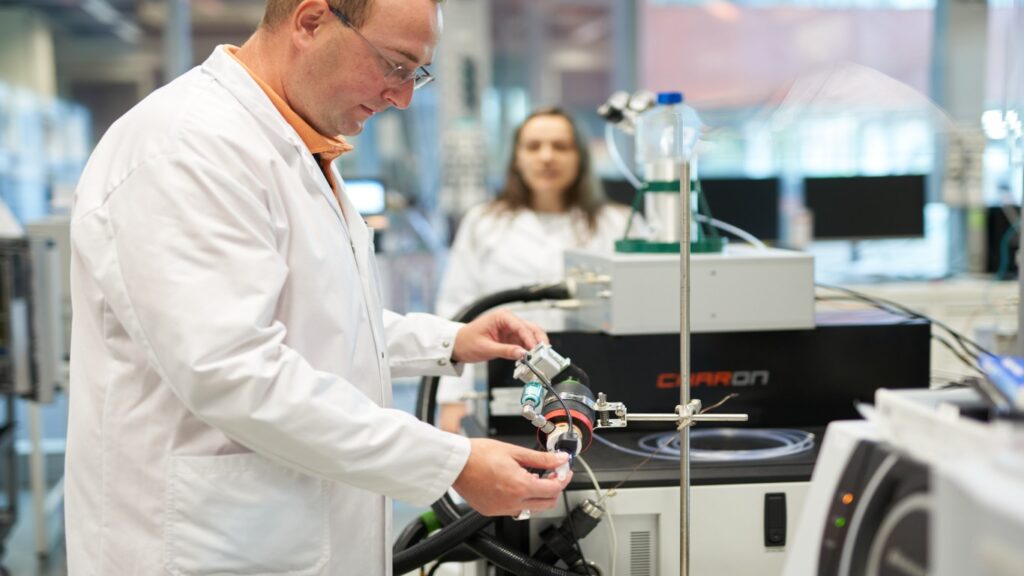
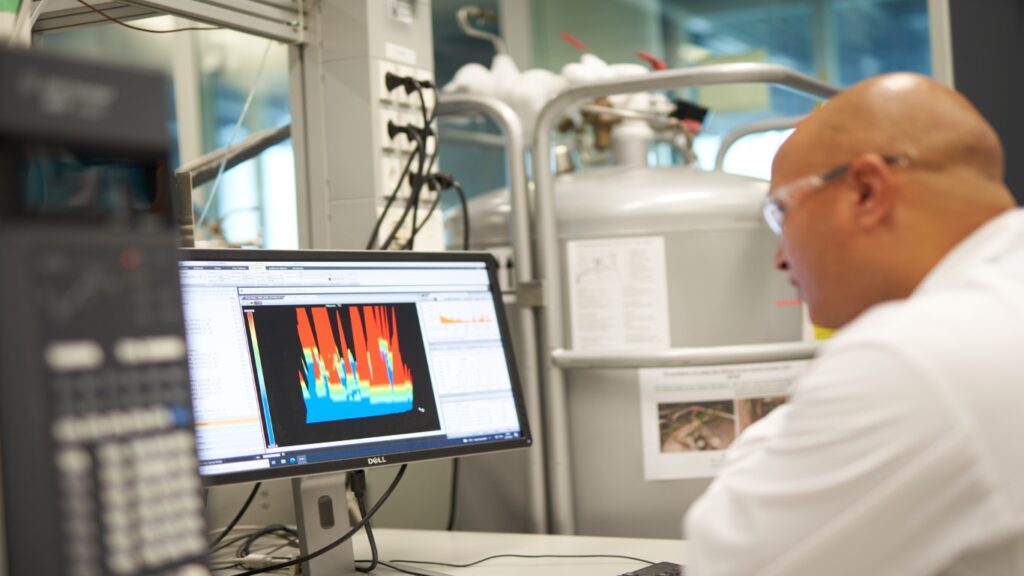
PM: Well, I think you articulated the science very well in this morning’s session. It’s quite difficult explaining science-based conceptual ideas to many, I am sure. Yet science, pivotally, is the engine room of the PMI smoke-free transformation. Has there been any moment when the data has forced the company to slow down, redesign or even rethink a product?
GB: Absolutely. For instance, when we switched the heating profile of our heated tobacco product. So in the original one, the temperature of the blade stayed below the combustion point at all times. So it was very easy to prove the absence of combustion. We then did induction heating and there’s very specific things around that process. I won’t get into all the science, but you have a very different heating profile. And what you have is a very split second where it goes above the temperature limit, where it could ignite the tobacco. And we had to come up with what’s the new assessment framework that we’re going to have to do to prove that it still doesn’t burn, Because now the blade temperature alone doesn’t do it. So we ended up having to meet with experts in multiple different countries. We had to redesign and redesign and it slowed the process down to launch it.
But the critical thing is, if the absence of combustion is a fundamental principle of your product, there’s no way you can launch a product that has a risk of burning the tobacco. So it did really require innovation, both on the scientific assessment side and on the product side to come together to be able to put a product out there that met the standards that we would need and had the proof and substantiation to support it.
PM: So, from your perspective, what is the biggest risk that could slow the shift away from cigarettes? Is it regulation, scientific disagreement, unexpected safety concerns, or simply lack of consumer adoption?
GB: I’m going to pick a whole new one. Misinformation. I think if we don’t figure out how to communicate risk to consumers and empower them with the science that we have instead of confusing them, that we’re going to be in a spot where people are making policies that are wrong, and consumers are choosing the wrong product for themselves. We may end up in a spot where more people continue to smoke than need to – because they don’t understand the risks and benefits of the two different products. And I think fundamentally that’s horrible.
PM: OK, final question, Gizelle. If we look 10 years ahead, what kind of real world evidence would convince even your toughest critics and those in government regulation as well, that tobacco harm reduction has genuinely improved public health? What kind of timeline do these people require to understand that your 90 to 95% reduction is of genuine validity?
GB: I think what we’re going to see is something of the same, but the opposite of what happened in smoking. Long before we had the proofpoints, doctors started to recognize the harms that were happening to their patients from smoking. And that information started to boil up before we had the evidence. I think that, between the consumers using the products, recognizing their own benefits, the doctors dealing with patients, they will start to see these benefits – that we’re going to have that same type of bubbling up of the fact that this is actually benefiting the population. And this will be long before regulators are going to be able to have the concrete evidence to put a stamp on it with proofpoints.










To subscribe free, please enter your email address: