

The House of Noya: “You’re Not Buying a Fragrance, You’re Sharing a Feeling”. Founder Talha Kalsekar and Marketing Director, Lyva Lehongre, Interviewed.


For many emerging fragrance brands, heritage is a powerful advantage. For House of Noya Founder and Chief Marketing Officer Talha Kalsekar, it was something he initially ran from.
Born into one of the Middle East’s most established fragrance families, Talha chose to build his own path rather than simply follow an existing one. His House of Noya is a fast-growing niche fragrance brand that places emotion, memory and personal connection at the centre of its identity.
Alongside Marketing Director Lyva Lehongre, Talha discusses family legacy, Gen Z consumer behaviour, the changing definition of luxury and why he believes travel retail is more than a sales channel for the brand.
In conversation with TRunblocked.com’s Colleen Morgan, they offer a candid view of a fragrance industry being reshaped by digital discovery, emotional storytelling and a new generation of consumers seeking connection over status.
It’s a remarkable interview.


Colleen Morgan (CM): Talha, you’ve said you once wanted “nothing to do with perfumery”. Was House of Noya ultimately born from rejecting your family legacy – or redefining it on your own terms?
Talha Kalsekar (TK): For a long time I was lost, and I still feel that sometimes. I didn’t want perfumery because I didn’t want to be handed something. I wanted to build something of my own. When you grow up watching your family do it at that level, it’s intimidating in a way nobody really talks about. You don’t feel inspired, you feel small.
So, I ran from it. I told myself I was running away from the drama of a family business. I tried other things and made mistakes I’m still learning from.
Then, at some point, I stopped running and realised that everything I cared about – memory, emotion, identity and craft – was sitting right there in what my family had been doing my entire life.
House of Noya wasn’t born from rejection. It was born from finally being honest with myself about who I am.

CM: House of Noya often feels closer to cultural storytelling than traditional perfumery. Are you building a fragrance brand – or creating an emotional identity people want to belong to?
TK: I’ll be straight with you: in the early days, I got this wrong. I thought the product would speak for itself. It doesn’t. Not anymore, maybe not ever.
What people are really buying is the feeling that someone made something for the way they see the world. For a long time, I underestimated that. I was focused on the liquid and the bottle, and I was missing the deeper conversation entirely.
The shift happened when I stopped asking, “How do we sell this?” and started asking, “Who is this person? What do they feel when they wear it? How do we connect through a shared experience?”
That’s when House of Noya started becoming something real. The fragrance earns the trust. The identity is what makes them stay.

CM: Luxury used to be about exclusivity and heritage. Your generation seems more interested in authenticity, emotion and relevance. Have legacy fragrance houses failed to keep up with younger consumers?
TK: I wouldn’t say they’ve failed, but there’s definitely a disconnect. Legacy houses built their identity around aspiration and distance. The idea was: you can’t get close to us, and that’s the point. But younger consumers don’t find distance aspirational anymore. They find it cold.
Lyva Lehongre (LL): Niche brands understood this years ago. Look at Byredo. Gustaf Westman didn’t come from the fragrance world, he came from basketball and fine art. And he built an entire brand around personal memory and emotion. Bibliothèque smells like old books and warmth. That’s not a perfumer flexing their craft, that’s someone saying “I want you to feel something”. People connected with that immediately.
TK: Maison Margiela’s Replica line is another perfect example. They named their scents Lazy Sunday Morning, By the Fireplace, Beach Walk. No mystique, no Latin names, no story about a master perfumer in Grasse. Just: here’s a moment you recognize, here’s how it smells. That directness resonates.
LL: What legacy houses missed is that the new luxury consumer doesn’t want to be impressed, they want to be understood. They’re not looking for a brand to tell them “this is prestigious” – they’re looking for a brand that gets them.
TK: That’s how we think about every scent at House of Noya. Not “what makes this luxurious?” but “what does this unlock in the person wearing it?” Heritage is beautiful, and we respect it, but heritage alone isn’t a reason for someone to choose you in 2025. You have to earn that connection every time.


LL: Fragrance was never meant to be a masterpiece behind glass. It’s something you share. You spray it on a friend, you smell it on a stranger and feel something, you give it as a way of saying “this reminded me of you”. That’s the community we’re building, people who use scent to connect, not to signal.
At House of Noya, the juice is a vessel for emotion. You’re not buying a fragrance, you’re sharing a feeling.
CM: How important was it for House of Noya to avoid becoming simply “the next generation of Rasasi”?
TK: It was everything. I’d seen what happens when the next generation coasts. The family name carries you for a while, and then it doesn’t. More than failure, I was terrified of irrelevance – of being known only as someone’s son.
My grandfather, father and uncles built something extraordinary from nothing. If I was going to be worth anything in this industry, I had to do the same. Not replicate their story, but write my own.
There were moments when the easier path was right there. I chose the harder one because I couldn’t live with the alternative.

CM: Lyva, one House of Noya line reportedly sold out within hours. What did that moment tell you about the new generation of fragrance consumers – and how should travel retail adapt to the speed and influence of Gen Z purchasing behaviour?
LL: That moment was hugely validating, although I should clarify that the line sold out over days rather than hours. What mattered wasn’t the speed, but why it happened.
It wasn’t the result of a single campaign. It came from a deliberate shift in how we market the brand. We moved away from traditional fragrance marketing and focused on one question: how do we make people feel something before they even smell the product?
That shift in storytelling and community-building created the momentum. The sell-out wasn’t a spike; it was the result of people who already believed in the brand showing up for it.
And that’s what it tells you about today’s fragrance consumer: they don’t buy products, they buy into narratives. They want to feel part of something.
For travel retail, the lesson is the same. You can’t just stock a product and expect it to move. You have to earn the desire before the customer walks through the terminal. If the storytelling has done its job, travel retail becomes the moment of fulfilment, not the moment of discovery.
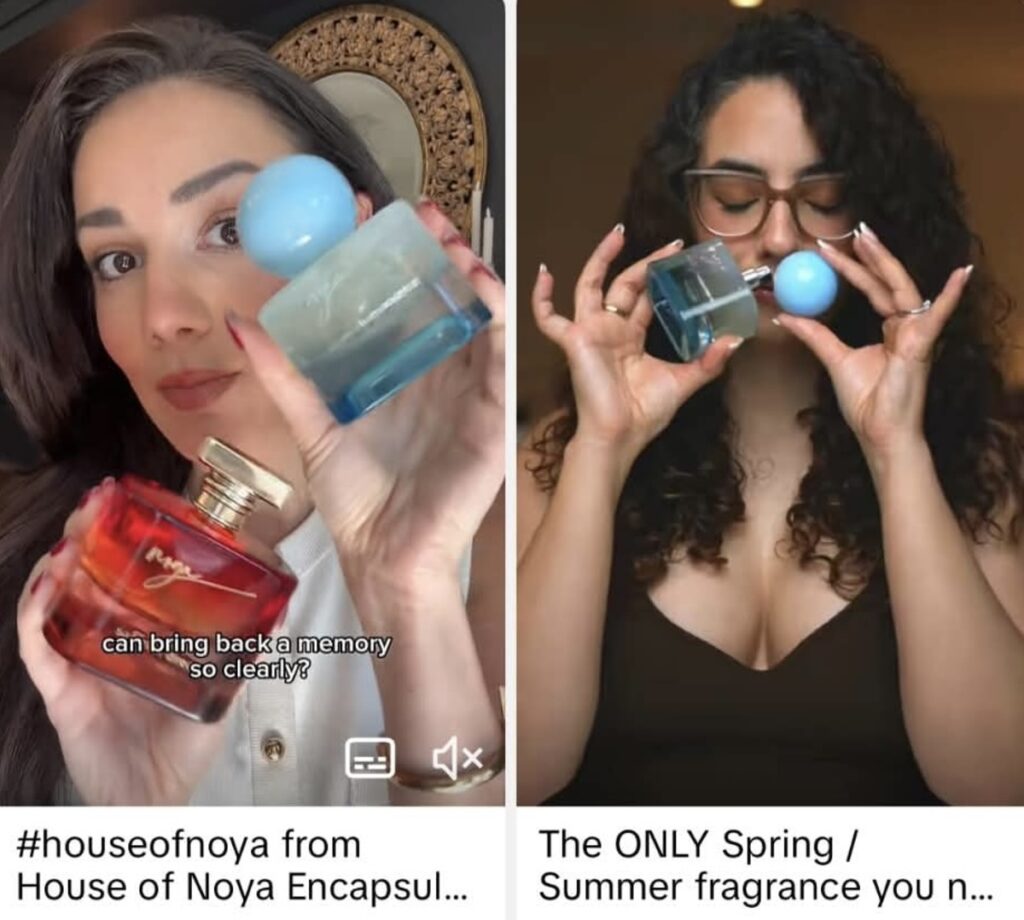
CM: Travel retail beauty was built around physical discovery at the counter. Gen Z discovers fragrance through TikTok before ever entering an airport store. Is the industry moving quickly enough to keep up with that shift?
LL: Honestly? No. And I think most people in the industry privately agree, even if they won’t say it out loud.
Travel retail was designed around a very specific ritual: the counter, the tester, the sales associate walking you through a fragrance wardrobe. But that model was built on the assumption that the airport is where discovery begins. For Gen Z, discovery happened three months ago on TikTok, in a comment section, in a fragrance community. By the time they’re standing in that terminal, they already have an opinion, a preference, sometimes even a shortlist.
The industry is still catching up to that reality. You still see launches built entirely around the airport moment, with very little investment in what happens before any of that. And that’s the gap.
The brands moving fastest are treating digital not as a marketing channel, but as their primary relationship with the consumer. Everything else, including travel retail, flows from that. Brands that still treat social as an add-on to their physical strategy will continue to feel one step behind. Because they are.
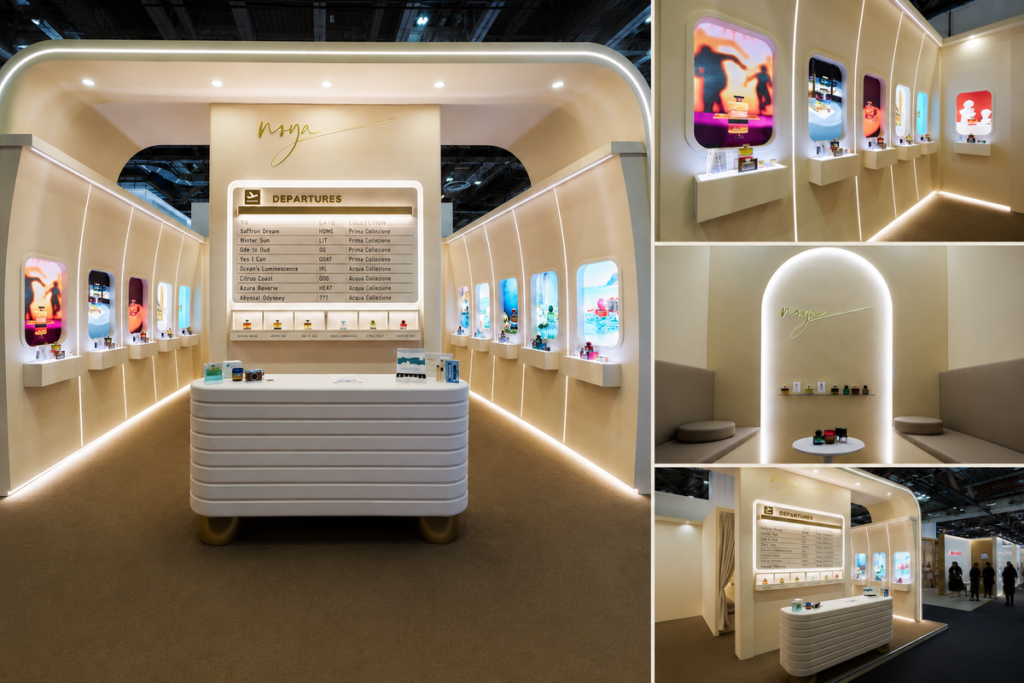
CM: How challenging has it been to break into travel retail – and will we see House of Noya exhibiting at TFWA World Exhibition & Conference in Cannes later this year?
TK: Honestly, it’s one of the hardest channels to crack. Travel retail has its own logic – the volumes buyers expect, the way shelf space is allocated and the dominance of established names. As an emerging niche brand, you’re asking people to care about something very different: story, experience and emotional resonance.
LL: That’s why TFWA has always been a deliberate choice for us. It’s where the right conversations happen with buyers, distributors and retailers who are genuinely looking for what’s next. Every time we’ve attended, we’ve learned more about what travel retail partners need from an emerging brand.
TK: The challenge is that travel retail rewards recognition. A passenger with 20 minutes in a terminal gravitates towards what they already know. Part of our job is proving that House of Noya has enough pull, enough of a following and enough of a story to make people stop, engage and buy. That takes time, but we’re building it intentionally.
LL: What gives me confidence is that the appetite for discovery is there. Travellers, especially younger ones, are increasingly looking for something they can’t find everywhere. That’s exactly where House of Noya lives.

TK: You’ll see us at TFWA World Exhibition this year. And this time, we’re not just showing up – we have something to say. We’ve been working on a new addition to the Acqua Collezione, created alongside a renowned master perfumer. It’s the most intentional piece of work we’ve done to date.
LL: TFWA Cannes will be where we reveal it first. Before the world gets to smell it, the travel retail industry will.
TK: The official worldwide launch is October 15. But a few weeks before that, Cannes is where it all begins. I’ll leave it at that for now, some things are worth the wait.
CM: Many of your fragrances are rooted in travel, memory and emotion. Does that make travel retail the natural home for House of Noya?
TK: It’s the only place that actually makes sense to me, apart from my home. And I don’t mean that commercially – I mean it almost spiritually.

When you’re in an airport, you’re between lives for a few hours. The version of you that exists at home, at work, in your routine – none of that applies. You’re just a person in transit, open, maybe a little vulnerable. That’s exactly the state in which fragrance hits differently. That’s when someone stops at a counter not because they planned to, but because something pulled them.
House of Noya was made for that moment – the restlessness, the movement, the emotion of being somewhere between who you were and who you’re becoming.
Travel retail isn’t a channel for us. It’s the whole point. It’s the dream of walking through an airport and seeing the House of Noya there.
CM: Lyva, you are marketing niche luxury to consumers in their twenties – a generation balancing financial caution with strong emotional spending habits. What makes Gen Z willing to invest hundreds in fragrance, but reject more traditional ideas of luxury?
LL: Gen Z isn’t anti-luxury, they’re anti-performance. They grew up watching people buy things to signal status, and they found it hollow. What they want is something that feels genuinely theirs.
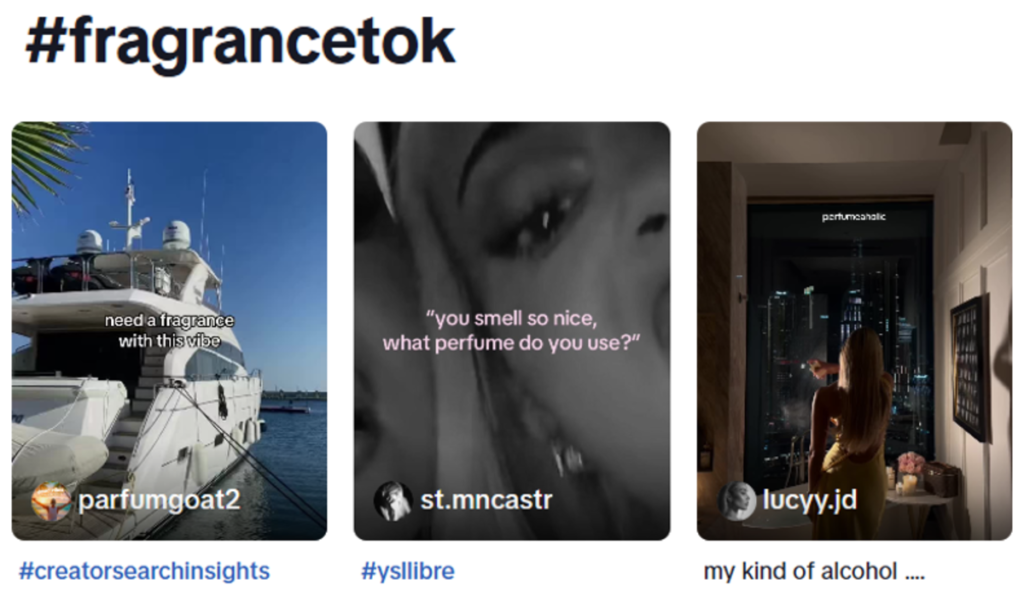
And what’s fascinating is how educated they are about fragrance specifically. FragranceTok is a real phenomenon, thousands of creators reviewing scents, breaking down notes, comparing houses, building entire audiences around their nose. Platforms like TikTok, Instagram, even Reddit have created a generation that knows the difference between a chypre and an oriental before they’ve ever stepped into a boutique. They trust those creators deeply, a genuine review from someone they follow can do more for a brand’s awareness overnight than a traditional campaign would in months.
But beyond education, it’s about belonging. They’re not buying a logo, they’re buying into a world, a community and an identity that aligns with who they are – or who they want to be. The brand story matters, the values matter and the experience matters, from discovery online to the moment they open the box.
I speak from personal experience here. What drives an impulse purchase isn’t the product alone, it’s the feeling that I’ve found something that gets me. That’s exactly the consumer we’re designing for at House of Noya.
CM: House of Noya has already built visibility on the global travel retail stage remarkably early in its journey. When you talk about “disruption”, what exactly do you believe needs disrupting in fragrance retail today?
LL: The word disruption gets used a lot, and I want to be precise about what we mean by it. For us, it’s not about being loud or provocative. It’s about questioning assumptions the industry has stopped noticing. The biggest one? That fragrance retail is a transaction. You walk in, smell something and buy it. We think that’s broken.
TL: The entire in-store experience was designed around the product, not the person. You’re confronted with hundreds of bottles and descriptions that tell you what a fragrance contains, but not how it might make you feel. In travel retail especially, where people are tired, distracted and short on time, that model doesn’t work.


LL: What needs disrupting is the emotional architecture of how fragrance is sold. People don’t buy a fragrance because of its top notes. They buy it because of how it makes them feel, what it reminds them of or who they want to be when they wear it. The retail experience should start there and work backwards to the bottle.
TL: We also believe the conversation between brand and customer needs to change. Traditionally, fragrance has been very one-directional: here’s our vision, our heritage, our perfumer. We believe in something more reciprocal. The emotions our community brings to our fragrances become part of the story.
LL: Ultimately, we want people to walk away from a House of Noya experience – whether in an airport, a boutique or online – feeling like something happened, not simply that they made a purchase. That’s the disruption: making fragrance retail feel human again.









To subscribe free, please enter your email address: