

As Purchase Planning Weakens, Pre-Trip Communication Should Strengthen. By Steve Hillam, Managing Director, Pi Insight.


One of the most significant shifts we have seen in Travel Retail over recent years has been the continued decline in purchase planning.
Increasingly, travellers are arriving at the airport with less certainty about what, or indeed if, they intend to buy. This has created valuable opportunities for brands and retailers to influence decision-making through activations, merchandising, staff engagement and retail theatre, helping to drive behaviours such as brand trial, non-regular brand purchasing and premiumisation.
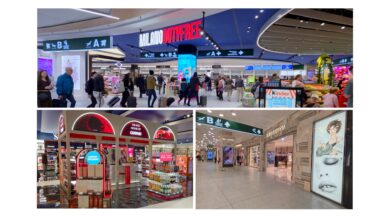
However, as this trend has strengthened over the past five years, the airport shop floor has become an increasingly competitive battleground. The natural reaction is often to increase in-store communications and intensify the use of impulse triggers in an effort to capture attention and drive conversion, and with good reason – if impulse purchasing is increasing, so too should impulse targeted strategies. However, there is a risk that continually adding more messages, more displays and more stimuli simply overwhelms shoppers, creating additional complexity and uncertainty at the point of decision.
And this is where pre-trip communications can begin to play an adapted role where the purpose is no longer just to drive exact-item or brand-level planning. Instead, they can be used to support the increasingly impulsive nature of today’s shopper by building awareness, familiarity and consideration before the airport visit.
In a week where TRunblocked.com looks at the importance of pre-trip, travel retail innovation and the introduction of a unifying revenue reporting platform, it’s great to start with Steve Hillam’s post.
Today, just 40% of global Duty Free shoppers enter the store with a planned purchase in mind, down from 55% in 2019 and 43% in 2023. The initial decline in planning was largely driven by the COVID pandemic, as prolonged lockdowns and reduced travel meant many shoppers became less familiar with airport retail ranges and consequently also became less able to plan their purchases in advance.
What is particularly interesting, however, is that while many consumer behaviours that shifted during the pandemic have since reverted, purchase planning has not. Instead, shoppers have become increasingly comfortable using Travel Retail as a place to discover, browse and explore before deciding what to buy. The airport has evolved from a channel where many shoppers arrived with a fixed purchase intention to one where the final decision is increasingly made in-store.
However, what intensifies this dynamic further still is the nature of planning itself. Of the 40% who plan, only 26% are planning to an exact item level (that’s the equivalent to just 10% of all Duty Free shoppers). A further 28% are planning to buy a specific brand, while around half of planned shoppers are entering the store with only a broad intention, such as a category they want to buy from, a shortlist of brands they are considering or simply an amount they are willing to spend.
Today’s Duty Free shoppers have become one of the most purposeful we’ve ever seen when they enter the store, knowing the types of products they want to see, whether that’s exclusives, promotions, innovations or destination-specific offerings, but they are far less committed to exactly what they will buy. This creates significant opportunities for brands and retailers to influence conversion, but also fundamentally changes how those opportunities need to be approached.

As purchase planning continues to soften, the opportunity on the airport shop floor is becoming increasingly impulse-driven, although the scale of this opportunity varies significantly by nationality.
More and more shoppers are entering the store without a fixed purchase intention, creating greater opportunities for brands and retailers to influence the final decision. As a result, understanding and activating the key impulse triggers has never been more important.
Among the most powerful impulse triggers are promotional activity and perceptions of value, both of which can create urgency and encourage immediate action. Travel Retail exclusives and limited editions also play an important role by offering something shoppers cannot easily access elsewhere. New products, innovative formats and destination-specific offerings tap into the desire for discovery, while premium packaging and gifting suitability help shoppers justify unplanned purchases.

Visibility is equally critical, with impactful displays, activations, sampling and retail theatre helping brands stand out in an increasingly crowded environment. Staff engagement remains another highly effective trigger, providing reassurance, recommendations and encouragement at the point of decision.
However, impulse triggers alone are not enough. While they may create the motivation to purchase on a particular occasion, the underlying purchase drivers still need to be present for conversion to occur. Factors such as quality perceptions, trust, brand familiarity and relevance remain fundamental to decision-making. A product may have an exceptional promotion or a highly differentiated proposition, but if it lacks credibility or is perceived as lower quality, shoppers are unlikely to convert. In simple terms, impulse triggers create the opportunity, but purchase drivers determine whether that opportunity is realised.
This distinction is becoming increasingly important as planning and purchase intent continue to weaken. Brands are now being asked to do more of the decision-making work within the store itself, often within a very limited window of time. They must attract attention, communicate value, explain differentiation, build trust and justify purchase, all while competing against dozens of alternative products and brands.
This is where the pre-trip phase can help relieve some of the pressure on the airport retail environment. The goal is not necessarily to drive exact-item planning, but to build awareness, education and purchase intent before travellers arrive. By increasing familiarity and consideration ahead of the journey, brands can then focus on those key impulse triggers that can drive conversion on that given day.

Currently, 28% of Duty Free shoppers undertake some form of pre-trip research before travelling, with the most common areas of interest being product pricing (53%), product ranges (52%), Duty Free exclusives (47%) and promotional offers (46%).
This presents a significant opportunity for brands and retailers, not only to increase the proportion of shoppers engaging in pre-trip research, but also to reshape the nature of that engagement. Today, much of the research being conducted is focused on functional information needs, what products are available, how much they cost and whether any promotions are running. While these remain important, they only scratch the surface of what pre-trip communication can achieve.
The brands that will be most successful are those that use the pre-trip phase to do more than simply inform. It is an opportunity to tell a brand story, communicate heritage, showcase innovation, explain differentiating features and build emotional connections before the shopper even reaches the airport. By doing so, brands can begin shaping consideration and purchase intent long before the point of sale.
Importantly, this isn’t just about driving conversion. It’s about education. As purchase planning continues to soften, pre-trip communication can help equip shoppers with the knowledge and confidence needed to make decisions in-store. Rather than expecting the airport environment to build awareness, communicate benefits and drive conversion within a matter of minutes, some of that work can be done earlier in the journey. The result is a more informed shopper, a stronger level of intent and ultimately a greater likelihood that the brand enters the consideration set when the final purchase decision is made.
The decline in purchase planning has undoubtedly created new opportunities for brands and retailers to influence shoppers in-store, driving behaviours such as brand trial, recruitment and premiumisation. However, it has also increased the pressure on the airport environment to educate, persuade and convert shoppers within an increasingly short and competitive decision-making window.
While strong in-store execution and effective impulse triggers remain critical in converting the impulsive shopper, the key potentially lies in building awareness, familiarity and consideration before the journey begins. By using pre-trip communications to educate shoppers, tell brand stories and establish relevance, brands can reduce the burden on the in-store experience and make conversion easier when the final purchase decision is made.
Pre-trip communications are no longer just about reinforcing purchasing decisions, they are now a key tool in influencing the impulsive nature of today’s shopper before they come face-to-face with that purchasing decision.









To subscribe free, please enter your email address: