

HARIBO: BEYOND THE IMPULSE – ELISA FONTANA INTERVIEWED


Travel retail confectionery has certainly no shortage of choice – which makes standing out increasingly difficult. For Haribo, the answer is not simply more products on the shelf, but sharper innovation, stronger localisation and experiences that give travellers another reason to engage.
TRunblocked.com Contributing Editor Colleen Morgan talks to Haribo Director Marketing Travel Retail Elisa Fontana about reaching younger shoppers, balancing innovation with the power of the core range, and why travel retail needs to rethink the confectionery impulse.

Colleen Morgan (CM): Travel retail confectionery has become increasingly competitive, with more brands competing for shoppers’ attention than ever before. What does a brand need to do today to genuinely stand out?
Elisa Fontana (EF): Standing out in today’s airport confectionery offer demands greater relevance to the shopper, rather than simply shelf presence – and that relevance needs to be communicated almost instantly.
One pressure on the category is what I see as an outdated approach in some operators, with shelves overloaded with the ‘usual suspects’. For effective stand-out, a product needs to communicate its qualities quickly, whether through vibrant colours, packaging or flavours such as sour, particularly relevant to younger consumers.
Haribo’s innovation strategy is supported by a specialist product-development team using research to identify what will resonate with different target profiles. With around 70% of airport purchases estimated to remain impulse-led, a product has only seconds to earn attention.
Discovery also starts long before the airport, particularly among younger consumers and increasingly through social media. Genuine innovation needs a story that works digitally as well as on shelf.
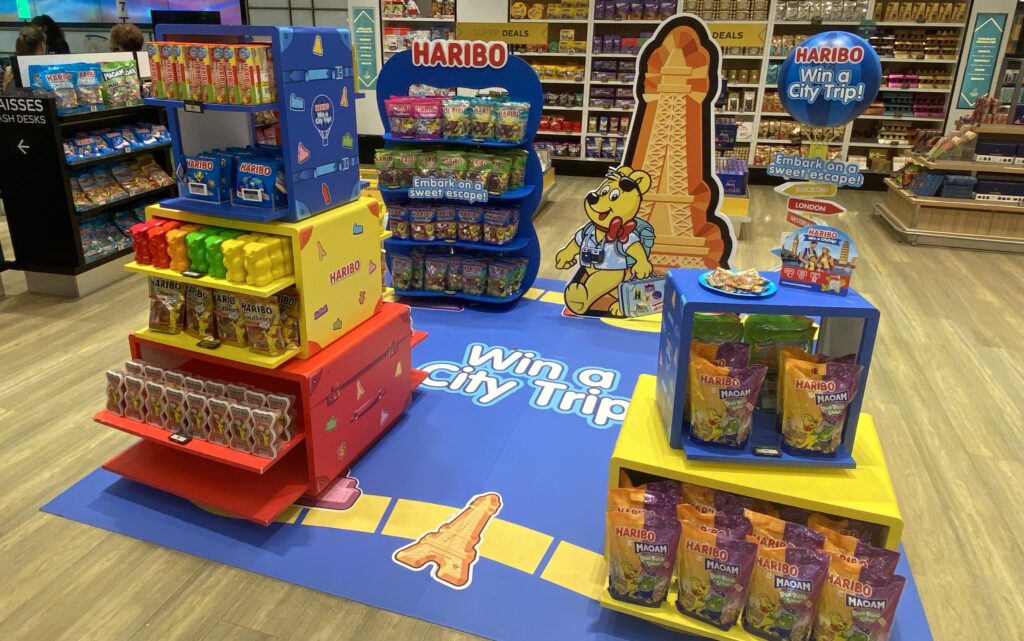
Execution is equally important. Our recent activations with retail partners have shown that confectionery can exploit its impulse advantage when the offer feels localised, fairly priced and relevant to the travel retail shopper. Brand and retailer investment in visibility at the point of decision is critical.
CM: Haribo’s new Travel Parade range goes beyond confectionery, combining sweets with a reusable pouch and a digital game activated by QR code on the My CITYTRIP pack. What traveller insights inspired this more experiential concept, and what role does added value now play in driving purchase?
EF: The insight behind both products is that we need to deepen the connection with the consumer and take it beyond the in-store experience.
 The Travel Parade Gift Bag is targeted at the family traveller, with three 100g bags in a colourful, reusable Haribo-branded cotton pouch that doubles as a passport holder, together with a memory card game designed for family play. It was developed from consumer research into what families are looking for from the category.
MY CITYTRIP takes a different approach, targeting Gen Z. Its QR-activated game takes players on a digital tour of Europe, moving a Goldbear across a map of 10 cities while answering timed questions about their history and culture. A leaderboard encourages repeat play and competition with friends and family.


This reflects a broader shift in traveller behaviour. Younger consumers are increasingly discovery-driven and expect the in-store experience to deliver something unexpected and worth sharing.
Added value is therefore no longer simply a bonus item attached to a pack. A reusable pouch, game or collectable can itself become a purchase trigger, extending the interaction beyond the till.
There is still work to do, however. m1nd-set data shows that only 41% of Gen Z visitors to duty free shops make a purchase, compared with 51% across all age groups. The opportunity is not simply to attract younger shoppers, but to convert that interest into purchase.
CM: Haribo is one of the few confectionery brands that appeals across generations, with almost everyone having their own favourite product. Does that make travel retail more complex – or does it present an even bigger opportunity?
EF: I think it’s a mix of both. Travel retail adds complexity, but also opens up a huge global opportunity. Millennials and Gen X currently drive the largest share of unit sales in confectionery, while Gen Z is key to the category’s future growth.
What’s interesting is that Gen Z and Millennials can be just as likely to reach for the fruity, nostalgic flavours they grew up with as they are to seek out new textures and ‘mystery’ formats. Nostalgia and novelty can therefore work together, and we use that thinking across many of our innovations.
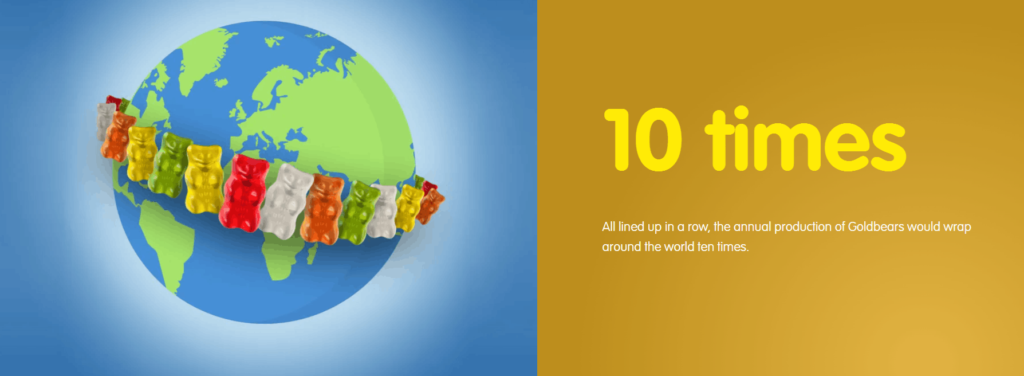
Goldbears provide a strong foundation for Haribo: a trusted, cross-generational product that is instantly recognisable. On top of that, we can layer newer travel retail exclusives such as Pixel Fizz’s vegan sour format, Mix Fizz Halal and MY CITYTRIP’s landmark shapes and digital game.
That combination is important. New formats can attract younger, more experimental shoppers, while the strength of the core range provides reassurance and encourages trial. In markets such as APAC and Latin America, the recognition and trust associated with Haribo is a powerful support for growth.
CM: How do you balance innovation with the strength of Haribo’s iconic core range?
EF: New products are always presented alongside, rather than instead of, trusted favourites such as Goldbears, Starmix and Giant Roulette. The core range acts as a confidence anchor, giving shoppers the reassurance to try something unfamiliar.
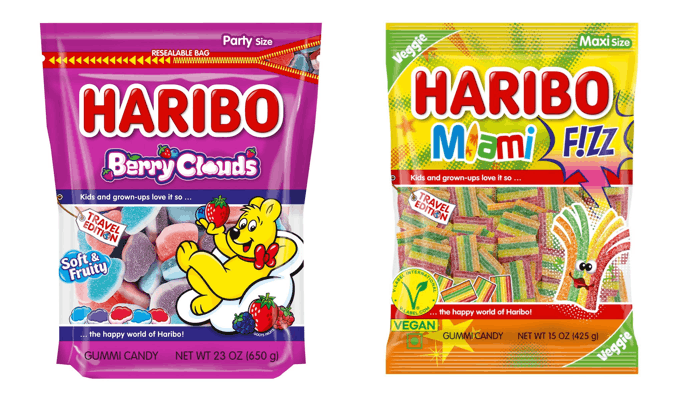 Our travel retail exclusives, including MY CITYTRIP, Berry Clouds, Miami Fizz, Pixel Fizz and Mix Fizz Halal, are genuinely new formats, flavours or textures. This allows us to reach different shopper profiles while limiting cannibalisation.
Classic fruity flavours remain important, while younger consumers are increasingly looking for sours, new textures and flavours. The strength of our core range gives us the freedom to innovate faster elsewhere in the portfolio.
CM: Sour has become a major focus for Haribo. What is driving the trend, and how are you responding?

EF: Sour is one of the clearest flavour trends in confectionery, particularly among Gen Z and Millennials, and travel retail is well placed to exploit it. Our own launch pipeline reflects that shift.
Miami Fizz combined a sour, tropical flavour profile with our first fully vegan format, followed by Pixel Fizz, with a sour strawberry heart and tropical coating. Mix Fizz Halal then extended the sour proposition into a halal-certified assortment. We are also bringing the trend into established products, including the Haribo and MAOAM DuoPack Sour and the sour variant of Giant Roulette.
The opportunity is not simply about following a flavour trend, but using it to create new formats and reasons to engage. Sour and bold flavour combinations can attract younger, more adventurous travellers, while fruity classics continue to provide the familiar foundation of the Haribo portfolio.
Across the wider confectionery market, we are also seeing a gradual shift towards gummies and other candy formats, which gives us further scope to develop the category.
CM: From halal-certified products to Dubai Duty Free exclusives and growing momentum in Latin America… how important is regionalisation in your global travel retail strategy?
EF: Regionalisation has always been central to Haribo’s travel retail strategy. Travellers, particularly younger consumers, increasingly expect localised offers and travel retail exclusives.

Mix Fizz Halal, our first halal-certified sour assortment, targets markets including the Middle East, Africa and parts of Asia. In Dubai, our limited-edition Friends & Party pouch was created exclusively for Dubai Duty Free, with the airport’s retail team playing an important role in its execution.
Latin America is another growth opportunity, where we have launched region-focused exclusives including Miami Fizz, Berry Clouds and the Travel Parade Gift Bag, while expanding through specialist partners. In India, we have seen new airport listings including Bangalore, New Delhi and Cochin.
Across these markets, the principle is the same: pair a locally relevant product with a retail partner that can execute it effectively in-market. Regionalisation is not simply about putting a different label on an existing global SKU – it requires genuine collaboration between brand and retailer.
CM: How do you ensure innovation delivers genuine consumer relevance rather than novelty for novelty’s sake?
EF: Our product innovation starts with a specific, researched consumer need rather than a reaction to a passing trend.
Berry Clouds is a good example. It went through multiple rounds of testing and sample production before launch – quite different from the speed of viral trends that can disappear as quickly as they emerge.
Miami Fizz and Pixel Fizz were built around a documented shift towards sour, bold and tropical flavour profiles, while also addressing a gap identified through our research for vegan-friendly products.
Confectionery trends may be moving faster, but insight-led development and testing remain essential. For us, the objective is to create innovations with lasting relevance rather than products that disappear after a single viral moment.
CM: And a sneak peek of what Haribo will be showcasing at this year’s TFWA World Exhibition?
EF: Our 2026 strategy is built around ‘Embark on a Sweet Escape!’, our largest-ever travel retail campaign, with MY CITYTRIP as the flagship product. The campaign will reach more than 250 stores at over 115 airports with partners including Avolta, Heinemann and Lagardère.
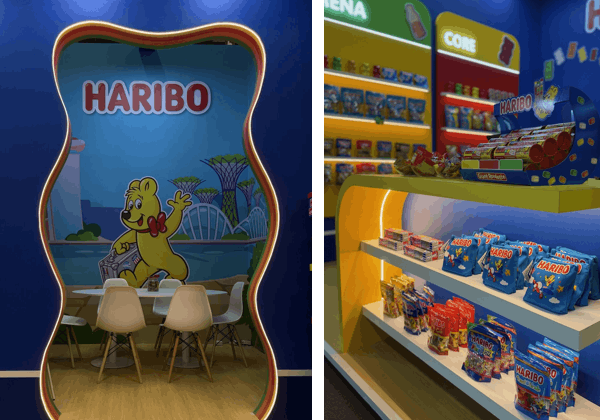
In Cannes, we will highlight new product development, with a clear focus on innovation that reflects genuine consumer need.
We will also stress the need for more sharing between brands and retailers. Better access to shared data can help us build closer partnerships and improve in-store execution.
Ultimately, it is that combination of relevant innovation, shared insight and strong execution that turns a new product into sales and longer-term performance.
CM: Finally, if you had to identify one major trend that will shape confectionery in travel retail over the next three to five years, what would it be – and how is Haribo preparing for it?
EF: I think the trend most likely to define the next three to five years is the shift from confectionery as a single purchase to confectionery as a more shareable, ongoing experience.
Gen Z is an early signal of what Gen Alpha will bring to travel retail. Younger consumers increasingly expect products to deliver more than taste – they want a story, a digital layer or something worth sharing, rather than simply a last-minute impulse purchase.

First, through digitally extended products such as MY CITYTRIP, which keeps the consumer engaged beyond the point of purchase. Second, through deeper regionalisation, including halal, vegan and destination-specific editions that respond to local needs.
And third, by continuing to invest in the trusted products that have made Haribo a global brand. Those anchor products give shoppers the confidence to experiment with newer formats.
Ultimately, the opportunity is to make the impulse purchase more relevant, engaging and memorable – without losing sight of what made the category work in the first place.









To subscribe free, please enter your email address: