Travel Retail’s Paradox: If Staff Influence 61% of Purchases, Why Are We Still Underinvesting in Them? Melvin Broekaart Interviewed.


For years, travel retail has invested heavily in marketing campaigns, premium shopfits and ever-expanding product portfolios. But is the sector underinvesting in its most commercially powerful asset – the frontline employee?
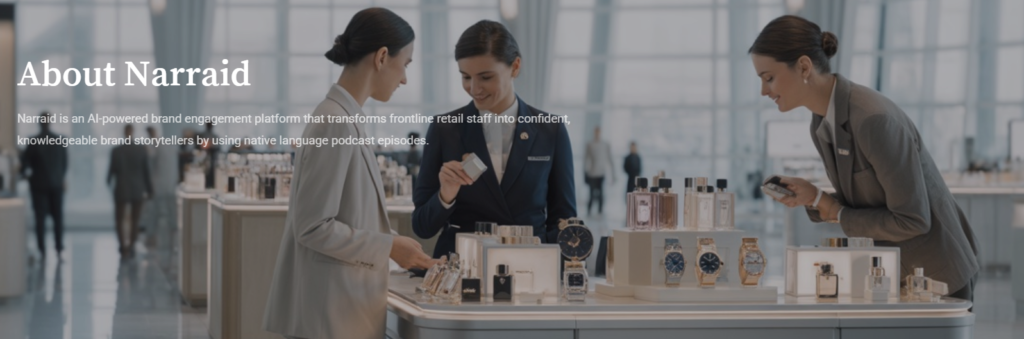
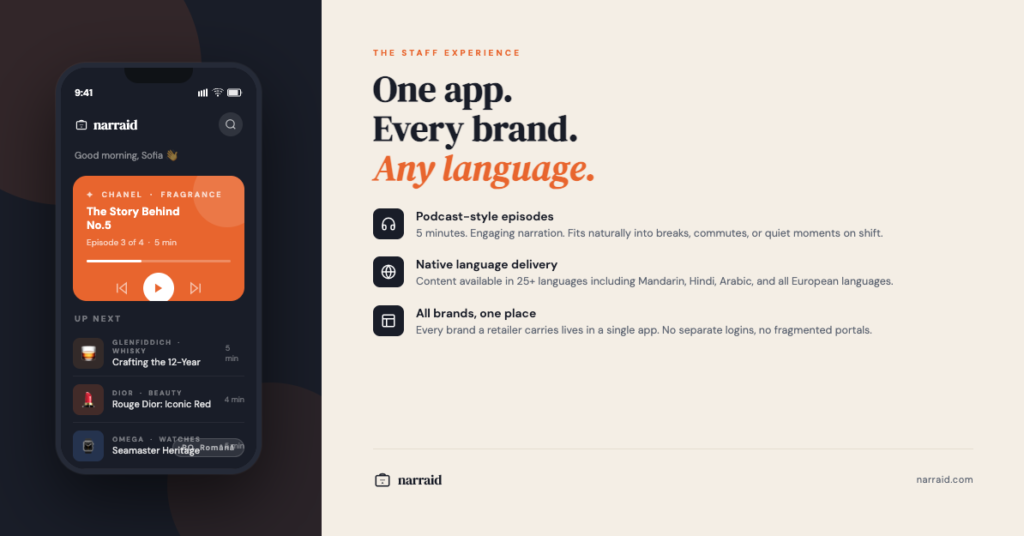
In conversation with TRUnblocked.com’s Colleen Morgan, Melvin Broekaart, co-founder of Narraid – a platform built around podcast-style microlearning for frontline retail teams – argues that the industry may be overlooking one of the simplest ways to influence passenger spend: equipping staff with the knowledge and confidence to engage.
Colleen Morgan (CM): Melvin, spend per passenger is under pressure across global travel retail and you argue that training can “bend the trend”. How does better product knowledge translate into measurable sales uplift?
Melvin Broekaart (MB): The short answer is simple: when staff know more, passengers spend more – and we now have independent data to support it.
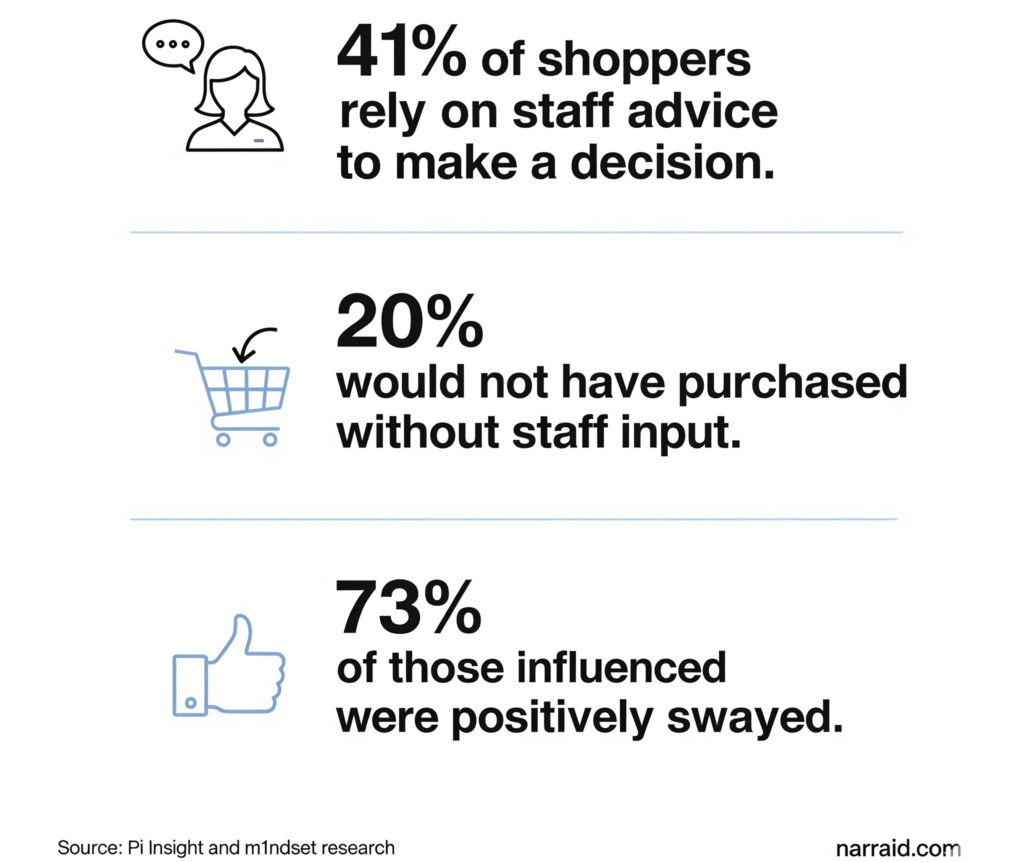
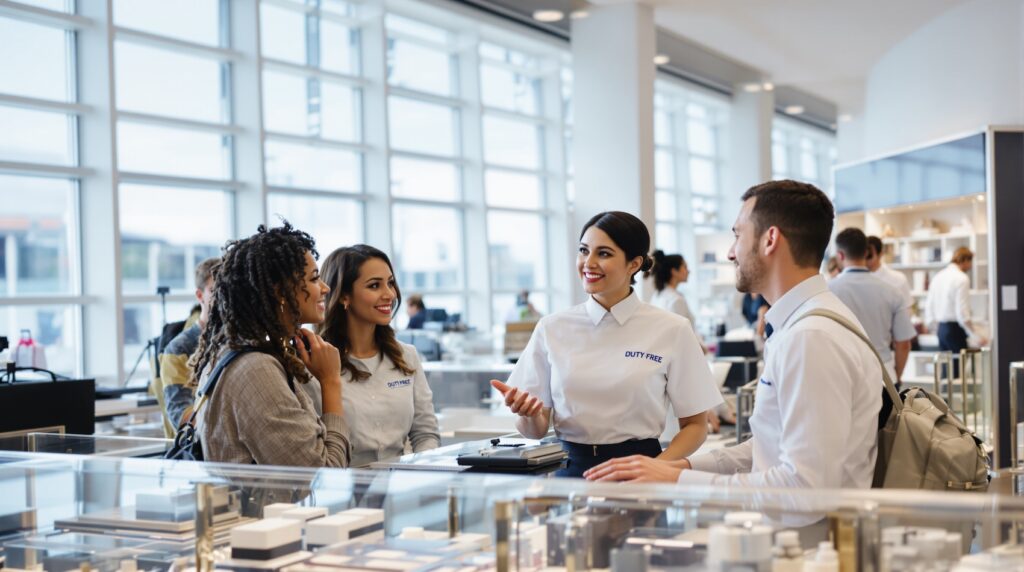
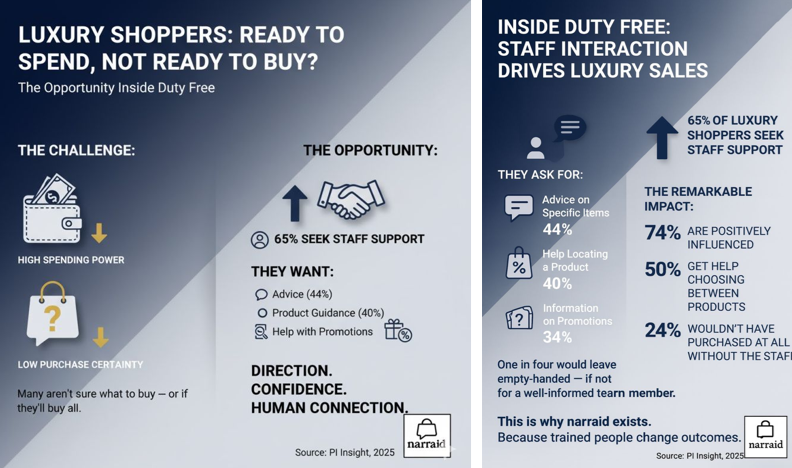
PI Insight’s 2025 research shows that 46% of passengers interact with store staff during their shopping journey. When that interaction happens, 41% say it helped them decide what to buy, while 20% say they would not have purchased at all without the staff member’s advice. That’s a 61% positive purchase influence.
The problem is that 54% of passengers report no staff interaction at all and that’s a huge missed opportunity.
Training bends the trend in two ways: it improves the quality of conversations and increases how often those conversations happen. Staff who feel confident about a product are far more likely to engage proactively rather than staying behind the counter.
Luxury retail illustrates the point. Around 64% of luxury shoppers report staff interaction, and almost half say that interaction helped them decide. Even in lower-interaction categories such as confectionery, staff influence remains significant when engagement occurs.
The link between product knowledge and sales isn’t theoretical. It’s measurable – and in travel retail it remains under-leveraged.
CM: Let’s be direct. Is podcast-style microlearning genuinely more effective than traditional training, or simply more convenient?
MB: It’s both – and in travel retail the two are closely connected.
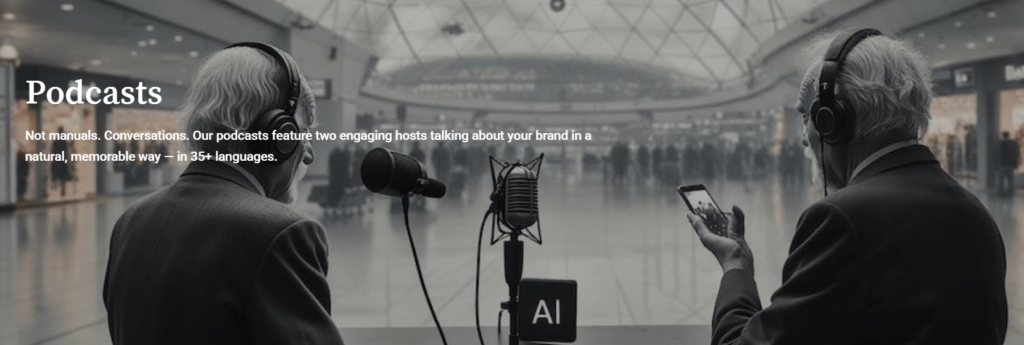
Research across education and professional training shows that well-designed educational podcasts can match or even outperform traditional lectures for knowledge retention when used as part of a blended approach. Microlearning studies also show that short, focused learning episodes – typically between three and ten minutes – improve retention and learner satisfaction.
But convenience is critical in travel retail.
Traditional training requires pulling staff off the floor, coordinating shifts, flying in trainers and working around peak periods. In a high-rotation, multilingual workforce, that model simply doesn’t scale.
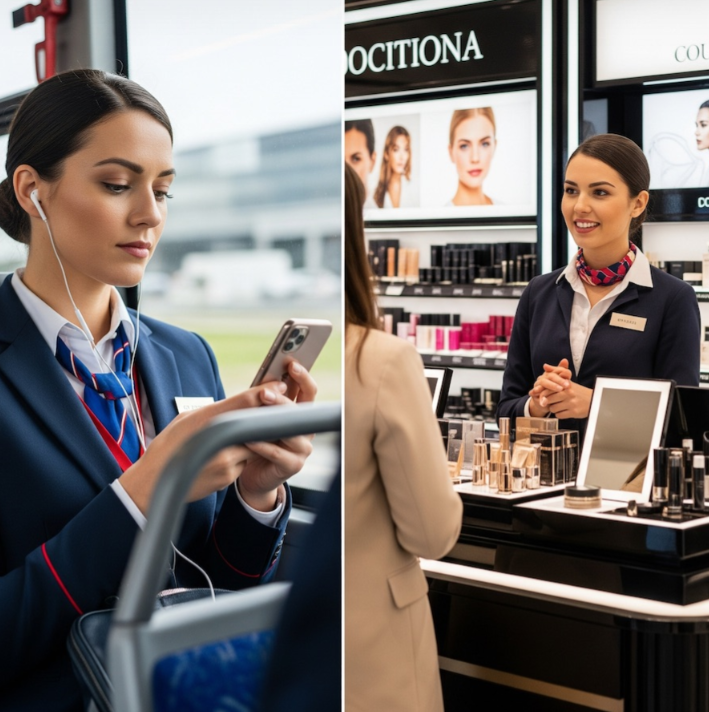
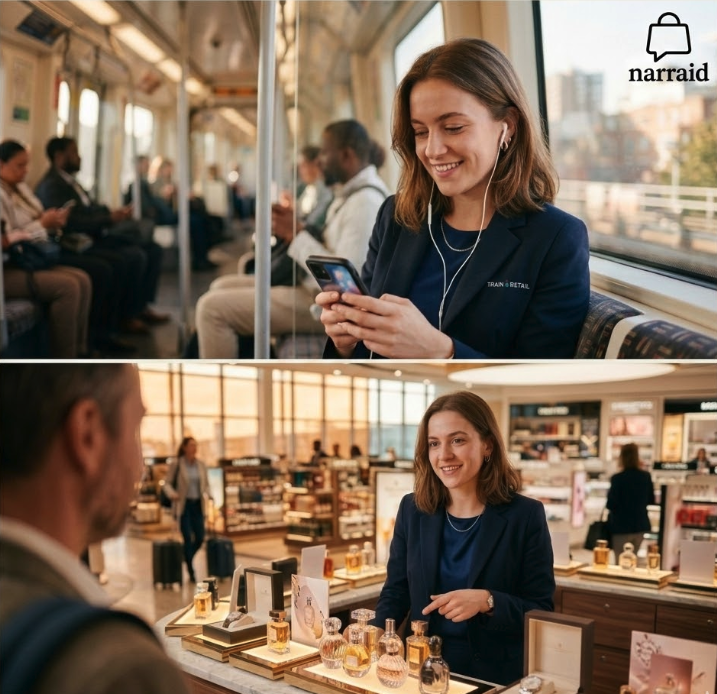
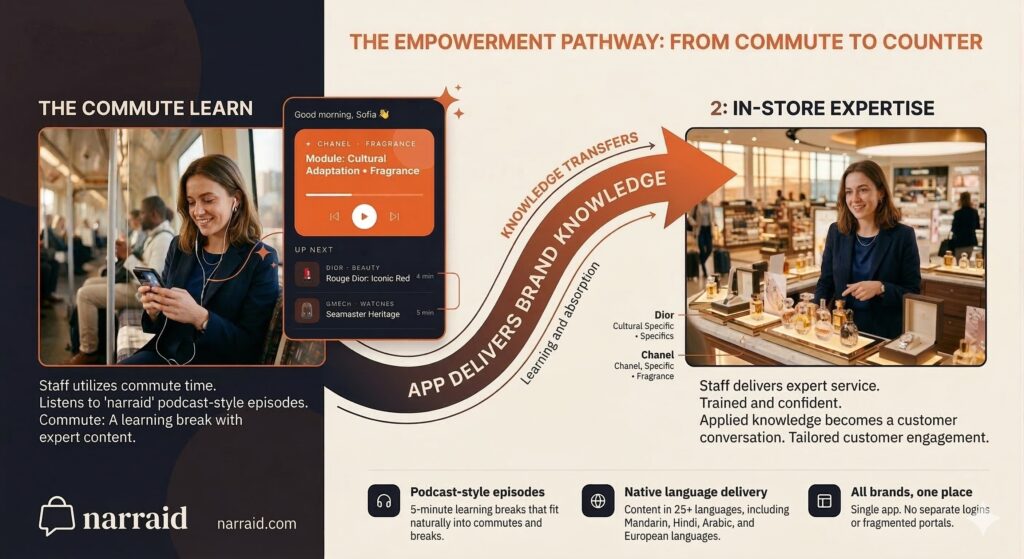
A five-minute audio episode that staff can listen to on their commute, in their own language, about the product they will sell later that day delivers reach and relevance that classroom sessions rarely achieve.
If knowledge doesn’t reach the frontline, it can’t influence sales – and the frontline is where the commercial moment actually happens.
CM: Has travel retail become stuck in an outdated training model?
MB: I wouldn’t say stuck – but the model was designed for a different era.
Slide decks, webinars and brand ambassador visits still have value, but they were created when product ranges were smaller, staff turnover was lower and launches were less frequent.
Today a single travel retail location may carry thousands of SKUs across beauty, spirits, confectionery, luxury and wellness. Promotions shift constantly and teams may speak fifteen different languages across one operation.
Traditional training also has a structural limitation: it reaches the few, not the many. A brand ambassador might train twenty staff at a flagship location, but what about the other stores, the night shift or the new hires who join the following week?
The result is inconsistent brand storytelling, missed upselling opportunities and uneven customer experiences.
The answer isn’t to abandon face-to-face training but to complement it with scalable, always-on learning that can reach the entire network.

CM: Who is actually using Narraid today within the airport ecosystem?
MB: We’re working with three main groups: brands, retailers and staffing agencies.
For brands, the challenge is consistency. They invest heavily in product development and marketing, but at the moment of truth the brand story depends entirely on the person serving the customer. Narraid allows brands to deliver that story directly to frontline staff in their own language.
Retailers value faster onboarding and continuous refresh for existing teams. Alongside brand content, they can create episodes covering sales goals, passenger insights and peak-season preparation.
Staffing agencies are another key group. Contract staff frequently move between brands and locations, so they need to become productive quickly. Audio microlearning enables rapid brand-specific onboarding without requiring classroom sessions.
Geographically, we’re seeing strong interest across Europe, the Middle East and Asia-Pacific – regions where multilingual teams are the norm.
CM: In a multilingual, high-rotation workforce, how do you maintain consistent brand storytelling?
MB: Consistency breaks down for three main reasons: knowledge fades over time, messages become diluted as they pass through different managers, and language barriers strip out nuance.
Narraid addresses all three.
Each brand episode captures the brand story – heritage, innovation and product differentiation – and delivers it directly to staff in their native language. That means a staff member in Singapore hears the same narrative as someone in Dubai or São Paulo.
We currently deliver content in more than 25 languages, including Mandarin and Hindi, using natural-sounding AI voice technology.
Because the content is always available through the app, new staff can begin learning immediately rather than waiting for the next training cycle. Brands can also track engagement and knowledge confidence across their entire network.
CM: What real-world impact are clients seeing?
MB: The most immediate change we hear about is staff confidence – and that has direct commercial implications.
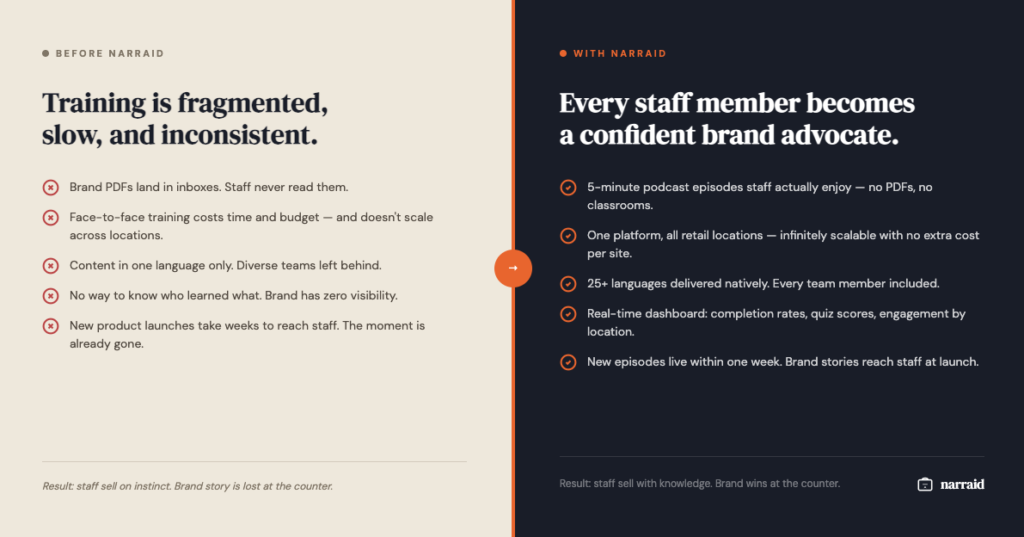
Confident staff engage customers more readily. Staff who lack knowledge tend to stay behind the counter. And we know from the PI Insight research that when staff interaction happens, 61% of the time it positively influences purchase decisions.
Through the Narraid dashboard, brands can see exactly who has completed training, how engagement is trending and how confidence levels evolve across their network.
For the first time, that creates a measurable link between training investment and commercial performance.
CM: Are we underinvesting in the most commercially powerful asset in travel retail – the frontline employee?
MB: Without question.
More than 54% of passengers never interact with store staff during their shopping journey. That means huge investments in marketing, product development and merchandising often reach the shelf without any human storytelling to support them.
Yet when staff do engage, the impact is dramatic. 41% of shoppers say staff helped them decide what to buy and 20% say they would not have purchased without that interaction.
Those numbers dwarf most traditional marketing metrics.
Frontline employees are not simply a cost line. They are the most powerful conversion tool in the travel retail ecosystem.
The real question for the industry is simple: if knowledgeable staff can influence 61% of purchase decisions, what is the cost of not investing in their capability?


To subscribe free, please enter your email address: