


AI-TS: The Business Behind The Intelligent Trolley


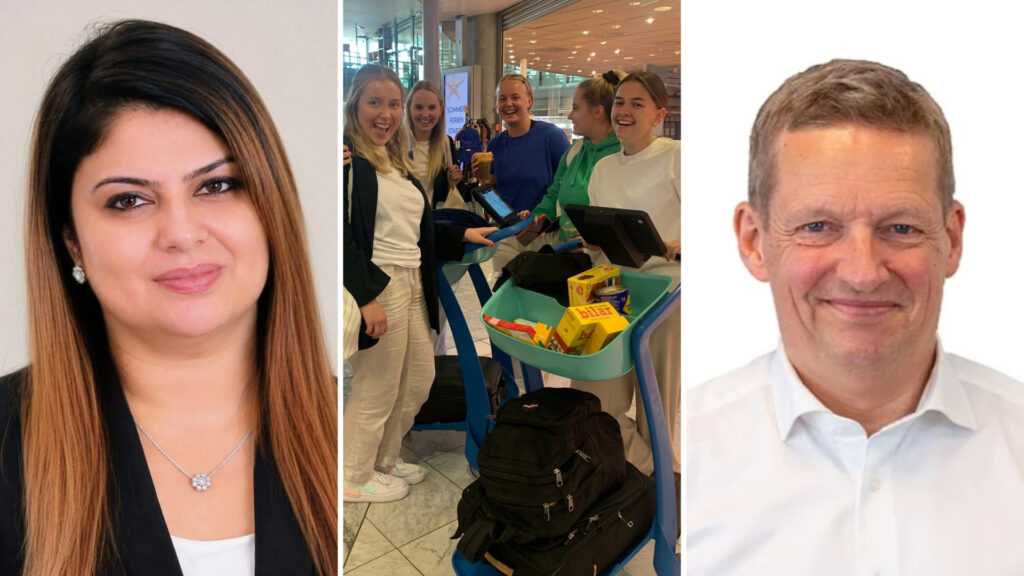
Few airport innovations have generated as much early excitement, or as many unanswered questions, as the intelligent trolley. Now, after financial difficulties at its previous owners, ITS returns as AI-TS, backed by Singapore’s US$500 million Lighthouse Trust. Dr Sheetal Soni, Spokesperson for Lighthouse Trust and Chief Business Officer of Danish Innovative Aviation Systems (DIAS), and Morten Pankoke, Chief Commercial Officer of DIAS, explain why Lighthouse invested, what has changed, whether pilots have become contracts, and why airports, retailers and advertisers should believe that this time the concept is finally built to last.
PM: Welcome to TRunblocked.com, Sheetal. Why this investment, and why now? Lighthouse Trust’s interests run from renewable energy and metallurgy to education, property and hospitality. What did your board see in a smart trolley business coming out of an insolvent estate that others had missed – was it a bargain, or a deliberate first step into aviation?
SS: I think you have to separate two things: a business failing and an idea failing. They’re not the same.
ITS spent years developing the technology, working inside really complex airport environments and learning how passengers actually use a digital trolley. That experience is valuable, whatever happened to the previous owners financially. What attracted us at Lighthouse was the chance to build a sustainable commercial business on top of it.
Think about it. Airports move millions of passengers through spaces full of shops, restaurants, hospitality and advertising. But there’s still a big gap between what’s on offer and what passengers actually find and use. AI-TS can help close that gap, and it does it with something every airport already has. So this was a strategic investment in the technology and in the commercial opportunity around passenger engagement. It wasn’t just a bargain we happened to pick up.
Honestly, buying the technology is the easy part. The hard part is building a business that airports trust, passengers use and commercial partners make money from. That’s where all our attention is now.
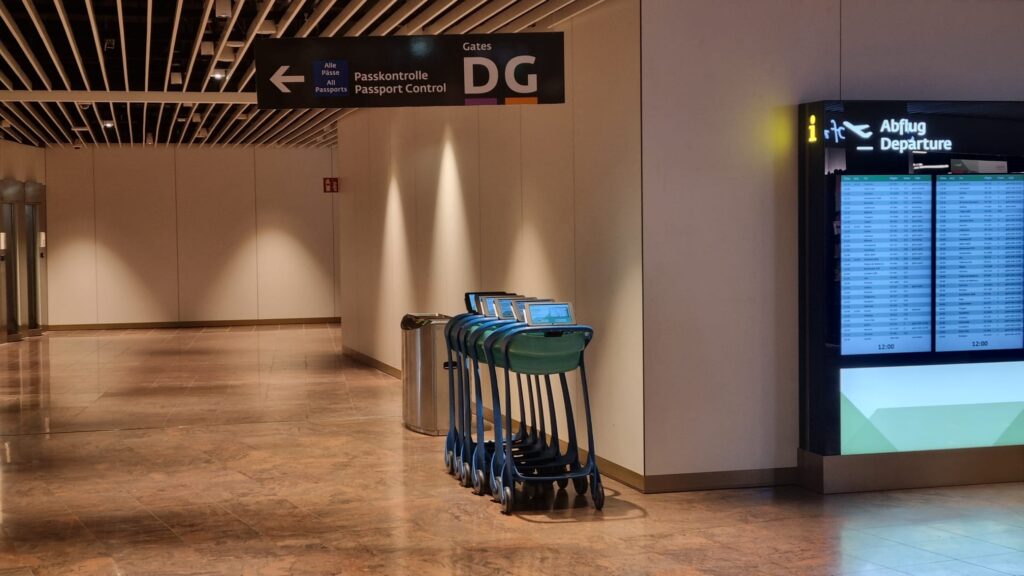
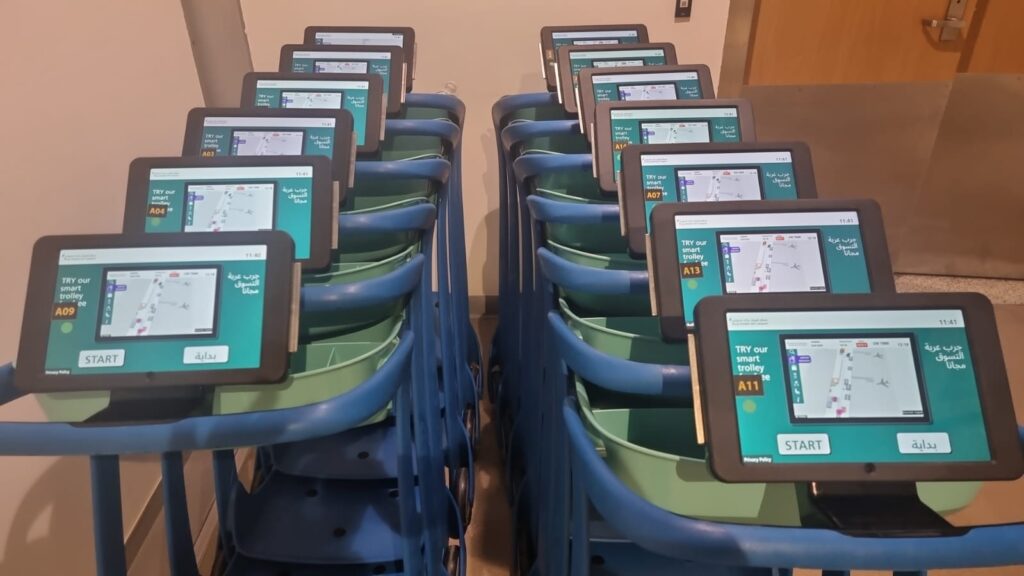
PM: Is this your way into travel retail? You call AI-TS “a passenger engagement and commercial ecosystem.” Is the trolley the platform itself, or a way into airport commercial relationships that DIAS then builds on – and what would the next acquisition or product look like?
SS: The trolley’s where we start. It’s not where we stop.
I look at an airport as a network of commercial opportunities that are all connected, but the passenger experiences them as separate, disconnected services. Someone might have plenty of time to shop or eat, but they don’t, because they’re not sure when boarding is, how far the gate is or where a particular store is. What we want to do is connect those decisions.
Picture a passenger who can see that boarding is still a while away, finds a restaurant they like, checks where it is and heads there feeling confident about it. That’s not just digital advertising. That’s technology helping someone turn an intention into an action. And for retailers and the airport, the value is in the business that would otherwise have been lost.

Over time, we see room for integrated retail services, passenger assistance, loyalty programmes and other airport applications. But any future acquisition or new product has to make that ecosystem stronger, not just make our technology portfolio bigger. We’re not trying to put another screen in the airport. We’re trying to make the services the airport already has easier to reach, better connected and more commercially productive.
PM: The crunch question is: how much money is behind it? Neither the purchase price nor the investment committed to AI-TS has been disclosed. Without a figure, what can you reasonably tell airports about committed funding and its likely duration? Their real fear is the service being withdrawn halfway through a rollout.
SS: That’s a fair concern, and I’d expect any responsible airport operator to raise it.
We’re not disclosing the financial terms of the acquisition or how much capital is allocated to AI-TS. But I’d be careful about using the size of an investment as the only measure of whether a business will last. A big investment can keep an inefficient business going for a while. It can’t make a bad operating model work forever.
So our focus is on the economics of each deployment: capex, infrastructure, maintenance, operating costs, advertising rights and the revenue potential of that specific airport. We also know airports need clear contractual commitments on service continuity, support and performance. The commercial structure has to hold up for the whole contract period, not just the installation.
For me, the real question isn’t how much money there is to roll out trolleys. It’s whether each deployment has a solid enough financial and operational footing to stay in service. Capital gets you launched. A sound business model keeps you there. Airports need to be confident about both.
PM: Where are you looking first? DIAS operates in Denmark, the UAE and India, and Lighthouse is based in Singapore. Are those the launch markets – and which airports or regions would you most like to sign in the next 18 months?
SS: We’re starting with four main regions: Europe, India, Asia-Pacific and the Middle East. Being in Denmark, the UAE and India gives us operational and commercial access there, and Lighthouse being based in Singapore gives us a natural link into Asia-Pacific.
But I wouldn’t pick an airport just because it’s big or sits in a strategically important market. Passenger numbers are only part of the picture. We look at the retail environment, how the advertising concession is set up, how passengers behave, what infrastructure is needed and whether the stakeholders are actually willing to work together.
Over the next 18 months, the priority is turning selected opportunities in those regions into commercially sustainable agreements and reference deployments. I’d much rather have a few airports that really work, with a model we can repeat, than a long list of pilots with no clear path to profitability.

PM: Good to see you back in harness, Morten. I know it’s been a tough couple of years. ITS had real airport partners and a lot of goodwill, yet its owners ran into financial trouble. What went wrong: funding, the business model, how long airport sales take, or the product? And which of those does this relaunch actually fix?
MP: Thanks, Peter. It’s definitely been a challenging period, but we’ve learned a lot from it.
I’d be careful about pinning the previous company’s financial problems on one single cause without a full look at its finances. But what we do know from experience is that airport technology businesses have a particular challenge: it can take a very long time to sign commercial agreements, install the infrastructure and get to operational scale. Passengers liking it and the technology working well both matter, but on their own they don’t make a business financially sustainable.
The earlier deployments taught us a lot about passenger behaviour, airport operations, maintenance and how complicated it is to work with lots of commercial stakeholders at once. The relaunch lets us build on all of that, with rebuilt software, new ownership and a much stronger focus on deployment structures that actually make commercial sense. The goal isn’t just to bring back the old service. It’s to put it on a more sustainable footing so it can keep growing.

PM: Sheetal, are we talking about contracts or pilots now? ITS mostly worked through two-to-three-month pilots with an option to extend, and at one point spoke of ten airport agreements – with Hamburg the only long-term partner after its trial. How many signed commercial contracts do you have today, at which airports and for how long? And do earlier partners such as Hamburg, Munich, Nice, Oslo, Riyadh or Hyderabad carry over to AI-TS?
SS: I think the industry deserves a clear answer on this. Historical ITS deployments, ongoing commercial discussions, pilot agreements and signed long-term AI-TS contracts are different things, and they shouldn’t be lumped together.
The earlier relationships are valuable. They give us operational experience, contacts and an understanding of what different airports need. But they don’t automatically carry over as current contracts under the new structure. We’re not announcing a specific number of new AI-TS contracts, airport names or contract lengths at this stage.
Right now we’re focused on turning opportunities into agreements that cover the whole commercial model: infrastructure, advertising rights, retailer participation, revenue arrangements and who’s responsible for what operationally. A successful pilot shows the technology works. A successful commercial agreement shows the stakeholders are ready to back it as a business. That second milestone matters a lot to us.
I’d rather announce a contract once the commercial side is actually done than build up expectations around deals that are still being worked out.

PM: Morten, how is this better than the old offer? The trolley is the same and the software has been rebuilt. An airport CCO who turned down ITS before will ask what is different enough to change their answer: ordering with delivery to the passenger, Live TV, airline app integration, DIAS now running the service, or the commercial terms?
MP: It’s the combination, really, not one single feature. We’re still using the airport’s existing baggage trolleys, and that matters, because we’re building on something that’s already part of the passenger journey. The software’s been rebuilt to give a much broader digital experience, with flight information, gate updates, navigation, retail discovery and entertainment all in one place.
We’ve also added Live TV and food and beverage ordering, though fulfilment and delivery depend on what services each airport has available.
But the real improvement has to go beyond the screen. Airports need to trust the technology, the operational support and the commercial setup. A more capable platform is only worth something if it can be deployed reliably and supported at a cost that makes sense. That’s the whole package we want airport operators to look at.
PM: Let’s check the numbers. The figures quoted are 4.7/5 satisfaction, 90% repeat usage, 39% higher basket values and a 24% click-through rate. Which airports and time periods do they come from, and has anyone outside the company verified them? ITS previously claimed a 29% conversion rate at San Diego. How should readers compare the two sets of figures? And what does “repeat usage” mean for passengers who may fly only a few times a year?
MP: First, we need to be careful to separate historical research findings from actual platform performance data. The published San Diego research gave the touchscreen a helpfulness rating of 4.73 out of 5. It also found that 94% of passengers surveyed said they’d use the trolley again. That tells you people are willing to use it in future. It doesn’t measure the same passenger coming back and using it again and again.

The same goes for the 29% figure from before. That was about passengers saying the trolley advertising influenced a purchase. You can’t compare that directly with a digital click-through rate, because they measure different things. The 39% basket-value uplift and the 24% click-through rate have also been quoted for the earlier platform. But we shouldn’t present those as independently verified, or as comparable across airports, until we’ve pinned down the measurement periods, sample sizes and methods behind them. That distinction really matters to us.
For future AI-TS deployments, we want reporting that keeps passenger satisfaction, actual engagement, advertising response and completed transactions separate. The historical results show the potential. The next step is proving consistent, measurable performance under AI-TS.
PM: And the advertisers, Sheetal – are they keener now? The model depends on media revenue that funds the trolley fleet. Are brands and media agencies more interested than they were in ITS’s first phase – because the platform has proper funding, because more airports want digital commercial tools, or both? And do you have any committed advertisers or brand partners yet?
SS: In the end, advertisers will judge AI-TS on how good the opportunity is, not on who owns it. The market is a lot more open to digital airport media than it was when ITS started. Global digital out-of-home advertising hit US$25.5 billion in 2025, which is 47% of all out-of-home spend. That tells you where the budgets are going.
I’d say it’s both factors, but they do different jobs. Lighthouse’s backing deals with the worries about continuity and the ability to scale. And airports pushing harder on digital commercialisation creates demand for advertising formats you can actually measure. The rebuilt platform strengthens that by linking brand exposure to passenger engagement and potential purchases.

But I’d separate general market demand from confirmed AI-TS commitments. We’re building partnerships with advertising stakeholders, but we’re not announcing signed advertisers or brand commitments yet. Our priority is to lock in media rights, advertiser participation and enough contracted revenue to support each deployment before we commit to scaling.
The test isn’t whether brands like the idea. It’s whether they put real budget behind it, enough to make the trolley fleet commercially sustainable.
PM: Is anything different when working alongside the media concessionaire? You have said the trolley screen is sold “alongside the airport’s existing advertising concession, not in competition with it.” In practice, who sells the inventory, how is revenue split three ways, and have you talked to the major airport media groups about a formal partnership?
SS: Yes, and that distinction is important. We’re not proposing a second, parallel advertising concession. We want AI-TS to be an extra, measurable media asset inside the airport’s existing commercial setup.
On selling the inventory, our preferred model is for the existing media concessionaire to lead the sales, where they hold the rights and already have the agency relationships. DIAS provides the technology, inventory management, campaign delivery and performance analytics. Where the rights are set up differently, we can agree on another arrangement.
On revenue, there’s no standard three-way split. The airport brings access and commercial rights, the concessionaire brings advertisers and sales expertise, and DIAS brings the platform, capital and operational support, as agreed. Each party’s share has to reflect what they put in, what they’re responsible for and the risk they carry. So we’ll negotiate it airport by airport, including any minimum guarantees, rather than throw out random percentages.
On partnerships, we know how important it is to work with the major airport media groups, and we’re taking a partnership-led approach. But we’re not announcing a formal agreement with a major media concessionaire at this point.
Our principle is simple: AI-TS has to create new advertising revenue, not just move existing airport media budgets around. If all three parties can’t see real additional value, the model doesn’t work.

PM: The question retailers will ask: what’s in it for them? Ordering and delivery only work where concessionaires take part. Are you talking to the big operators about putting their offers, pre-order and loyalty programmes on the screen? And how do you persuade a duty-free retailer that the trolley sends people into its store rather than away from it?
SS: Retailers don’t want another advertising platform. They want more customers and more sales. And I think that should shape everything we offer them.
Say a passenger has an hour before boarding and wants to buy a gift. The airport might have exactly the right product, but if they don’t know where the store is or how much time they’ve got, that sale might never happen. AI-TS can connect that passenger with the store, guide them there and maybe show them relevant offers or services. And where retailers take part, the platform can support things like pre-ordering, loyalty integration, collection and delivery.
But the key thing is proving it’s incremental. A retailer needs to be able to see whether the platform brings in extra store visits, offer redemptions or transactions they’d otherwise have missed. And the experience has to support physical retail, not undercut it. Some passengers will want to walk into the store, others will like the convenience of ordering or picking something up.
So what we’re saying to retailers is pretty simple: we want to help turn passengers who are in the building into measurable business. That’s a much more useful conversation than just selling space on a screen.
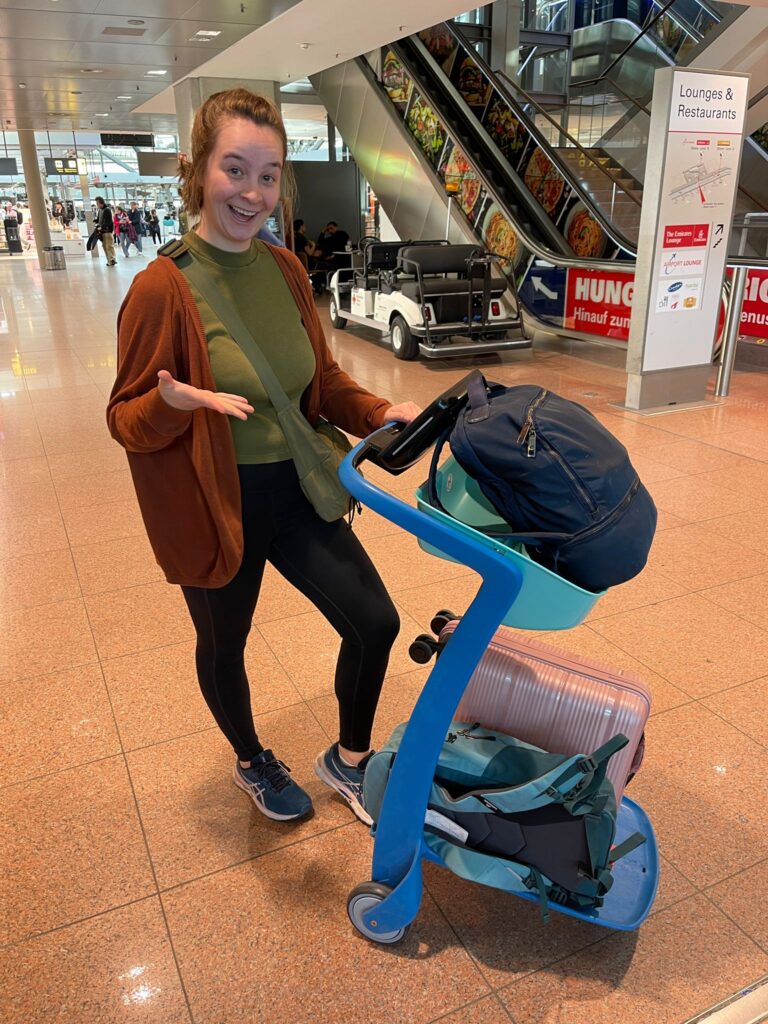
PM: One last question, Morten. Where else could it go? Once there is an AI assistant and data on how passengers move through a terminal, what else is possible: airline partnerships, arrivals, cruise terminals, rail hubs, data products for brands? And looking ahead two years, what would make you say this relaunch worked?
MP: There are quite a few possibilities. AI assistance could make the platform more intuitive, so passengers can find information and services just by asking in a natural way. Linking up with airport and airline systems could make the information more relevant throughout the journey. And over time, parts of the technology could work in arrivals, other transport hubs and aggregated operational insights, as long as data protection and privacy requirements are met.
But right now, the priority is getting AI-TS properly established in airports. Two years from now, I’d call it a success if we have sustained commercial deployments, reliable operations, passengers using it consistently and clear evidence that it’s delivering value to airport operators and commercial partners.
The technology has already shown why the concept deserves attention. Now we have to show why it deserves to become a permanent part of the airport.












To subscribe free, please enter your email address: